
Refine by
Particle Sampling Articles & Analysis
174 articles found

GMP cleanroom contamination monitoring is a critical safeguard, forming the frontline defense against risks that can compromise product quality. When executed with intention and rigor, it becomes one of your most powerful tools for detecting contamination risks early and stopping issues before they escalate. Aligned with EU GMP Annex 1, these ten practical tips are designed to help you ...

Dynamic Light Scattering (DLS) represents one of the most valuable analytical techniques in modern science for characterizing particles in solution. This non-invasive method provides critical insights into particle size, molecular interactions, and solution dynamics—information essential across numerous scientific disciplines. ...

Apart from particle deposition, static electricity particle adsorption pollution also needs attention. ...

Liquid particle counters are like silent guardians in industries where fluid purity is critical. From pharmaceuticals to water treatment and semiconductor manufacturing, these devices ensure that tiny, often invisible particles don’t compromise product quality, safety, or efficiency. Let’s break down how they work, where they’re used, and what makes them so ...
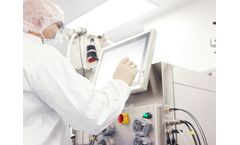
Cleanrooms are essential controlled environments used in industries such as pharmaceuticals, biotechnology, and electronics manufacturing. Their primary purpose is to maintain high levels of cleanliness and minimize contamination, which is critical for ensuring product quality and compliance with stringent regulations. Recent advancements are providing fresh insights into how we can enhance ...

In the research and development, production, and quality control of antibody drugs, MFI is a key tool for assessing drug safety, purity, and stability.The core principle of MFI is to capture the images of particles passing through a specially prepared sample carrier under flowing conditions using a high-speed camera. ...
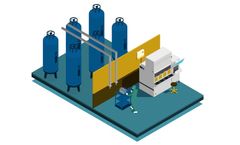
Ultra Pure Water (UPW) is critical in industries where even the smallest impurities can have significant consequences. It is used in semiconductor manufacturing, pharmaceuticals, and high-end laboratories-applications that demand the highest level of purity. Achieving and maintaining this purity requires a complex process and advanced monitoring tools. This blog explores the UPW process and ...

If the particles are embedded and sliced to make thin samples, the microstructure inside the particles can also be analyzed. ...

The document directly looks at those applications where particles less than 5.0 µm are important as part of an overall sampling program and not singularly those applications that are only looking at large, macro particles (>5.0 µm). ...

In a DLS experiment, a liquid sample is illuminated by a laser beam, and the particles in the solution cause the laser to scatter. ...

While virome research shares some commonalities with metagenome and amplicon technologies, it also possesses distinct features and faces unique challenges that set it apart. Commonalities Sample-Based Analysis: All three technologies—virome, metagenome, and amplicon—are built on the foundation of studying microbial DNA within a sample, avoiding the ...

Matrix-Assisted Laser Desorption/Ionization Mass Spectrometry (MALDI-MS)MALDI-MS is a technique for exciting a sample with a laser beam under high vacuum conditions, causing the sample molecules or clusters to desorb and ionize from the solid or liquid state. ...

Matrix-Assisted Laser Desorption/Ionization Mass Spectrometry (MALDI-MS)MALDI-MS is a technique for exciting a sample with a laser beam under high vacuum conditions, causing the sample molecules or clusters to desorb and ionize from the solid or liquid state. ...
Here are some commonly used purification methods: Centrifugal 1. Ultracentrifugation The sample particles sink at a certain speed, determined by their size, shape, and centrifugal force. If the sample is a homogeneous suspension containing only one particle, a clear interface will slowly move to the bottom of the pool due to ...

Generally, the steps involved in affinity purification include solution preparation, sample preparation, sample loading, elution, and analysis. Mass spectrometry (MS), on the other hand, is a powerful tool for analyzing proteins and other large biomolecules, providing information about molecular mass and chemical structure.Protein Affinity PurificationProtein ...

To ensure the accuracy and reliability of the analytical results, the requirements for the samples are relatively strict, as follows:Sample PurityThe samples for mass spectrometry analysis must be of high purity to avoid interference from other substances. Therefore, it is important to remove as many impurities as possible from the sample, such ...

By measuring the change in light scattering intensity over time caused by the Brownian motion of particles in the sample, the particle size can be inferred.When interpreting the experimental results, the following points should be noted:1. Particle Size DistributionDLS results are usually presented as particle ...

Sample Preparation(1) Clean all sample bottles and utensils to avoid contamination.(2) Prepare the sample solution, ensuring that the sample is within the appropriate concentration range to avoid multi-body effects or too low signal strength.(3) Filter the sample to remove large particles or ...

When a laser beam is shone on a sample, the particles in the sample scatter light. As the particles continuously undergo Brownian motion (i.e., random movement) in the solution, the phase and intensity of the scattered light from each particle change over time. ...
Below is the basic processing procedure for protein sequencing samples. Protein Extraction 1. Cell Lysis Disrupt the cell membrane to release the intracellular proteins by using physical or chemical methods (such as ultrasonication, freeze-thawing, detergent lysis, etc.). 2. ...