
Refine by
Passive Sampler Articles & Analysis
52 articles found

Pre- and post-application samples were analyzed for sediment contaminant concentration, carbon content, benthic community, and bioavailable portion of the contaminants using passive samplers and laboratory bioaccumulation assays. Activated carbon delivered via SediMite was found in the sediments of Bailey's Creek samples collected during the final ...
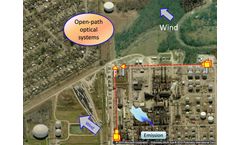
In recent amendments to the National Emission Standards for Hazardous Air Pollutants from Petroleum Refineries, the U.S Environmental Protection Agency (EPA) is for the first time requiring fenceline measurements for benzene as a surrogate for facility fugitive emissions using time-integrated passive samplers with potential use of time-resolved measurements as ...

This site recently completed its 33rd quarter of groundwater monitoring with the Snap Sampler. To compare variability of the Snap Sampler with traditional volume purge methods, contaminant concentration changes over 9 monitoring periods were compared. Quarter-to-quarter changes in contaminant concentrations were tabulated and quarter-to-quarter relative percent change was compared. There were 81 ...
The Army Corps ESTCP study is the most extensive 3rd-Party evaluation of the Snap Sampler method completed to date. There are 5 complete reports and several presentations included here for free download. A Fact Sheet explaining results in a short synopsis is included ...

Since the aftermath of World War I and II, the North and Baltic Seas have been littered with thousands of ship and aircraft wrecks, housing a deadly cargo of conventional munition and agents of chemical ...
The acid herbicide MCPA (4‐chloro‐2‐methylphenoxy acetic acid) is a relatively common pesticide used in agriculture and horticulture to control broadleaved weeds and rush. It has been detected in surface water, groundwater and drinking water worldwide. In fact, it is one of the most frequently encountered herbicides in water quality monitoring the US, Canada, Australia and much ...

Miniaturization of sampling equipment now allows samplers to be placed almost anywhere including on the person. This can be a small, battery-powered sampler, or even a small, passive badge sampler attached to someone while a particular task is performed. ...
Miniaturization of sampling equipment now allows samplers to be directly attached to the worker. This can be a small, battery powered sampler, or even a small, passive badge sampler attached to the worker while a particular task is performed. The testing can be as short as a few minutes or a full shift. Some ...

Conifers are often used as an “air passive sampler”, but few studies have focused on the implication of broadleaf evergreens to monitor atmospheric semivolatile organic compounds such as polychlorinated biphenyls (PCBs). ...
The measurement of freely dissolved concentrations using conventional approaches is challenging as a result of the low concentrations that may be encountered and their temporally variable emissions. Absorption‐based passive sampling enables the estimation of freely dissolved concentrations of hydrophobic contaminants of emerging concern in water. ...
Three configurations of single‐phase‐polymer passive samplers made of polyoxymethylene (POM), silicone rubber (SR) and polyethylene (PE) were simultaneously calibrated in laboratory experiments by determining their partitioning coefficients and the POM diffusion coefficients and by validating a kinetic accumulation model. ...
Polymeric passive samplers have become a common method for estimating freely‐dissolved concentration in environmental media. ...

In this work, an integrative passive sampler based on a silicone membrane filled with a suspension of γ-Fe2O3 at pH 3.5 was developed. ...
Understanding the transfer of chemicals between passive samplers (PS) and water is essential for their use as monitoring devices of organic contaminants in surface waters. ...
In general, the different passive samplers demonstrated good agreement, with Cfree values varying by a factor of 2 to 3. Further, at New Bedford Harbor, where conventional water sample concentrations were also measured (i.e., grab samples), passive sampler‐based Cfree values agreed within a factor of 2. These findings suggest ...
Methods involving polyoxymethylene (POM) as a passive sampler are increasing in popularity to assess contaminant freely‐dissolved porewater concentrations in soils and sediments. ...
Hence, freely‐dissolved porewater concentrations, CW, have also been investigated as predictors of organism tissue concentrations, but they are more difficult to measure than bulk sediment concentrations (used with BSAF). In situ passive sampling methods make it possible to deduce CW with less effort than is required to measure the value directly, and make it possible to relate ...
To address this point, contaminant concentrations have been normalized for specific sediment characteristics, including organic carbon content, or the chemical activity has been estimated using passive samplers. Another approach to assess compound availability is to determine the extent of readily desorbed compound using resin extractions of sediment slurries. ...
A challenge in environmental passive sampling is determining when equilibrium is achieved between the sampler, target contaminants, and environmental phases. A common approach is the use of performance reference compounds (PRCs) to estimate target contaminant sampling rates and indicate degree of sampler equilibrium. One logistical issue ...

EPA has proposed an amendment to 40 CFR Parts 63, Subpart CC and Subpart UUU that requires all petroleum refineries to deploy passive time-integrated benzene samplers at the fenceline (where fenceline is equivalent to the facility property line) of their facility to alert them of fugitive emissions from leaks of Subpart CC and UUU process equipment. ...