
Pcb Water Articles & Analysis
23 articles found

Waste from factories that use PCB is a major source of PCB pollution. PCBs can be absorbed by the human body through the skin, respiratory tract and digestive tract, and are enriched in human tissues, seriously endangering human health and life. ...
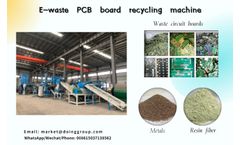
DOING e waste PCB recycling machine adopts advanced dry physical separation and pulse dust removal system, which can effectively recycle and reuse the valuable metals of waste circuit boards and without any pollution to water, soil, and air. Our e waste PCB recycling machine has advanced equipment and perfect technology. With high quality and ...
Waste from factories that use PCB is a major source of PCB pollution. PCBs can be absorbed by the human body through the skin, respiratory tract and digestive tract, and are enriched in human tissues, seriously endangering human health and life. ...

One solution has emerged at Mirror Lake in Dover, Delaware. The lake, originally a natural water body, was modified years ago by constructing a small weir to control the water elevation. ...
ByEnsia

Project reference Project: Pilot project in Ersmarksdeponin landfill in Umeå county Customer: Umeå county, Sweden Project period 1999 Nature of task: Development of new monitoring strategy for landfill: Time integrated monitoring of bioavailable fraction of PAH and PCB in landfill leachate (surface water and groundwater); In-situ monitoring of ...

Despite bans and restrictions for their adverse health effects including endocrine disruption, due to their stability in the environment, polychlorinated biphenyls (PCBs) are still of concern for their residues in several matrices. This study employed low-density ultrasound-assisted emulsification–microextraction (USAEME) to measure selected PCBs (28, 52, ...

Chemical / Occupational Hygiene Services include: Heavy metal contamination in soils Lead content in paint Total Polychlorinated biphenyls (PCBs) Water Analysis Perimeter dust monitoring Occupational hygiene and chemical work is carried out in accordance with our UKAS and Mcert accreditations. ...

We used ESDs (silicone rubber and polyethylene) to determine freely dissolved concentrations and chemical activities of PCBs in the water column and sediment pore water, and calculated for both phases the corresponding equilibrium concentrations and chemical activities in model lipids. Overall, the studied ecosystem appeared to be in ...
The present study used a food web bioaccumulation model to estimate TMFs for polychlorinated biphenyls (PCBs) in a riverine system. The uncertainty associated with model predicted TMFs was evaluated against realistic ranges for model inputs (water and sediment PCB contamination) and variation in environmental, physiological, and ecological ...
This paper presents baseline and post‐removal data documenting reduced PCB concentrations in fish tissue, surface water, and sediment in response to the U.S. ...
Polychlorinated biphenyls (PCBs) are an environmental concern due to their adverse effects on humans and wildlife, and understanding the contribution of various matrices (i.e., sediment and water) to PCB exposure on aquatic communities is critical for successful remediation of impacted sites. The present study examined the toxicity of ...

PCBs and some chlorinated pesticides are resistant to decomposition in the environment, and tend to accumulate in living organisms. ...

To make the disposal as economical as possible, as much of the water needs to be removed, PCB free, allowing for storage or transporting of high solids PCB contaminated material. ...
The overall objective of the presented study was to examine the concentration and pattern of polychlorinated dibenzo-para-dioxins (PCDDs), polychlorinated dibenzofurans (PCDFs) and dioxin-like polychlorinated biphenyls (dl-PCBs) in the five urban, cascade reservoirs. The obtained data demonstrated an increasing total concentration of toxic PCDDs/PCDFs and dl-PCBs ...
To evaluate the consistency and possible causes of this behavior, polychlorinated biphenyl (PCB) contaminated sediment samples from the Hudson, Grasse, and Fox Rivers Superfund sites were used in sediment bioaccumulation tests with the freshwater oligochaete, Lumbriculus variegatus, with PCB concentrations in interstitial water (IW) quantified ...
In the present study, we measured concentrations of the 209 PCB congeners in 84 uncooked, warm‐water shrimp samples from the United States and 14 other countries in three continents. Total PCB and dioxin‐like PCB (DL‐PCB) levels were not significantly different between wild‐caught and farm‐raised shrimp, and the ...
Prior to 1978 Polychlorinated biphenyls (PCBs) were used in the manufacturing process. During that time, PCBs seemed like the good way to go. ...

Process Description A west coast aluminum producer uses the HDBF to remove PCBs and suspended solids from non contact caster water, which comes from the ground water. The producer uses the ground water, which contains PCBs, for use as cooling water. The water does not come into ...

For decades polychlorinated biphenyls (PCBs) have been high on the list of toxins the public fears. A new vitrification technology is claimed to be able to completely destroy PCBs and other toxins in contaminated sediment by meltingit into a glass aggregate product that can be used in the construction industry. ...

Tens of thousands of members of the regulated community from industrial facilities with air emissions and wastewater discharges to municipal wastewater treatment plants, to hazardous waste site managers may be affected by changes to the WQC. US EPA Water Quality Criteria (WQC) which attempt to protect human health and the environment associated with the US ...
ByAECOM