
Peanut Hull Articles & Analysis
9 articles found

For example, most charcoal making machines are unable to only process wood nevertheless they can also process coconut shells, peanut shells, rice hulls, as well as other waste that may be remaining after crops have been harvested. ...
The Palm Kernel Shell Charcoal Making Machine is not merely helpful for processing palm shells but is additionally ideal for processing MSW (municipal solid waste) sewage sludge, along with other varieties of biomass materials that commonly include olive shells, peanut shells, rice hull, coconut shells, bamboo, sawdust, wood, and a lot more. ...
After crops are harvested and processed, farmers may be left with a lot of waste to dispose of, including rice hulls, peanut shells, coconut shells, sugarcane bagasse, etc. In decades past, there seemed to be simply a limited amount of approaches to dispose of such agricultural waste. ...
After crops are harvested and processed, farmers could be left with plenty of waste to dump, including rice hulls, peanut shells, coconut shells, sugarcane bagasse, etc. In decades past, there seemed to be merely a limited variety of approaches to dump such agricultural waste. ...
As an illustration, they could possibly produce charcoal from rice hulls or from peanut shells. View https://bestonturkey.com/sawdust-charcoal-making-machine/.Producing charcoal might be a profitable business structure since it is something that is in high demand. ...
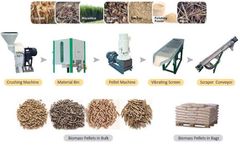
The appearance of the biomass pellet machine makes biomass energy more fully utilized. The common straws, cottonseed hulls, peanut hulls, miscellaneous wood, various wood fragments, corn cobs, larch wood chips, rice husks, etc. in our life are very low-use and easily cause pollution, but they are all very good biomass pellet fuel raw materials. ...
For instance, they could possibly produce charcoal from rice hulls or from peanut shells. Producing charcoal might be a profitable business structure because it is a product which is in high demand. ...

In this study, magnetic biochar derived from corncobs and peanut hulls was synthesized under different pyrolysis temperatures after pretreating the biomass with a low concentration of 0.5 M FeCl3 solution. ...

Adsorption of copper (II) ions to untreated peanut hulls and untreated Pinus brutia sawdust was investigated as a function of the contact time, amount of adsorbents, initial pH, temperature and initial metal ion concentration. ...