
Refine by
Pelletizing Articles & Analysis
916 articles found
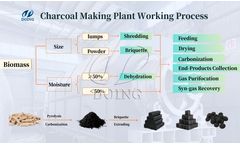
Biocoal (Physical Extrusion Molding) According to conventional industry understanding, what we commonly refer to as biocoal is primarily produced through physical extrusion; it is also known as biomass molded fuel, biomass pellets, or briquettes. Biocoal Manufacturing Process: Biomass raw materials, such as wood chips, crop stalks, and rice husks, are first pulverized and dried. ...

Economic reality: Virgin plastic is often cheaper than recycled pellets. This is where plastic-to-oil plants rewrite the rules. What Is a Plastic to Oil Plant? ...
Sawdust charcoal is produced by compressing and carbonizing sawdust, a byproduct of wood processing, into solid briquettes or pellets. Unlike conventional charcoal, which often relies on cutting down trees, sawdust charcoal recycles industrial wood waste, giving it a second life as fuel. ...

Temperatures Drop. Moisture Rises. Chutes Plug. According to Sukup Manufacturing, a plugged bin or chute costs one facility $50,000 a day in lost production and labor. In mining, blocked chutes are responsible for about 60% of conveyor-related accidents, per the Australian Mine Safety Journal. ...
Many powders and bulk solids are known to sit erratically in storage. Sometimes they flow freely. Sometimes, not. When slide gates are supposed to be closed, but aren't, loose material falls and becomes waste. Feeders and conveyors should deliver bulk materials into a process—but how do you know for sure if it was ...
How often do you replenish bulk powders, pellets, powders, and other solids? If you’re more reactive—ordering when low on material—versus proactive—projecting upcoming needs—you may be losing money. ...

As birds grow, transition to appropriate feed options and consider incorporating Backyard Boost Daily Essentials, a pelleted protein supplement designed for all classes of poultry. Daily Essentials is rich in protein and fortified with prebiotics, vitamins, minerals, and organic trace minerals, and it contains AO-Biotics EQE, a postbiotic proven to support egg quality and ...
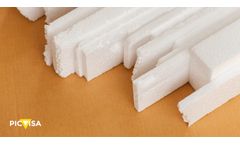
Due to its properties and relatively low cost, it can be found in various forms, mainly as expanded polystyrene (EPS) – lighter, with a pellet texture and open cells, absorbs more moisture and is cheaper, ideal for packaging and general insulation – and extruded polystyrene (XPS), whose closed-cell structure makes it denser, smoother, more moisture-resistant and better insulated, ...

The most significant sources include:Single-use plastics and packaging waste Coastal tourism and recreational activities lead to single-use plastics (such as packaging, straws and cups) being abandoned on beaches or boats, eventually ending up in the sea.Cosmetics and personal care products Exfoliants, toothpaste and gels often contain microplastics or microbeads that are washed into the ...

Horse Hoof Care When conversations turn to horse hoof care, they often center on farriers, trimming schedules, shoeing decisions, and environment. While each of those elements plays an important role, they address only part of the picture. Healthy hooves are not built solely from the ground up; they are grown from the inside out. Nutrition is the quiet workhorse behind strong hoof horn, ...
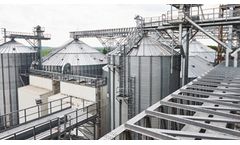
With proven technologies such as rotary paddle and capacitance sensors, SEVEN Sensor ensures accurate level detection and safe, efficient silo operations across industries.Why Are Silo Level Sensors Important? Silos store powders, grains, pellets, and other bulk solids. Without proper monitoring, risks include:Overfilling and spillage leading to safety hazards.Emptying errors ...

Figure 3Typical installations include flour, grain, plastic pellets, cement, lime, fly ash, animal feed, and similar bulk solids. ...

Want to learn more about how radar measurements work? Curious about radar sensors’ strengths and limitations? You’re in the right place! Senix’s compact non-contact radar sensors—or CNCRs—utilize an 80 GHz radar signal to gather level measurements of bulk solids and liquids. This signal is sent through the face of the antenna in the form of a beam. It reaches the ...
Managing inventory and usage of bulk materials—grain, feed, powders, pellets, raw ingredients, additives, and chemicals—presents a set of challenges that differ from those in gaylords or boxes of packaged goods. ...
Ilmenite and Its Significance: Where It’s Used and Why Composition Matters Ilmenite is a mineral—the primary source of titanium—occurring as iron–titanium oxide (FeTiO3). It is a raw material for producing titanium dioxide (TiO2), a widely used white pigment, and for metallic titanium. About 95% of all mined titanium feedstock is processed into TiO2 pigment used in paints ...
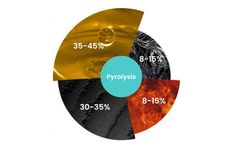
After magnetic separation to remove metallic impurities, it can be upgraded through grinding, pelletizing, and pyrolytic activation. Industrial applications of recovered carbon black include its use as a filler in rubber compounding, pigment in ink and paint manufacturing, and additive in construction materials. ...

Cast aluminum-silicon alloys are widely used in automotive, mechanical, and instrument manufacturing. They allow complex parts to be produced with precise geometry and low weight. But the properties of silumin depend heavily on its chemical composition. Even small deviations from the standard can affect fluidity, strength, crack resistance, and corrosion behavior. That’s why it’s ...
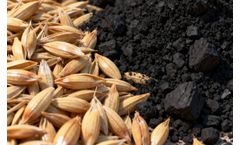
To prevent the husks from flying off during the carbonization process and causing blockage, they should be pressed into pellets of uniform size and shape using a pelletizer before carbonization. Pelletization of rice husks not only ensures more uniform heating during carbonization, but also improves carbonization efficiency and biochar quality. ...
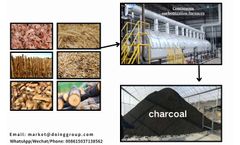
Common charcoal forms include bars, blocks, and pellets. After mixing the prepared charcoal with a binder, a charcoal press briquetting machine uses mechanical pressure to press the charcoal powder into the desired shape, improving its density, hardness, and uniform appearance. ...

Carbon Black (approximately 30%) It can be pressed into pellets for use in industrial heating. Pellets are a good alternative to coal as its calorific value is equivalent to that of coal. ...