
Refine by
Perchlorate Articles & Analysis
61 articles found

Interference from specific components: Sulfides (FeS) react with HNO3 to form sulfur oxides, which precipitate as sulfates at high temperatures and adsorb metal ions; excessive perchloric acid can easily lead to the loss of volatile elements such as As and Se. ...

Early mercury oxide catalysts are replaced by Lewis acid catalysts (SnCl4 or Hg(OAc)2), then replaced by strong acid trimethylsilyl esters, such as trifluoromethanesulfonic acid trimethylsilyl ester and perchloric acid trimethylsilyl ester. This reaction is carried out in a polar solvent such as acetonitrile or 1,2-dichloroethane, depending on the reactivity of the reactants; the ...
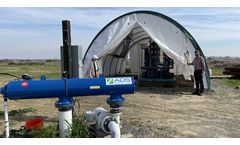
The process can selectively remove contaminants found as trace elements such as arsenic, selenium, perchlorate, boron, or those found in larger quantities such as nitrate, sulphate and TDS. ...
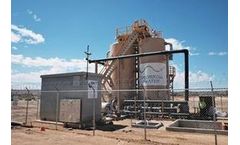
From Contaminated Groundwater to Potable Water Due to the presence of serious contaminants and potentially hazardous material in groundwater, there is an increasing threat to human health. Regions like the West and the Midwest with high concentrations of livestocks has already suffered from groundwater contamination. Facilities that use groundwater as tap water recognized the potential dangers ...
Type of chemicals: Certain chemical residues may be dangerous if left inside. Perchloric acid hoods come with a washdown system to prevent residue from exploding. ...
While perchlorate was considered the primary contaminant, the ion-exchange resin became quickly saturated with nitrate, which was present at much higher concentrations than the perchlorate. ...

The EPA has established a Lifetime Drinking Water Health Advisory of 15 ppb for perchlorate to reduce health risks. More than 10 states in U.S. have established heath advisory levels for perchlorate in drinking water ranging from 1 to 18 ppb; for example, California and Maryland have proposed standards of 6 ppb and 1 ppb, respectively. A few quantitative methods ...

OTL’s as defined by PEP Food Safety & Regulatory Affairs (FS & SRA) Contaminant: OTL Bromate: 5.0 ppb Chlorate: 200 ppb N-Nitrosodimethylamine: 0.01 ppb Perchlorate: 5.0 ppb Perfluorooctanoic Acid: 0.06 ppb Even you will have many benefits like: Flavor segment of Citrus Based CSD drink like 7up, Miranda will more improve like real fruit. ...

Specialized ion exchange resins targeted at specific contaminants like nitrates, perchlorate, and uranium also have become increasingly popular for potable water production. ...
Environmental Protection Agency (EPA) continues to develop and review regulations for contaminants such as lead, copper, perchlorate, and total and hexavalent chromium, and is expected to announce proposed changes to federal regulations on lead and copper by August 2018 after delaying its initial deadline of January 2018. ...

The aim of this study was to evaluate if chlorate, chlorite, perchlorate and bromate ions are found in treated water from 16 Canadian drinking water treatment plants (WTPs) that use hypochlorite as a disinfectant. ...
Water contaminants such as natural organic matter, color, chloroform, perchlorate, nitrate, nitrite, bromate, iron, manganese, selenate, chromate, arsenate, and arsenic are completely removed. ...
It Is Proven to A Superior Treatment for Specific Contaminants Nicholas Dugan of the United States Environmental Protection Agency’s Office of Research and Development conducted research on biological treatment methods and presented in his findings that it can actually be more effective than more popular treatment methods for contaminants, such as ammonia, nitrate, nitrite, and salts ...

EOS is an effective, low-cost substrate for enhancing anaerobic bioremediation of a variety of contaminants, including chlorinated solvents, perchlorate, nitrate, chromate, acid mine drainage, and explosives. EOS consists of food-grade soybean oil, surfactants, macro- and micronutrients, and vitamins blended to form a stable microemulsion with small, uniformly sized oil droplets. ...
Laboratory microcosms showed rapid and complete removal of perchlorate with slower degradation of 1,1,1-TCA to measurable daughter products. ...
For example, while a regular carbon filter will eliminate many potential contaminants, it must be changed regularly and it will not filter out perchlorate, a rocket fuel ingredient sometimes found in water supplies. ...

Can cause shortness of breath, vomiting and the potentially fatal "blue baby" syndrome. PERCHLORATE: Used to make rocket fuel, fireworks and other explosives. Contamination has been caused by improper disposal at rocket testing sites, military bases and chemical plants. ...
The biological reduction of nitrate and perchlorate was comparatively evaluated in autotrophic and mixotrophic bioreactors using elemental sulfur and/or methanol as the energy source. ...
Absolute reduction of perchlorate has proven complex owing to the diverse characteristics of the perchlorate ion. ...
Orange peel was made into a highly efficient bio-sorbent by modification with cross-linking amine groups for perchlorate removal. Bench-scale experiments were performed to explore the factors affecting the perchlorate adsorption onto the modified orange peel (MOP). Perchlorate could be removed effectively at a wide range of pH (from 1.5 to 11). ...