
Refine by
Permeable Reactive Barrier Articles & Analysis
30 articles found
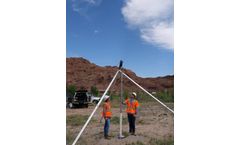
The current remediation approach is based on injection of solutions of calcium-citrate and sodium-phosphate into sediments, which leads to citrate biodegradation and formation of hydroxyapatite, which will serve as a permeable reactive barrier, decreasing uranium mobility. ...

CLIENT: JCB RECLAMATION STRATEGY: Integrated E-Clay Stabilisation, E-Clay Permeable Reactive Barrier, asbestos amanagement and material management. ...

Historical operations in the area had impacted the soil and groundwater creating a large copper plume. Shopping centre infrastructure currently in place limited the remedial strategies available. Soil comprised of sandy gravel and the target treatment zone was fully saturated. Down-gradient of the source plume is a fresh water ...

In this work, a natural zeolite, modified and loaded with iron (NZ-A-Fe) as a heterogeneous catalyst, was characterized for its suitability as a permeable reactive barrier (PRB) material for treatment of aromatic hydrocarbons in groundwater. ...
Groundwater contamination via nitrate leaching has been observed in many countries. The denitrification performance of a poly(3-hydroxybutyrate-co-hydroxyvalerate) (PHBV)–ceramsite-based reactive barrier system was evaluated in continuous upflow bioreactors. Artificial groundwater spiked with nitrate (44.75–57.25 mg NO3−-N/L) was tested under different hydraulic retention times (HRT; 5.2 h ...
The project objective was to determine if a Trap and Treat® BOS 100® permeable reactive barrier (PRB) could be effectively angle drilled in the wooded and sloped area on the upgradient side of the stream to intersect the plume and reduce or eliminate the contaminant mass flux into the stream. ...

Preliminary results from the pilot-scale permeable reactive biological barrier (PRBB) show complete removal of perchlorate in the injection and downgradient monitor wells as quickly as 5 days after injection. Within 68 days of EOS® injection, 1,1,1-TCA concentrations decreased by 95% in monitor wells located up to 20 feet downgradient of the ...
This study offers the opportunity to utilize Undaria pinnatifida and Phragmites australis to remove lead from water in permeable reactive barrier (PRB) technology. Its efficacy was tested using batch experiments and PRB column systems. ...
This study offers the opportunity to utilize Undaria pinnatifida and Phragmites australis to remove lead from water in permeable reactive barrier (PRB) technology. Its efficacy was tested using batch experiments and PRB column systems. ...
This research was conducted to investigate in situ treatment of leachate by pilot-scale permeable reactive barrier (PRB) with vegetation. Two different types of PRB media, with and without the presence of ferric chloride sludge, for the removal of pollutants were examined. ...
Thus, reducing Cr(VI)–Cr(III) simplifies its removal from effluent and also reduces its toxicity and mobility. Permeable reactive barriers (PRBs) with zero-valent iron (ZVI) have been used to remediate contaminated groundwater with metals, but using ZVI in remediation of contaminated groundwater or wastewater is limited due to its lack of ...

Biogeochemical reductive dechlorination (BiRD) uses biotically generated iron sulphide minerals to abiotically reduce chlorinated aliphatic hydrocarbons (CAH). BiRD was applied by permeable reactive barrier (PRB) at Dover Air Force Base, the first time this approach was tested in the field. ...
In situ remediation of ammonium-contaminated groundwater is possible through a zeolite permeable reactive barrier (PRB); however, zeolite's finite sorption capacity limits the long-term field application of PRBs. ...
In this study, we report the performance of a zeolite permeable reactive barrier (PRB) designed to remove ammonium from contaminated river water that infiltrates to a groundwater aquifer that serves as a drinking water supply for the city of Shenyang. ...
As alternative materials for heavy metal removal, this study investigated biosorbents to determine their suitability for permeable reactive barriers. The lead removal efficiencies of brown seaweed (Undaria pinnatifida) and reed (Phragmites australis) were determined under different conditions (batch and column system). ...

There are primarily four main technologies or approaches: Geochemical Fixation Permeable Reactive Barriers (PRBs) Reactive Zones Natural Attenuation In addition to the above mentioned methods, there are several other methods available for in-situ chromium remediation: Soil Flushing and Enhanced Extraction ...

A total of approximately 20,000 cubic yards of diesel impacted soil was removed from the vadose zone to a depth of 5 feet bgs and stockpiled approximately 100 feet north of the source area above a non-permeable and non-reactive Visqueen barrier. The pile footprint measured approximately 124 feet by 38 feet with an average height of 14 feet. ...

Project : Bay Project - Union Pacifi c Railroad Location : Escanaba, MI Products : Bulk Organoclay, Reactive Core Mat Background: The groundwater at a former creosote wood treating site was contaminated by non-aqueous phase liquid (NAPL). ...
ByCETCO
Full-Scale Design Six 1,000-ft long permeable reactive barriers (PRBs) were constructed to intercept contaminant migration at various points along the plume transect (Figure 2). ...
These findings indicate that ammonium-saturated clinoptilolite can be in-situ bioregenerated in a multibarrier, which implicates that periodic (and particularly costly) removal and external regeneration of the ion exchange material can be avoided.Keywords: multibarriers, PRB, permeable reactive barriers, landfill leachate, ammonium removal, ...