
Pet Sorting Articles & Analysis
20 articles found
Why PET Recycling Is Important Now EU regulations require PET bottles to contain at least 25% recycled content from 2025, rising to 30% by 2030. Norway achieves 97% PET bottle recycling rate. The US reached 33% in 2023. Post-consumer PET flakes sold in Europe for up to 1,690 euros per tonne in 2024. These regulatory and market ...
Automated waste sorting systems are revolutionizing recycling facilities worldwide, achieving up to 85% greater accuracy than manual sorting methods. ...
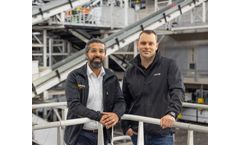
A new chapter in Swiss plastic recycling industry has begun with the launch of a state-of-the-art PET sorting plant in Zurich. The facility, developed by AGIR in collaboration with Bollegraaf Group, focuses on separating PET bottles into food and non-food grade fractions — a critical step toward high-quality bottle-to-bottle recycling. ...
Recently, the Ningbo Haishu Recyclable Sorting Center, which was built by JONO Enviro, was officially put into use. This is a mixed plastic sorting line, which can subdivide plastics of different colors and different materials into 13 kinds, improve the recycling rate of plastics, and further enhance the fine sorting ability of ...
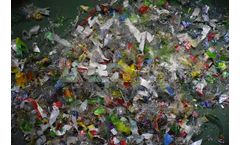
The PET washing line, also known as a PET bottle recycling machine, is a specialized system designed for the cleaning and recycling of PET (polyethylene terephthalate) bottles. It typically consists of several stages: Sorting and Shredding: PET bottles are sorted based on color and type, then ...

The Process of Generating Pyrolysis Oil from Plastic Waste: The production of pyrolysis oil from plastic waste involves several distinct steps, each crucial for the successful conversion of waste plastics into a usable liquid fuel: Feedstock Preparation: Waste plastics, including polyethylene (PE), polypropylene (PP), polystyrene (PS), and polyethylene terephthalate (PET), are ...

The huge benefits in improving safety are one of the most important factors when using these machines and hopefully, also other companies see this automatic dewiring safety improvement as a necessity for the future, says Mr. Fabrice Petit who is the operations director for Wellman Internationals Verdun ...
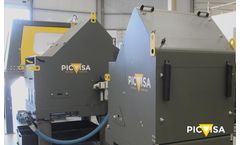
For this reason, at PICVISA we have wanted to review some of the company’s recent success stories, in which we remain determined to develop and produce separation and classification technologies and equipment, under continuous innovation. SEPARATION OF PET AND HDPE CONTAINERS WITH ECOPACK 3000 We started “traveling” to Riba de Ave (Portugal), where PICVISA ...

An innovative approach With a capacity of 100.000 metric tons per year, the SRF facility has not only been producing high-calorific solid recovered fuels since its launch in 2003, but has also recycled around 27.000 tons of scrap metal and 5.000 tons of PET plastic waste using a sorting system positioned after the primary shredders. ...
For the most part, the sorting was done manually. This sorting process was supposed to be optimised. ...
At the heart of the recycling plant are 5 REDWAVE machines (2- and 3-way designs) which separate the input material into six end product fractions. Output: PET clear PET blue PET green PP PE PS Sorting Process The incoming material arrives in yellow plastic bags. ...
The sorted clear PET should be shredded, washed, and sold as PET flakes after sorting. ...
All sorted materials will be further checked and cleaned manually to en-sure quality control. ...
HPR Limited were looking for a solution to sort efficiently natural and colour HDPE along with natural and colour PET before final storage and baling. ...
The company now employs more than 30 employees and owns several recycling centres. Requirements PET and PE are to be recycled from a mixed fraction (60% PE/PET and 40% other materials such as other plastics, wood, paper, etc) with a grain size of > 10mm. Solution A REDWAVE sorting machine with multispectral near-infrared (NIR) sensor ...
The facility has been operating since June 2013 and is processing around 100 tonnes of PET bottles per day, according to Redwave systems, which supplied sensor sorting technology for the facility. For the process, PET bales are opened and separated by a bale opener, then the magnetic parts are separated using an overbelt magnet. ...
Following the sorting process, the PET Clear will be shredded, washed and sold as PET Flakes. ...
A lot of trash is recyclable like pet bottles, cans and should be sorted out separately, rather than dumped in the compactor with other trash. ...
In spite of these challenging conditions, this type of sorting was successfully implemented with the REDWAVE sorting machines. ...

A typical PET processing flow sheet would sort the HDPE and PVC containers from the main flow. Normally, these plastics are processed separately. The PET is color sorted before shredding to about 0.28-inch flake, and then washed to remove glue and labels. ...