
Refine by
Ph Analyzer Articles & Analysis
46 articles found

Purpose: Assess customer satisfaction, product effectiveness and making a comparison between other probiotics in the Egyptian ...
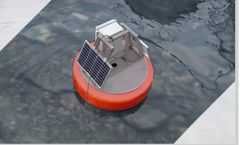
Water quality sensor is the front end of water quality monitoring systemLaboratory water quality analyzer-COD, BOD, PH, turbidity Laboratory water quality analyzer (laboratory water quality testing equipment), adopts sealed catalytic digestion, and then uses colorimetric method to measure, advanced cold light source, narrow band interference ...

In the measurement of water, pH sensor is one of the important tools. However, the wide variety of pH sensors on the market has left many consumers wondering “how do I choose the right pH ...
Analyzing different types of water samples on a regular basis presents several challenges for analysts. Depending on the type of lab (e.g., municipal or water bottling facilities), the number of samples to be analyzed can vary significantly. Every day such laboratories receive hundreds of samples that must go through pH, conductivity, and ...

MANTECH is proud to offer this presentation summarizing our analytical product line followed by a demonstration of our MT-100 Analyzer for pH, Conductivity and Alkalinity. MANTECH’s product home pages are linked below: PeCOD COD/BOD Analyzer PeCOD Optimized TOC Analyzer MT Automated Environmental Titration System BOD ...

Inline Continuous Total Fluoride Measurement System using: AB 6100 Fluoride Ion Selective Sensor for High HF & Low pH Service PNHF 6431 pH Sensor for High HF & Low pH Service Dual Channel 56 Analyzer, Transmitter & Controller that computes the Total Fluoride from Fluoride ISE & pH sensor ...
AB 6100 Fluoride Ion Selective Sensor for High HF & Low pH Service PNHF 6431 pH Sensor for High HF & Low pH Service Dual Channel 56 Analyzer, Transmitter & Controller that computes the Total Fluoride from Fluoride ISE & pH sensor inputs Real-Time Measurement & Control of Wastewater ...

A sparge nozzle was installed at the bottom of each of the basins to receive the waste gas stream, which is piped directly from the hydrogen plant. The system uses a flow-through pH sensor and pH transmitter/analyzer to control the amount of CO2 sparged. The pH sensor measures the pH of the flowing aqueous ...

EGC unit complete with 2 fans and 5 exhaust gas connec-tions, pumps with variable frequency drive, filters, cooler, NaOH dosage system, gas (SO2/CO2) and water (PAH , turbidity, pH, flow) analyzers, temperature and pressure monitoring, valves, flow meters, exhaust dampers (bypass), switchboard, PLC, Documentation and Certification, Services during planning, ...

In a batch chemical process in parallel with PHREEQC software, two temperatures (22 and 55°C), four pHs (8, 8.5, 9 and 9.5) and CO2 partial pressure were tested. The aim was to analyze the quantity of precipitates and their crystalline nature and calculate the effects of these factors on the behavior of dissolved chemical elements in treated wastewater to be able ...
Water samples were collected and analyzed for temperature, pH, total organic carbon, turbidity, free chlorine and THM. ...
In the current work, the diagnosis of a reverse osmosis desalination unit is reported. Over the two last decades, the studied desalination unit was supplying a 1,200 bed hotel. The feed water was driven from a well near the sea. The desalination unit has two stages giving an average recovery equal to 81%. The behaviour of all water streams with respect to aggressiveness and scaling tendency ...
The reuse of greywater is steadily gaining importance in South Africa. Greywater contains pollutants that could have adverse effects on the environment and public health if the water is not treated before reuse. Successful implementation of any greywater treatment process depends largely on its characteristics in terms of the pollutant strength. This study investigated the physico-chemical ...
Water is fundamental to the survival of living beings. It registers every impact and can function as an indicator of environmental stressors. Our objective in the current study was to assess the sanitary conditions of the waters in the Açude, Maria Lucinda and Santa Rosa streams. This was done by checking pH, running quantitative analyses of heavy metals and testing for total coliforms. The ...
Twenty-three water quality parameters were analyzed, including pH, total dissolved solids, turbidity, nitrate, nitrite, ammonia, hardness, arsenic, iron, cadmium, nickel, chromium, manganese, mercury, selenium, lead, zinc, Escherichia coli, and total coliform. ...
The samples were allowed to settle for 1 h, after which the supernatant was analyzed for pH, total suspended solids (TSS), dissolved oxygen (DO) and oxidation-reduction potential (ORP) (exp A). ...
Then the hexavalent chromium Cr(VI) adsorption experiments on calcined Zn/Al-LDHs were carried out to analyze the effects of pH, temperature, adsorption time, initial Cr(VI) concentration and adsorbent dosage on the removal of Cr(VI) from aqueous solutions. ...
Adsorption equilibrium and kinetics of MB removal from aqueous solutions at different parametric conditions such as different initial concentrations (2–10 mg/L), biosorbent dosages (0.3–0.7 g) and pH solution (4–9) onto durian skin were studied using batch adsorption. ...
Data were collected in two rounds to examine fecal coliform (FC) and Escherichia coli (E. coli) contamination of drinking water at the household water storage containers and SODIS bottles, and thereby determined the effectiveness of SODIS in reducing fecal contamination. All water samples were analyzed for pH, electrical conductivity, turbidity and salinity. ...

Small physical changes to the glass surface on a pH sensor, for example, will change the response and result in an inaccurate pH reading. ...