
Refine by
Pharmaceutical Raw Material Articles & Analysis
18 articles found

These versatile machines combine loading, mixing, and transportation into a single intelligent system, dramatically reducing material waste while maintaining exceptional operational efficiency. Their unique design philosophy addresses one of construction's most persistent challenges: the staggering amount of concrete wasted on traditional job sites.Precision Batching Eliminates ...

The pharmaceutical industry is under constant pressure to ensure product integrity, regulatory compliance, and efficiency in manufacturing. As production processes become more complex, the need for real-time, data-driven quality control has never been greater. Near-infrared (NIR) spectroscopy is essential for advanced monitoring of drug manufacturing, enabling rapid, non-destructive analysis ...

Chemical industry In chemical production, Magnetic Inductive Flow Meter is used to measure the flow of various acid and alkali solutions, solvents, chemical raw materials, reaction liquids, etc. Intelligent electromagnetic flow meters measure these conductive liquids very accurately and can work stably for a long time in harsh chemical environments. ...

Biopharma PEG innovatively uses plant sterols as starting materials to prepare plant-derived cholesterol (CAS NO.: 57-88-5) through biological fermentation and green synthesis, eliminating the generation and carrying of viruses from the source. Cholesterol has a wide range of uses, and can be used as cosmetic raw materials, high-end ...
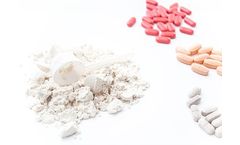
Customer: Pharmaceuticals manufacturer Material: Pharmaceutical raw materials Installation point: At the bottom of the fluidized bed Function: Moisture online control ...
ByENVEA
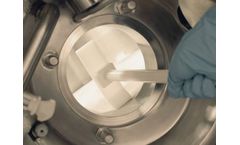
Solid-liquid separation is necessary in many industries for compliance, quality control, and efficient production processes. In the pharmaceutical industry, solid-liquid separation is conducted in applications such as biocatalysis, active pharmaceutical ingredient (API) purification, and chromatography, to name a few. ...

Raman spectroscopy is a non-destructive analytical technique based on the inelastic scattering of photons related to the different vibrational modes of molecules. This discovery by C. V. Raman in 1928 resulted in a simple yet effective method to determine the structure of simple molecules that continues to grow in popularity among the scientific community. As the spectrometer’s laser ...

However, in principle, the newly added medicinal excipients must first apply for NDA (New Drug Approval) test and establish relevant quality standards, and secondly, they must be generally recognized as safe substances, namely GRAS-grade raw materials; otherwise, they cannot be approved for use as a pharmaceutical excipient. ...
The purpose of the stability testing is to investigate how the raw materials or pharmaceutical preparations will change over time under the influence of temperature, humidity, and light, so as to provide a scientific basis for the production, packaging, storage, and transportation conditions of the drug, and to establish the validity period of ...
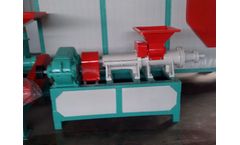
The environmentally-friendly continuous peanut shell charcoal making machine is mainly used for carbonization of biomass materials such as sawdust, rice husk, hemp straw, straw, nutshell, and coconut shell. ...
It is a new material with broad development prospects. Typical uses include: - In the infusion of the pharmaceutical industry, small injections, eye drops, decarbonization filtration in the concentration of oral liquids, and security filtration before terminal filtration in the lean ...

Desirable textural characteristics. A relatively cheap source of raw material containing a high concentration of starch (dry-matter basis) that can equal or surpass the properties offered by other starches (maize,wheat, sweetpotato, and rice). ...

Raman spectroscopy has seen increased adoption as the technique of choice for the rapid identification of materials; especially for raw material identification in the pharmaceutical industry, identification of controlled substances and explosives for security applications, polymer material identification for ...
ByB&W Tek
Ever since the European Medicines Agency (EMA) recommended that all pharmaceutical companies test every raw material that passes through their manufacturing facilities, this practice has attracted great interest in the nutraceuticals, food manufacturing, cosmetics, and agricultural industries, pushing them to strive for more rigorous and ...
ByB&W Tek
The benefits of Raman spectroscopy are well recognized for the molecular identification of unknown molecular compounds and as a result the technique is being used routinely in applications areas such as pharmaceutical manufacturing (1), raw material verification (2), detection of counterfeit drugs (3), medical diagnostics (4), characterization of ...
ByB&W Tek

How pharmaceutical companies can keep up with the shifting trend towards reducing carbon emission beyond their direct organisational control. ...

There are STANDARD Guidelines used to define the Identification and Purity of compounds used in Pharmaceutical and Cosmetic formulations, as well as the final Products. These protocols are described in great detail in the various Monographs of the United States and British Pharmacopoeias, the National Formulary (USP/NF and BP), the International FAO/WHO Codex (CODEX) and other Regulatory ...
Normal quality control procedures involve accepting a “lot” of a raw material from a supplier and then performing a series of tests to determine if the material is suitable for use in a manufacturing process. For the drug manufacturing industry, as well as many others, this is both a critical and time-consuming (and occasionally costly) step in the process. If the sample is not ...