
Refine by
Phosphate Concentration Articles & Analysis
63 articles found
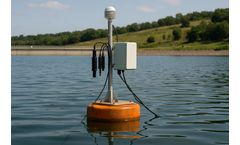
Some platforms also measure nutrients directly; for example phosphate concentration can predict bloom risk weeks before visible algae. Phosphate monitoring solutions offer early warning of nutrient loading that grab sampling would miss until densities spike. ...

Precise Control of Total Phosphate in Boiler/Cooling Water with Double Beam UV-Visible Spectrophotometry The Critical Need for Phosphate Control In boiler and cooling water systems, the concentration of total phosphate plays a pivotal role in maintaining system integrity and operational efficiency. Phosphate is ...

Integrating real-time water monitoring and phosphate monitoring can greatly enhance management effectiveness by providing immediate data on conditions that promote blooms. ...

The process by which water bodies, enriched by excessive nutrients, experience algal blooms is known as eutrophication. While some algal blooms are harmless, others harm both aquatic life and humans, due to the toxins they produce. Furthermore, after the algae die, they sink to the bottom of the water body, where bacteria and other microorganisms begin decomposing them, consuming oxygen in the ...

In the 1970’s this unique natural resource was threatened by eutrophication due to acute phosphate contamination. The problem was immediately addressed by a number of remedial measures, the key one of which was the Eriskirch clarification plant. ...

It also has a high turnover rate and can generate strong signals in a short period of time. High concentrations of phosphate can severely reduce the stability of horseradish peroxidase. ...

The Environment Agency is making strategic use of citizen science data to give its water quality monitoring activity a boost and help it decide where and how to tackle pollution on the River Wye, which stretches some 155 miles from its source in mid-Wales to the Severn estuary in Bristol. Natural England and Natural Resources Wales are working alongside the agency to address concerns about ...

Typically, the pollutants found in textile wastewater include: Concentrations of nonbiodegradable organics or inorganics like metals, dyes, phenols, pesticides, phosphates, and surfactants Elevated concentrations of total suspended solids (TSS) High biological oxygen demand (BOD) High chemical oxygen demand (COD) High levels of total ...

Typical Textile waste water Composition Typically, waste water effluent from textile processing operations has the following characteristics: Non biodegradable organics/inorganics such as metals, phenols, color, pesticides and phosphates and certain surfactants. High concentration of total suspended solids (TSS) Biological oxygen demand (BOD) and chemical ...

” While the phosphate content of the water inflow is usually around 5-6 mg/l, the concentration after purification must not exceed 1.6 mg/l. To avoid this, a measured amount of precipitant is added (before the water enters the aeration tank) as soon as the concentration of phosphates in the wastewater reaches a ...

The science behind nutrient pollution in rivers is still poorly understood despite the fact that nitrate and phosphate concentrations in the UK’s rivers are mostly unacceptable, although an element of uncertainty exists about what an acceptable level actually is. ...
The trophic state of a lake is determined by the concentration of nutrients, mainly phosphate and total phosphorus, in the water and is assessed by the concentration of algae (chlorophyll-a) and water transparency. A hyper-eutrophic or eutrophic lake has an increased concentration of nutrients in the water, leading to persistent ...

originally published in Supelco®'s Analytix Reporter Journal Issue 2 2018 by Merck KGaA, Darmstadt, Germany Visit SigmaAldrich.com/ar-reg Phosphorus is an essential element for organisms and plants.1 In natural, uncontaminated waters, it occurs as organically bound phosphate, condensed phosphates or as orthophosphate - often referred to by its chemical ...

According to the values of correlation coefficients, a significant positive correlation existed among PAI and total microbial count, organic loading and phosphate concentrations. The enzyme activity is useful tool for early identification of risks from point discharge of different wastewaters (treated or non-treated). ...
The struvite crystallization plant was operated for two different periods: period I, in which an influent with low phosphate concentration (34.0 mg P·L−1) was fed to the crystallization plant; and period II, in which an influent with higher phosphate concentration (68.0 mg P·L−1) was used. ...
Typical Textile wastewater Composition Typically, wastewater effluent from textile processing operations has the following characteristics: Non biodegradable organics/inorganics such as metals, phenols, color, pesticides and phosphates and certain surfactants. High concentration of total suspended solids (TSS) Biological oxygen demand (BOD) and ...

What is Water RunOff? Runoff is precipitation that did not get (infiltrated) absorbed into the soil, or did not evaporate, and therefore made its way from the ground surface into places that water collect. Runoff causes erosion, and also carry chemicals and substances on the ground surface along to the ponds, lakes and rivers where the water ends up. (eschooltoday.com) Phosphorus and Nitrogen ...
When water is stagnant, has a high temperature or a high concentration of Nitrates and Phosphates, an algae bloom might occur, which can cause several problems. ...
Acetylene purification wastewater (APW) usually contains high concentrations of ammonia nitrogen (NH4-N), which is generated during the production of acetylene in a polyvinylchloride manufacturing plant. ...
Pectin-nanoscale zerovalent iron (PNZVI) has been studied as an effective phosphate adsorption material to remove highly concentrated phosphate from aqueous solution. Batch phosphate removal and equilibrium experiments were conducted in order to evaluate the effects of environmental factors such as pH, coexisting anions and ...