
Refine by
Phytoremediation Articles & Analysis
69 articles found

Chemical Transformation and Phytoremediation Some pollutants are transformed into less harmful forms either on leaf surfaces or inside plant tissues. ...
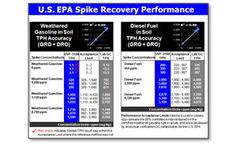
"The UVF-3100A exhibited the following desirable characteristics of a field TPH measurement device; (1) good accuracy, (2) good precision, (3) high sample throughput, (4) low measurement costs and (5) ease of ...

Intrinsyx Environmental was contracted to implement its phytoremediation solutions at a former manufacturing facility with very high concentrations of TCE, DCE, and vinyl chloride. ...
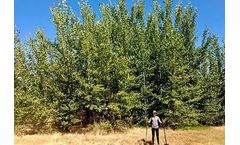
Working with NASA-Ames Environmental Remediation Group and the EPA, this site was our first field deployment of Endophyte Assisted Phytoremediation, at one of the region’s largest Superfund sites with TCE groundwater contamination. ...
ABSTRACT:Endophytes have been isolated from a large diversity of plants and have beenshown to enhance the remediation efficiency of plants, but little information is available on theinfluence of endophytic bacteria on phytoremediation of widespread environmentalcontaminants such as polycyclic aromatic hydrocarbons (PAHs). ...
The site was a petroleum tank farm from the early half of the 20th century. Contaminants on-site include petroleum hydrocarbons, benzene and ethylbenzene, and PAHs naphthalene and 2-methylnapthalene. Most contaminants are in subsurface and groundwater, with the exception of PAHs that extend from the surface to ...
Phase A: Engineering firm attempted phytoremediation using un-inoculated poplar trees. Tree survival rate ~30%. ...

“Endophyte-assisted phytoremediation offers an inexpensive, natural, on-site technology for removing harmful ...
advertisement That’s where trees could help, via phytoremediation, which lets “nature do the dirty work,” he says. ...
The Arbor Day Foundation and Intrinsyx Environmental have announced a partnership to launch a phytoremediation program to use trees and plants to clean up contaminated land in cities and towns. ...

Based on bioaccumulation factor, aspen could be considered as a Cd-accumulator and used for phytoremediation ...
ByBiovala

Phytoremediation has many proponents to treat widespread chemical contaminants in soil, water, and air. ...

From all the crops identified as suitable for combining high biomass production with wastewater Arundo donax is highlighted because this perennial crop is well adapted to water-scarce regions and marginal lands, with an ability for wastewater phytoremediation and nutrients ...
Heavy metal accumulation potential in the biomass and different plant parts of the selected species of energy crops cultivated on contaminated soil was evaluated. Phytoextraction potential, biomass yield and qualitative parameters of bioenergy plants grown on heavy metal contaminated soil has been measured. Finally heavy metal influence on biomass utilization possibilities, energy recovery and ...
ByBiovala

The Stevens HydraProbe is now being used to monitor the progress of a new groundwater pollution clean up method called phytoremediation. Phytoremediation is the method by which trees are used to pull contamination out of groundwater. ...

At this point, four alternative remedial actions were considered: monitored natural attenuation, phytoremediation, bioremediation by anaerobic supplements and in-situ oxidation using ozone sparging with groundwater recirculation. ...
In the North America, the Stevens HydraProbe is used in the following Mesonets: US Department of Agriculture’s Soil Climate Analyses Network (SCAN) NOAA’s Climate Reference Network (CRN) US Department of Agriculture’s SNOTEL Network US Bureau of Reclamation’s Agrimet Network Kansas State Mesonet Oklahoma Mesonet Kentucky Mesonet Provence of Alberta Mesonet ...

Phytoremediation is an environmentally friendly and sustainable alternative for treatment of nitrogen-enriched wastewaters. ...
Phytoremediation, which is an emerging technology for cleaning up contaminated sites, is cost effective and has aesthetic advantages and long term applicability. ...

Rhizofiltration: A form of phytoremediation. Water is filtered through a group of roots to remove toxic substances. Phytoremediation: Using live plants to remove contaminants from soil, sludge, surface and groundwater. ...