
Refine by
Plant Substrate Articles & Analysis
28 articles found
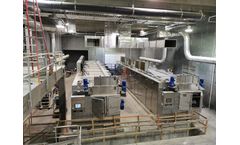
Therefore, each key city has carried out a special study on the follow-up disposal of municipal sludge, pointing out that sludge with a moisture content of 30%~40% can be used as cement production, backfill, unburned bricks and other materials; Sludge containing certain organic matter can be used for incineration and other heat treatment to generate heat energy; The sludge meeting the standard of ...
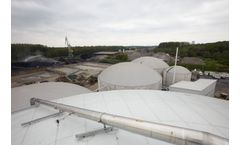
Location: Lünen Germany Plant Capacity: 70,000 t/a Fresh Substrate Realization: 2010 (Realized in 9 Month incl. Permit) Substrate: Energy Crops and plants Cow and Pig Slurry Different Manure Process: Single steps mesophilic process. Reception Silo and Tanks Full automatic Feeding System 2 Digesters ...

Location: Bardowick Lower Sacsonie Germany Plant Capacity: 36,500 t/a Fresh Substrate Realization: 2012-2013 Substrate: Food Waste from Super Market, Restaurants and Canteen, Food Industry Waste, Market Waste, Slaughter House Waste, ETP Sludge, Used Oil, Expired Food and brewery Process: 2 steps mesophilic process. Entire Capsuled ...

Lipase exists in fat-containing animal, plant and microbial (such as mold, bacteria, etc.) tissues. Including phosphatase, sterolase and carboxylesterase. ...
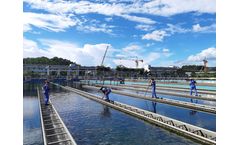
Therefore, each key city has carried out a special study on the follow-up disposal of municipal sludge, pointing out that sludge with a moisture content of 30%~40% can be used as cement production, backfill, unburned bricks and other materials; Sludge containing certain organic matter can be used for incineration and other heat treatment to generate heat energy; The sludge meeting the standard of ...

Read on more to find out. The link between plants and indoor air quality Why are we interested in the potential of plants to improve indoor air quality? ...
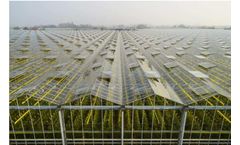
The study estimates that greenhouse horticulture establishments will provide 56.5-58.5 million hours of employment, of which more than 90% is for cultivation labor. "In most cases, plants are grown not in soil, but in a substrate (e.g. rockwool) in which with the water of the nutrients is supplied," said Dr. ...
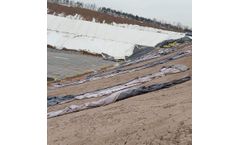
In areas with enough soil, the method of compressing 10-20 cm of soil can be used for planting, covering soil to create fields, and expanding the area of arable soil and land. ...

Scandinavian Biogas plans to increase production capacity at Scandinavian Biogas Södertörn from the current 80 to 120 GWh. The expansion will be completed by the end of 2021 and will include both an increased gas production capacity and a liquefaction plant where the produced gas is converted into liquid biogas (LBG). In connection with the development, a number of new process ...
ByBiokraft

ExpertsClub bundles the competences of various cluster members, thus being able to offer turn-key solutions as well as specific custom-made solutions in the fields of: planning & consultation analyses evaluation controlling & project financing sorting & substrate treatment plant construction CHP plants process engineering ...

The Ronald McDonald House Charities is an international, non-for-profit organization that creates a “homeaway-from-home” for families with seriously ill or injured children. In July 2012, the newest Ronald McDonald House was completed. Located in the heart of Chicago at 211 E. Grand Avenue, this location is the largest Ronald McDonald House Charities building. Challenge: The Ronald ...
ByCETCO

The present research study assesses the use of substrates with different compositions for the growth of six aromatic plant species – Lavandula dentata, Pelargonium odoratissimum, Helichrysum italicum, Satureja montana, Thymus caespititius and T. pseudolanuginosus, during a 2-year period, and the monitoring of water runoff quality. Growing ...
Evaluating the performance of a wastewater treatment plant (WWTP) requires a good characterization of the biodegradable substrate entering the plant. ...
All VFCWs receive the same water, have the same substrate (gravel and sand) and the same hydraulic retention time, but they differ in their additional characteristics: presence of plants (Phragmites australis) and earthworms (Eisenia fetida): 1st VFCW: substrate only 2nd VFCW: substrate and plants 3rd VFCW: ...
The aim of this study was to assess the microbial biomass carbon (MBC) and Shannon's diversity index (SDI) in the substrate of CWs planted with Phragmites australis, Hymenocallis littoralis, Canna indica and Cyperus flabelliformis, and to relate MBC and SDI to the pollutant removal in the systems. ...
Wernsing biogas plant Addrup The Wernsing biogas plant was one of the first biogas weser-ems plants to treat waste from food industry since its commission in 2001. ...

Treatment of fermentation residue substrates from biogas plants by means of ceramic membranes The growing number of biogas plants makes it increasingly difficult to return the fermentation residue substrates to green spaces or arable land. ...
The results showed that except for total phosphorus, dual substrate layer green roofs behaved as a sink for most of the nutrient pollutants (significant at p < 0.05), and the first-flush effect did not occur during the 27 simulated rain events. The results also revealed that the concentration of these nutrient pollutants in the runoff strongly depended on the features of ...
Addition of E. fetida increased the photosynthetic rate (Pn), transpiration rate (Tr) and chlorophyll meter value of leaves of Iris pseudacorus L. in the constructed wetlands by 16, 35 and 7%, respectively. Compared with the substrate only system, evapotranspiration losses were increased by 8, 48 and 56% for the wetland systems with substrate and E. ...

The authors quantified the ability of several macrophyte species to mitigate insecticide toxicity by comparing the survival of the aquatic herbivore, Daphnia magna, following exposure to a factorial combination of 3 malathion concentrations (0 µg/L, 3 µg/L, and 24 µg/L) and 7 macrophyte treatments (no macrophytes, 4 different macrophyte monocultures, and 2 inert substrates: ...