
Refine by
Pm10 Articles & Analysis
374 articles found

Typical fence-line pollutants include VOCs (benzene, toluene, xylene), PM2.5/PM10, sulfur dioxide, nitrogen oxides, and site-specific hazardous air pollutants. ...

Stage 1: Wet FGD + Wet ESP Pretreatment The pretreatment section serves as the first line of defense for the entire system.Its primary functions include removing:Sulfur dioxide (SO₂) Acid gases (HCl, HF) Fly ash and particulate matter Fine dust (PM10 and PM2.5) Particle-bound heavy metalsBy eliminating corrosive and particulate contaminants before the thermal oxidation ...
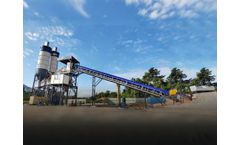
The Malaysian construction sector is undergoing a quiet but profound metamorphosis. For years, the industry standard was defined by raw throughput—cubic meters per hour, silo capacity, and mixer size. But a new variable has entered the equation: intelligence. Smart concrete batching plants for sale, equipped with industrial IoT sensors, real-time telemetry, and predictive analytics, are rapidly ...

Typical fence-line pollutants include VOCs (benzene, toluene, xylene), PM2.5/PM10, sulfur dioxide, nitrogen oxides, and site-specific hazardous air pollutants. ...
Typical fence-line pollutants include VOCs (benzene, toluene, xylene), PM2.5/PM10, sulfur dioxide, nitrogen oxides, and site-specific hazardous air pollutants. ...
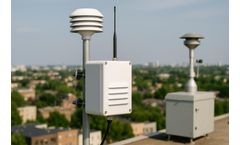
Yes, they are the primary tools for indicative monitoring.What pollutants can be measured through indicative monitoring? PM1, PM2.5, PM10, CO, NO2, SO2, O3, and CO2.Original: ...
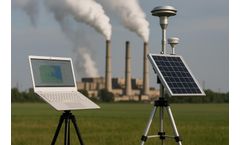
AERMOD is widely used for analyzing ambient air pollutant concentrations and is applied to buoyant and neutrally-buoyant releases. In AERMOD View, the Pollutant Type list is accessible through the Control Pathway's Pollutant / Averaging options. Many pollutant types serve as labels with no chemical transformations; however, certain pollutant names or combinations influence how AERMOD computes ...
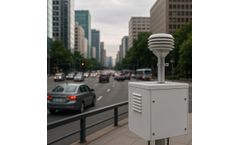
Urban planning increasingly treats air quality as an infrastructure input, leveraging multi-source data to reduce exposure, bolster resilience, and guide investment in healthier, more equitable cities.Key data types and their valuePollutant concentration data: monitoring commonly tracked pollutants include PM2.5, PM10, NO2, O3, SO2, and CO. PM2.5 is particularly problematic due ...

This shift from hardware-centric to software-centric approaches is redefining environmental intelligence for air-quality management.Why Adoption Accelerates in 2026Regulatory tightening and expanding reporting requirements across manufacturing, construction, energy, and urban sectorsGrowing public and stakeholder awareness of air pollution risksDemand for data-driven decision making and ...
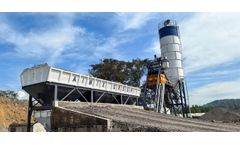
Modern plants utilize pulse-jet cleaned filters with advanced membrane filter media capable of capturing particulate matter down to PM2.5 and PM10 sizes with efficiencies exceeding 99.9%. These are not passive systems; they are controlled by automated pressure differential sensors that optimize cleaning cycles for maximum efficiency and minimal compressed air use. ...

Practical Scenarios Where Plants Meaningfully Reduce Outdoor Pollution Roadside Green Barriers (Traffic Emissions) Shrubs placed at exhaust height can block PM2.5/ PM10 and brake dust near sidewalks, acting as physical filters. Green Belts Near Industries & Mines Plantation buffers reduce dust dispersion around quarries and industrial zones. ...
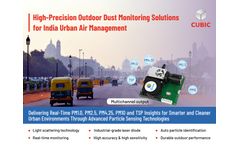
The scope of required pollutants and compliance benchmarks under NCAP is specified by the National Ambient Air Quality Standards (NAAQS), which establish standardized monitoring requirements including PM2.5, PM10, NO2, SO2, CO, NH3, ozone and Pb. In practical deployments, air-quality monitoring projects typically involve solution providers and system integrators tasked with ...

The PM sensor adopts a constant-speed airflow design and optical optimization to ensure consistent particle detection, while Cubic’s proprietary particle recognition algorithms support accurate classification of PM1.0, PM2.5, and PM10. The AQS sensor, built on Cubic’s self-developed micro hot plate and gas-sensitive materials, enables multi-gas detection including CO ...

The modules provide a comprehensive solution for real-time monitoring, supporting tailored combinations of PM1.0, PM2.5, PM10, VOCs, NO2, HCHO, temperature, and humidity measurement to meet diverse application needs and seamlessly integrate into air purifiers. ...

Dust is one of the most persistent threats to solar energy output, especially at utility-scale installations. It’s not just a cleaning nuisance; it cuts directly into your revenue. Effective solar farm dust control helps prevent panel soiling, protects equipment, and reduces maintenance costs. If you care about getting the most out of your annual power yield, you have to control dust at the ...
This approach protects worker health, ensures the site meets strict PM10 and PM2.5 air quality regulations, and reduces overall site ...
For venue managers and sports complex operators, maintaining a dust-free environment is a paramount requirement for competitive integrity, athlete safety, and public health. Airborne dust particles erode playing surfaces and pose significant health risks to participants and spectators. Effective, long-term arena dust control requires advanced soil stabilization that addresses the root cause of ...

CAC2003 offers complete multi-lingual support for the SPECIATE and FIRE profiles for criteria and hazardous air ...

Cubic has developed a comprehensive portfolio of gas sensors based on core technologies including NDIR, light scattering, MEMS MOX, and electrochemical principles, enabling accurate detection of key indoor air quality parameters such as carbon dioxide (CO2), particulate matter (PM1.0, PM2.5, PM10), total volatile organic compounds (TVOCs), temperature, humidity, and formaldehyde ...
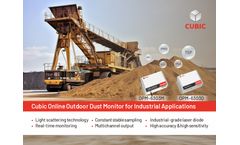
Both OPM-6303M and OPM-6303Q adopt high-power industrial-grade laser to ensure accurate measurement of airborne particulate matter, with particularly strong recognition of larger particles including PM10 and TSP. Unlike traditional sensors that often struggle with unstable readings in humid and variable outdoor conditions, the built-in heater and flow sensor provide constant ...