
Refine by
Pollination Control Articles & Analysis
14 articles found

As industries across agriculture, food processing, wastewater treatment, and environmental operations face increasing pressure to reduce nuisance-insect activity, a new challenge has emerged: How do we manage harmful fly presence without compromising pollinators, ecological balance, or community health? Traditional neurotoxic pesticides—such as pyrethroids and ...
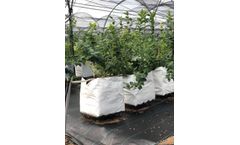
A good selection of variety (Bluetta, Duke, Earliblue, Puru, Nui, PBBB and Sunrise), spacing, control of temperature and pollination, roots and water are must ...

Bats also prey on insects that feed on crops, saving the U.S. agriculture industry more than $3 billion a year in pesticide costs, according to a Boston University study.v Not only do bats control flying insects, they also pollinate commercial crops, flowers, and various cacti. “I cannot think of another mammal that does more for people in terms of pest ...

The result has been tremendous loss of ecosystem services such as water filtration, pollination of crops, control of pests and emotional fulfillment. Should present rates of extinction continue, in as little as three human lifetimes Earth would lose three out of every four familiar species (for example, vertebrates) forever. ...
ByEnsia
Zero deforestation is vital to maintain the environmental services the Amazon provides: water provision, climate regulation, carbon storage, pollination, biodiversity, natural pest control, scenic beauty, tourism and more. ...
ByEnsia
To find an answer, researchers from the United Kingdom and Japan looked at how well cities with a range of development strategies were able to provide each of nine urban ecosystem services — carbon storage, water infiltration, human well-being, agricultural production, pollination, pest control, noise reduction, air purification and temperature regulation. ...
ByEnsia
How can we achieve sustainable agriculture if we don’t understand the ecological nuances of the pest, pollinator and predator communities that use the agricultural landscape? ...
ByEnsia
What’s important, he says, is identifying the type of biodiversity interactions that will carry out ecosystem services (pollination and pest control, for example, or climate regulation) and then determining which farming practices will encourage such interactions — in other words, working with biodiversity to provide the farming system with ecological ...
ByEnsia
Rather, in their view, restoration ecologists should strive to manage the resulting “novel ecosystems” to maximize services they provide to human populations, such as flood control, carbon sequestration and pollination. This message was taken further in 2010, when journalist Emma Marris proclaimed novel ecosystems the “new normal” and ...
ByEnsia

These include improved water quality, soil erosion control, crop pollination services and the provision of timber and non-timber products. ...
Examples of ecosystem services are the provision of food, energy, fibres and medicines, and regulatory mechanisms such as nutrient and water cycling, climate regulation, soil formation and retention, pollination, and control of agricultural pests and diseases. The global target of reducing biodiversity loss by 2010 was endorsed in 2002 (see Section 1.2). ...

Among the services these ecosystems provide are water purification, pollination, carbon sequestration, flood control, and soil conservation. ...

Controlling pollination of the female inbred is critical to achieve maximum kernel set and high levels of genetic purity in maize (Zea mays L.) hybrid seed production. ...

Outcrossed, non-hybrid seed could be produced by controlled pollination in ex-situ conservation stands or by using seedling morphology and microsatellites to screen seedlings from the remnant ...