
Refine by
Pressure Pipe Articles & Analysis
268 articles found
Here are the most common types: Weld Neck Flanges: These flanges are designed for high-pressure applications and are attached to the pipe by welding. Their tapered hub provides reinforcement and prevents distortion under heavy loads. Slip-On Flanges: Slip-On Flanges are easy to install and work well for low-pressure applications. They slide over ...
When it comes to high-pressure and high-temperature piping systems, the reliability of your fittings is non-negotiable. ...
The Core of Industrial Systems: For large-diameter piping and high-pressure applications, carbon steel buttweld pipe fittings are the industry standard. ...
In any high-pressure industrial piping system, fluid dynamics are rarely linear. Pipes of different diameters must be connected safely to manage flow velocity, pressure drops, and spatial constraints. ...
The standard includes pressure classes 75, 150, 300, 400, 600, and 900. Because it uses the same materials as B16.5 (except for nickel alloys), the pressure-temperature ratings are generally identical. ...
Pipe bends and returns are essential components in piping systems, designed to change the direction of flow while maintaining smooth transitions to minimize pressure loss. ...
From refineries and chemical processing plants to offshore platforms, industrial steel pipes must withstand extreme temperatures, high pressures, and highly corrosive fluids. ...
Pressure Capacity Because the walls are thicker, SCH 80 pipes can handle significantly higher internal pressures. For example, in deep-sea drilling or high-pressure steam systems, SCH 80 seamless pipes are often the minimum requirement for safety and durability. ...
In the world of industrial piping, reliability is everything. Whether you are working in oil and gas, chemical processing, or high-pressure construction, the choice of pipe can make or break your project. ...
While welded pipes have made technological leaps, the absence of seamless steel pipe remains the critical requirement for high-pressure, high-temperature, and corrosive environments found in offshore drilling and petrochemical refineries. ...
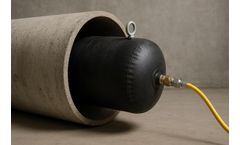
Correct plug selection in testing and temporary blocking operations is essential for test integrity and safety.1. Pipe Diameter and Plug SizingIf the plug will be used in multiple pipe diameters, a multi-size plug should be preferred.If the plug will be used in a single pipe diameter, a single-size plug should be selected.Care should be taken to ...

As winter approaches, underground infrastructure is exposed to significant stress. Freezing and thawing cycles place constant pressure on pipelines, causing damage that often remains invisible until a break or a backup occurs. Every year, these conditions lead to costly repairs, service disruptions, and emergency interventions—many of which could be avoided with preventive inspection. ...

These defects posed a critical barrier to the decommissioning sequences, specifically, the pipes could not be pressure-tested, pigged, flushed, or plugged until the leaks were resolved. ...
A production facility in West Texas identified internal corrosion during ultrasonic inspection of several 4-inch, 45° elbows on an inlet header. Wall loss exceeded 20% in critical areas, with minimum thickness readings as low as 0.145". Due to widespread degradation and the lead time required for spool fabrication, XCorr 100 was applied to reinforce the degraded elbows and maintain ...

Consider factors such as the type of fluid you will be measuring (liquid or gas), the flow rate range, temperature and pressure conditions, pipe size, and any specific industry standards or regulations that need to be met. ...
Only by clarifying the characteristics of the measuring medium, pipe diameter, working pressure and other parameters, comparing the technical indicators and prices of different products, and choosing a manufacturer with a complete after-sales guarantee system can you purchase an electromagnetic flowmeter that is truly suitable for your enterprise and ensure ...
However, the sharp turn creates high turbulence and pressure loss. They are often used in facility piping where space is limited. ...
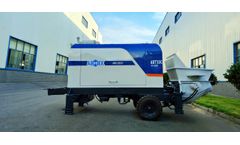
The pump should face the direction of the pipeline route to minimize the number of bends and reduce pumping pressure. When working with a stationary concrete pump, the placement of the pipeline is just as important as the pump itself. ...
The measurement accuracy of electromagnetic flowmeters decreases when the pipe size is too large or too small. In this case, consider using other flowmeters suitable for large or small pipes, such as differential pressure flowmeters or thermal flowmeters. ...
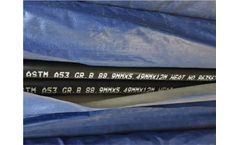
ASTM A53 B ERW carbon steel pipe is a resistance welded carbon steel pipe manufactured according to ASTM A53 standard, mainly used in the pipeline system to withstand general pressure and transport media. Commonly used in mechanical and pressure applications, it is also used in general purpose piping for the ...