
Refine by
Process Condensate Articles & Analysis
133 articles found
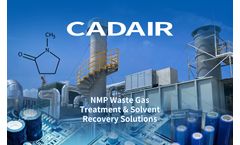
Through standardized pretreatment, adsorption, desorption and condensation processes, we help industrial manufacturers cut operational expenditure, recycle valuable NMP solvent and fully meet local environmental regulations. Proven Project Cases & Flexible Process Combinations CADAIR owns fully mature NMP recovery projects across multiple ...
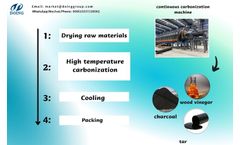
In the process of biomass resource recycling, biomass carbonization technology has garnered widespread attention for its ability to transform waste into high-value energy. Whether it be rice husks, coconut shells, wood chips, or agricultural crop stalks, converting them into biochar with high fixed carbon content requires undergoing high-temperature pyrolysis ...

Achieving the ideal balance between processing temperature and material residence time determines both the volume and the structural quality of the recovered char. ...

Against a backdrop of increasing demand for LNG, continued investment in new liquefaction plants and the drive to optimize existing plant profitability, the demonstrated value of a process digital twin has never been more important. This use case features the SLB (Schlumberger) Symmetry simulation platform, MySep Engine rigorous separator models and additionally, MySep Studio for ...
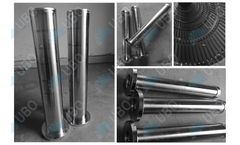
. ✔ Water Treatment Resin Trap A resin trap screen filter is a safety device designed to capture and retain media such as ion exchange resin beads, preventing them from escaping into downstream pipelines or processing units. In ion exchange systems, loss of resin not only affects water quality but can also damage pumps and valves. ...

Additionally, GasTDL-3100 maintains high sensitivity across all measured gases, making it an ideal solution for demanding process environments. While some process gas analyzers often face issues such as long response times and high maintenance and operational expenses due to sampling systems, GasTDL-3100 addresses these challenges with its in-situ, non-contact ...
The reactor can process various feedstocks, including plastics, tires, biomass, and other organic materials. ...
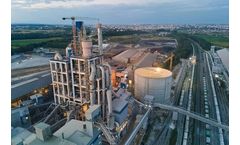
Temperature control is a critical aspect of chemical processing that directly impacts the quality, safety, and efficiency of production. In an industry where precision and reliability are paramount, maintaining the right temperatures at every stage of production can mean the difference between success and costly failures. Whether it’s in reaction vessels, distillation columns, or heat ...
Plastic pyrolysis is a chemical recycling process that takes advantage of the thermal instability of plastics. In an oxygen - free or low - oxygen environment and at specific temperatures, large - molecule plastics are broken down through a combination of decomposition and condensation reactions. This process converts the plastics into smaller - ...

This step causes the plastic to break down into smaller hydrocarbons, releasing volatile gases and producing liquid oil and solid carbon black. 4. Condensation: The gaseous byproducts produced during pyrolysis are then cooled and condensed into liquid fuel oil. The condensation process involves passing the gas through a series of ...
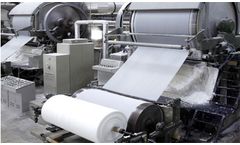
Type Of Separation: Solids from Liquids Processing: Condensate Water Implementation : 1. Palm (POM, OLEO, BIODIESEL & REFINARY) 2. ...
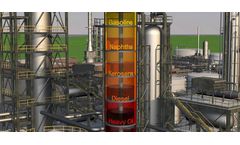
Type Of Separation: Solids from Liquids Processing: Condensate Water Implementation : 1. Palm (POM, OLEO, BIODIESEL & REFINARY) 2. ...

The WESP is usually installed in the wet desulfurization device. After desulfurization, a large number of water droplets are carried in the saturated smoke, which is captured when passing through the high-pressure electric field, thus reducing the probability of gypsum rain formation. At the same time, it has a good effect on collecting fine particulate matter PM2.5 and acid fog, etc., and the ...
The WESP is usually installed in the wet desulfurization device. After desulfurization, a large number of water droplets are carried in the saturated smoke, which is captured when passing through the high-pressure electric field, thus reducing the probability of gypsum rain formation. At the same time, it has a good effect on collecting fine particulate matter PM2.5 and acid fog, etc., and the ...
Pyrolysis, a thermochemical conversion process, offers a sustainable solution for PKS recycling, transforming this waste material into valuable products. ...
Heating System: Pyrolysis reactors utilize various heating mechanisms, including direct and indirect heating methods, to elevate the temperature of the feedstock and initiate the thermal degradation process. Condensation System: As the plastic waste undergoes pyrolysis, the resulting vapors are cooled and condensed into liquid and solid products ...
Understanding Small Pyrolysis Machine Small pyrolysis machines are compact units designed to carry out pyrolysis – a thermal decomposition process – on a batch basis. These machines are capable of processing a wide range of feedstocks, including biomass, plastics, rubber, and organic waste, to produce useful outputs such as biochar, bio-oil, and ...
While it can be utilized as a source of energy in its gaseous form, it can also be liquefied and used as a fuel or feedstock in petrochemical processes. The extraction of hydrocarbon gas contributes to the overall energy efficiency of the pyrolysis process and reduces dependency on fossil fuels. ...
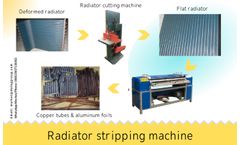
This method is used because no need to invest money but is difficult to process. It is only can be used for process single air conditioner radiators to get copper and aluminum. ...
They consist of a reactor where tyres are heated, a condensation system for collecting pyrolysis oil, and devices for recovering steel and carbon black.3. ...