
Refine by
Process Emissions Articles & Analysis
584 articles found

It also helps facility owners identify emission sources, validate controls, and respond proactively to elevated emissions before violations occur. ...
A Direct Fired Thermal Oxidizer (DFTO) is a VOC destruction system that uses a high-temperature combustion chamber to oxidize volatile organic compounds into carbon dioxide (CO₂) and water vapor (H₂O).Unlike Regenerative Thermal Oxidizers (RTOs), DFTO systems do not use ceramic heat storage beds. Process exhaust passes directly through the combustion chamber, making DFTO ...
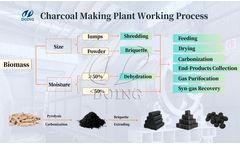
The charcoal production facility must be rationally divided into the following areas: raw material storage, production and processing, finished product storage, and administrative offices. Given the flammability of both raw materials and finished charcoal, the planning of fire safety facilities and the provision of safety passageways are also essential preparatory work. 4. ...
Odorous CompoundsAmong these pollutants, high-concentration CO emissions, dioxin destruction, and NOx control remain the most challenging aspects of achieving ultra-low emissions in waste incineration facilities. ...

Additionally, the propensity for foaming during pyrolysis requires controlled feedstock sizing and uniformity to ensure consistent product quality and process stability. Polyvinyl Chloride: Contamination and Emission Challenges Polyvinyl chloride (PVC) is less favorable for direct pyrolysis due to its chlorine content. During thermal decomposition, PVC can ...
With years of experience in industrial VOC treatment, CADAIR provides customized solutions for furniture factories, woodworking facilities and wood coating production lines worldwide. What Causes VOC Emissions in Furniture Manufacturing? VOC emissions are primarily generated during coating, spraying, drying, curing and solvent cleaning ...
During shipbuilding and pretreatment processes, paint mixing, spray painting, and drying operations generate large volumes of volatile organic compounds (VOCs). ...

AI-Assisted PLC Dynamic Optimization to Eliminate Manual Conservative Redundancy (Core Principle) To avoid the risk of excessive emissions, manual operation keeps the RTO furnace temperature above 850℃ all year round, and continuous supplementary combustion is carried out regardless of waste gas concentration, resulting in serious idle combustion waste. ...
CADAIR VOC solutions are widely applied across various industries, including: Aerospace & Aircraft Manufacturing Shipbuilding Automotive Manufacturing Container Manufacturing Semiconductor / Electronics / 3C Industry Chemical & Petrochemical Industry Pharmaceutical Industry Printing & Packaging Paints, Inks & Adhesives Furniture Coating Rubber & Tire Industry Carbon ...
While this reduces combustion-related emissions, the process still generates gaseous and particulate byproducts. ...
It also helps facility owners identify emission sources, validate controls, and respond proactively to elevated emissions before violations occur. ...
It also helps facility owners identify emission sources, validate controls, and respond proactively to elevated emissions before violations occur. ...
Strict emission requirement conditions: Adopt a zeolite rotor + five-bed RTO combined process. ...
Precision Conversion and Energy Efficiency A rice hull carbonizer operates through controlled pyrolysis, thermochemically decomposing organic matter in an oxygen-limited environment. This process ensures maximum carbon retention while producing minimal emissions. ...
As the 3C electronics manufacturing industry continues to expand globally, VOC emissions from production processes have become an increasingly critical environmental challenge. ...
By converting the waste into non-toxic by-products, the plant reduces the risk of environmental contamination, helping to protect vital ecosystems. 5. Reduced Toxic Emissions The pyrolysis process is designed to minimize harmful emissions compared to traditional waste treatment methods. ...
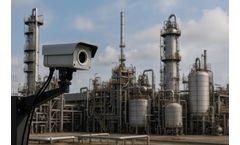
Introduction: The Critical Need for Continuous Visibility The modern petrochemical complex comprises advanced processes and a critical emissions risk. For decades, LDAR operated on campaign-based surveys using handheld OGI or thermal imaging, typically quarterly or annually. ...
ByOPGAL
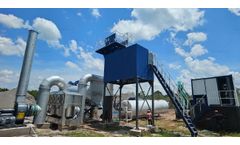
Buyers should evaluate suppliers’ emissions data, noise mitigation strategies, dust management solutions, and documentation for permitting. ...
ByMacroad

Black carbon emitted during automotive manufacturing can accumulate within facilities, presenting operational challenges and broader environmental concerns. Traditional emissions testing and stack measurements offer limited real-time visibility and may not capture short-term fluctuations or localized deposition on the shop floor.Real-time monitoring and high-resolution air ...

Through professional solar panel recycling processes, treatment conditions, efficiency, and emissions are controlled, thereby maximizing the recovery of valuable materials and minimizing environmental impact. ...