
Refine by
Process Spectroscopy Articles & Analysis
16 articles found

The pharmaceutical industry is under constant pressure to ensure product integrity, regulatory compliance, and efficiency in manufacturing. As production processes become more complex, the need for real-time, data-driven quality control has never been greater. Near-infrared (NIR) spectroscopy is essential for advanced monitoring of drug manufacturing, enabling ...

Infrared Spectroscopy (IR) is a powerful experimental technique often used in the fields of analytical chemistry and biology, especially in the study of biomolecular structure and function. ...

The most commonly used description method is the Cahn-Ingold-Prelog (CIP) rules. In spectroscopy, Circular Dichroism (CD) is a powerful tool that can be used to study the structure and conformation of molecules, especially large biomolecules. ...

Infrared spectroscopy analysis is a vital analytical technique, widely applied in fields like chemistry, biology, and materials science. ...

This blog article covers a brief history of this industry, the manufacturing process, and how near-infrared spectroscopy (NIRS) can be used as a multi-parameter QC ...
ByB&W Tek
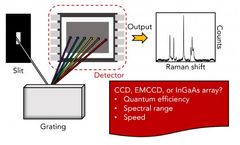
An ideal detector would convert every photon to an output signal, but in practice, the functionality of a detector is typically limited to a specific spectral region that is dictated by its constituent materials and the manufacturing process. Since Raman spectroscopy can be applied to an extensive range of samples with widely varying optical properties, the ...

machine vision, which captures real-world images, processes and analyzes them, with?infrared spectroscopy (NIR),?which identifies the composition of textile products. ...

In the first part of this series, a brief historical overview was given for both infrared (IR) and near-infrared (NIR) spectroscopy, as well as for Fourier transformation (FT) and dispersive spectroscopy. A few myths were discussed and put to rest, and we showed that Fourier transformation spectroscopy (FT-NIR) is not necessarily the only nor the ...

Spectroscopy is a precise and non-destructive technique that can tell us about several processes going on in plants and trees. ...

Cr(VI) removal kinetic rates followed a pseudo-second order model, like other fungal biomass reported previously. The apparent adsorption process was described well by the Freundlich isothermal model. However, determination of total chromium indicated that adsorption of Cr(VI) was followed by a redox reaction that released proportional quantities of Cr(III) into the experimental ...
Thermodynamic studies suggested that U(VI) adsorption onto H. verticillata was an exothermic and spontaneous process in nature. Fourier transform infrared spectroscopy and X-ray photoelectron spectroscopy indicated that the amino and hydroxyl groups on the algal surface played an important role in U(VI) adsorption. ...
The negative values of ΔG and the positive values of ΔH implied that Sr(II) biosorption on Bacillus subtilis was a spontaneous and endothermic process. Fourier transform infrared spectroscopy indicated that the functional groups, hydroxyl, carboxylate and amide groups, might participate in the interaction between Sr(II) and Bacillus subtilis. ...

This paper analyses the use of Fourier Transform Infrared (FTIR) spectroscopy as a maturity index for herbicide-contaminated green wastes composts. ...
Therefore, it is important to monitor MBRs as close to real-time as possible to accelerate control actions for maximal biological and membrane performance. 2D-fluorescence spectroscopy is a promising on-line tool to simultaneously monitor wastewater treatment efficiency and the formation of potential biological fouling agents. ...
This study strived to improve the photocatalytic activity by using liquid-phase non-thermal plasma (LPNTP) technology for preparing N-doping TiO2 as well as to separate/recover the N-dope TiO2 particles by using ceramic ultrafiltration membrane process. The yellow color N-doped TiO2 photocatalysts, obtained through the LPNTP process, were characterized with ...
Nanocrystalline hafnium diboride, carbide and nitride are synthesised by a two-step process, namely a short mechanical activation step (∼1?2 h) of powder mixtures based on partially hydrated hafnium tetrachloride, ph-HfCl4, and on magnesium, followed by a brief annealing step (∼1 h) of the activated powders in flowing argon at ...