
Refine by
Process Voc Emissions Articles & Analysis
14 articles found
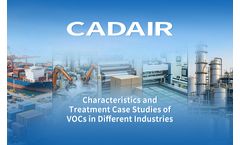
Due to differences in manufacturing processes, raw materials, and production procedures, VOC emissions vary significantly across industries in terms of composition, concentration, airflow volume, and treatment difficulty. ...

What VOC Emission Standards Can CADAIR Systems Achieve? CADAIR provides customized solutions designed to meet national regulations, local standards, and industry-specific environmental requirements. Typical Compliance Performance Aerospace Manufacturing Projects Emission concentration ≤ 20 mg/m³ Chemical Industry / RTO Projects ...
As the 3C electronics manufacturing industry continues to expand globally, VOC emissions from production processes have become an increasingly critical environmental challenge. ...
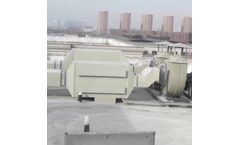
Source Reduction Process Optimization: Reducing the use of VOCs in industrial processes, selecting low-VOC materials, or modifying processes to minimize VOC emissions can significantly reduce the need for post-emission treatment. Substitution: Replacing ...

The FID is calibrated with propane and gives a direct reading as parts per million per volume (ppm) propane equivalent of VOCs, which can be converted to a mass concentration. b) ISO 13199:2012: Stationary source emissions — Determination of TVOCs in waste gases from non-combustion processes — Non-dispersive infrared ...

Volatile Organic Compounds (VOCs) are released, for instance, from organic solvents emitted from industrial processes. VOC emissions can be carcinogenic, and contribute to climate change and destruction of the stratospheric ozone layer. ...
During the application and drying of this alcohol-based glaze significant emissions of VOCs are released into the environment. The new VECTOR 2,000 SCFM Catalytic Oxidizer (CatOx) will control the VOC emissions from the application of an alcohol-based confectioners glaze from an extrusion line, dip bath and flashoff area. The ...
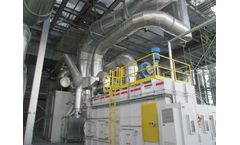
As enhancements to production capabilities continue to increase wafer sizes, the amount of emission-laden air coming from the wafer fabrication process also increases. ...

Emission control methods Catalytic oxidation VOC emissions from many pharmaceutical coating and drying processes have historically been controlled with catalytic oxidation. ...
The company has operated a 60,000 scfm RTO for over 5 years. The RTO processed VOC emissions from a specialized curing oven. The customer was interested in using this amount of waste heat in either the process oven or in building heat. Since building heat can only be used during the cold months of the year, we know the best ...
The company has operated a 60,000 scfm RTO for over 5 years. The RTO processed VOC emissions from a specialized curing oven. The customer was interested in using this amount of waste heat in either the process oven or in building heat. Since building heat can only be used during the cold months of the year, we know the best ...
For over 43 years Catalytic Products International has designed and manufactured specialized oxidation systems for use in controlling process-related VOC emissions. The QUADRANT-NRV Series Thermal Oxidation System is designed for use with the low-volume/high-BTU waste gas stream emitted from many landfill gas purification ...
When a company installs an APCS to either destroy (as with a catalytic or thermal oxidizer) or recover (as with a solvent recovery system) the VOCs/HAPs being exhausted from the production process, the overall reduction of emissions must be demonstrated and reported to establish regulatory compliance. Demonstrating compliance requires ...

Waste Characteristics Boilers, process heaters, and other process equipment are responsible for the emission of particulates, carbon monoxide, nitrogen oxides (NOx), sulfur oxides (SOx), and carbon dioxide. ...