
Refine by
Process Wastewater Effluent Articles & Analysis
15 articles found

Food and Beverage Industry Used in dairy, brewery, and meat processing plants for removing fibrous solids and suspended particles from effluent streams. 2. Pulp and Paper In paper mills, wedge wire static screens are used to screen out pulp fibers before wastewater moves to biological treatment stages. 3. Textile and Dyeing Textile manufacturers ...

Industrial processes generate wastewater, also known as effluent, that contains harmful pollutants, chemicals, and toxic substances. ...
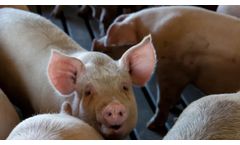
Livestock wastewater is the third largest source of pollution after industrial wastewater and domestic wastewater. ...

Evaporator Limits Boron to 5 PPM at Award-Winning Chemical Plant Reprinted from Chemical Processing PROBLEM: The biggest challenge confronting Rohm & Haas Corp. in building a wastewater plant for its chemical facility in Elma, WA, was meeting Washington State Department of Ecology limitations on boron of 5 ppm. ...

At every stage in a wastewater treatment process is important to achieve the desired treatment results. ...
Every stage in a wastewater treatment process is important to achieve the desired treatment results. ...
In order to cause this treatment process to occur, a coagulant must be added to the solution to neutralize either a positively or negatively charged effluent. ...
Typical Textile wastewater Composition Typically, wastewater effluent from textile processing operations has the following characteristics: Non biodegradable organics/inorganics such as metals, phenols, color, pesticides and phosphates and certain surfactants. ...

We evaluate the applicability of a reverse osmosis (RO) system that combines powdered activated carbon (PAC) and ultrafiltration (UF) to treat the effluent discharged from tannery wastewater treatment plants. Conventional treatment processes such as neutralization, clariflocculation, and biological processes are used to clean ...
This paper conducts a comparative assessment of the environmental impacts of three methods of treating primary clarifier effluent in wastewater treatment plants (WWTPs) through life cycle assessment methodology. The three technologies, activated sludge (AS), high rate anaerobic-aerobic digestion (HRAAD), and trickling filter (TF), were assessed for treatment ...
With a detection limit lower than 0.1 mg/l and fast analysis sequence ( less than 6 minutes), the TOC Evolution suits an unprecedented wide range of applications in the field of Water Quality Monitoring including but not limited to: industrial wastewater, process water and effluents/influents monitoring, Fresh water in water table, sources, ...
In many cases, (processed) wastewater or thermal effluents are discharged into the marine environment, rivers or lakes. ...
So, the main characteristic of these effluents is their toxicity towards the environment. In this study, an approach was developed to estimate the possibility of developing two biological wastewater treatment process for pesticides effluents treatment. The first one is particulary designed for small vineyard and is a co-epuration ...
Wastewater from seafood processing operations can be very high in dissolved and suspended organic materials. ...
Most ELG directly calculate limits very simply as the product of an effluent limitation factor times a measure of operation: the petroleum refining guidelines for process wastewater were based on complex models that related flow to production for five subcategories of processes. Effluent limit ...