
Refine by
Process Water Heating Articles & Analysis
37 articles found

During coating, spray painting, drying and finishing processes, significant amounts of volatile organic compounds (VOCs), paint mist and wood dust may be generated. ...
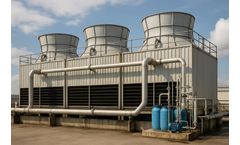
Temperature and system performance Summer heat increases thermal and mechanical loads within facilities. Heat absorbed by process water is circulated to cooling towers, where open-air cooling reduces the water temperature before returning it to service. Maintaining clean, properly treated water ...

Taking garments to textile recycling centers, a clothing recycling drop-off, or a clothing recycling company donation bin helps conserve natural resources such as water and energy. Producing a single cotton T-shirt can require up to 2,700 litres of water. ...

Some notable applications include: 1. industrial automation: for monitoring and controlling pressure parameters in industrial processes, such as boiler pressure, pipeline pressure, hydraulic system pressure, etc., to ensure the safety and stability of the production process. 2. automotive electronics: used to monitor tire pressure, fuel pressure, brake pressure, ...

Econotherm SC model 400 smooth/finned hybrid pipe ‘through-flow’ heat exchanger. 440 kW process water heater. Contaminated steam; regulatory requirement to condense, fuel savings, stainless steel. ...
Econotherm GW 1200 finned to finned pipe heat exchanger. 1.2MW process water heater (Genset). Remote location: chosen for high reliability, no single point of failure, low fouling,easy cleaning and low maintenance, small footprint and weight ...

Because of its low calorific value, or because of its different metabolic process from glucose, it can still have some special uses. Non-sugar sweeteners have high sweetness, low dosage, small calorific value, and mostly do not participate in the metabolic process. ...
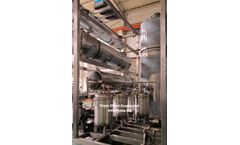
Industrial waste water evaporators are used to purify water by distillation, which is a process that involves heating the water to its boiling point and collecting the resulting steam, which is then cooled and condensed back into a liquid form. This process removes impurities and contaminants ...
ByYASA ET
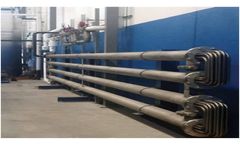
This reduces the energy required to actively heat water for cleaning and substantially reduces the temperature of the outgoing wastewater. Not only does this heat recovery system benefit the local water systems and the balance of aquatic life, but the anticipated reduction in greenhouse gas from energy production is estimated to ...
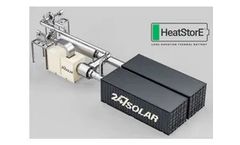
Remote towns and villages require round-the-clock clean power too, at affordable cost. Solar PV and wind are incomplete solutions. Conventional batteries help but for just a few hours. Backup gensets rely on expensive, dirty ...

Finned tube heat exchangers are often used for heat recovery in processes that exhaust hot gasses. The heat in the gas is transferred into a liquid, usually water or a thermal oil. ...
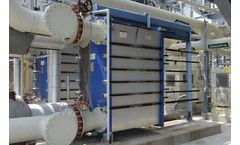
Water is utilized for multiple purposes — cooling, process applications, service water — at many industrial plants. ...
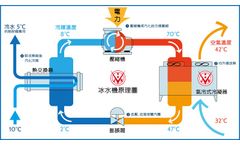
Principle of chiller The main working principle of chiller is the phase transfer of refrigerant means the heat transfer and through this way can reject the heat which is in the object fluid. ...

Pharmaceutical wastewater is discharged intermittently, and the water quality and volume fluctuate greatly. Pharmaceutical sludge refers to the precipitation material produced in the pharmaceutical wastewater treatment process. ...
Water is used widely as a cooling medium in processes for many industries and public buildings. The use of an evaporative cooling tower is still the most effective method of heat transfer. Heat is transferred from hot process fluids into the cooling water through a heat exchange ...

Biomass boiler to supply process heat and hot water to a mushroom factory located in Villamalea (Albacete) The energy produced is supplied to the production plant, this process requires heat, cold and humidity regulation at all times of the year. ...
The steam produced by a boiler must be measured in order to optimize boiler efficiency. Steam is used to heat buildings, in food processing, and in heating water. Even nuclear power plants use the steam produced from the heat of the nuclear fission. ...

We have supplied many different types of pumping systems for power gen facilities for wastewater, condensate, and other types of process water. A frequent scenario for a Romtec Utilities pump station is pumping for a heat recovery steam generator (HRSG) or blowdown process in cogeneration/combined-cycle power plants. ...

The Metal Injection Molding (MIM) process is a widely known and applied technology for producing small metal parts. A great variety of materials and, consequently, approaches have been developed. The MIM process always requires a combination of polymer and metal powder. The polymer in this mixture has two purposes. ...

By comparison, refineries often use once through cooling water systems. The cooling water is taken from lakes, rivers, or the ocean and circulated once through the plant to cool processes. ...