
Refine by
Produced Water Stream Articles & Analysis
19 articles found
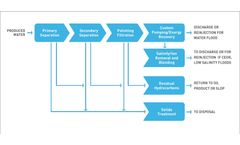
However, with this increase comes an increase in produced water, which is already available in high amounts, making treatment even more critical.The Impact of Produced WaterProduced water is the largest waste stream linked to oil and gas production, containing total suspended solids, non-soluble oil and organics, ...
Scientists looking for new ways to source lithium, though, have discovered a promising new membrane material that could help recover lithium from mining and fracking wastewater, improving water quality while producing a revenue stream. Membrane processes have been used to extract lithium from aqueous sources for some time, but the membranes ...
Produced water from the extraction process of oil and gas reserves, as well as flow back water from hydraulic fracturing operations, must be properly managed in order to mitigate any environmental impacts to existing water supplies caused by oil drilling/fracturing activities. Recent research and data indicate that the amount of produced water from these energy exploration and drilling ...
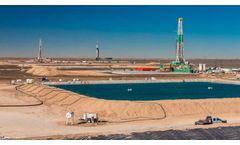
The composition and chemistry of produced water is variable and can be complex due to the amounts of contaminants in each of the produced water streams and geographic areas. ...
Problem: The solids separation system at Lindc's waste water treatment facility had high operating, maintenance and sludge disposal costs. ...

Reduce operator maintenance and recalibration significantly Optimize water treatment systems to limit product losses Reduce liability for hydrocarbon discharges into the environment Lessons Learned The new monitors: Have proven more accurate in detecting OiW in upstream produced water and downstream wastewater streams. ...
Its definition includes anything that is not an actual water molecule. That means that naturally occurring things like sediment and water weeds are considered contaminants along with things like oil and uranium. Chances are good that the type of contaminants your company needs to keep out of the water system aren’t naturally occurring. ...
The injected water flows back, as the non-potable water alongside the desired hydrocarbon is produced. ...

Produced waters are the largest waste associated with the production of oil and gas; they contain dissolved salts, oil (dissolved and scattered organic compounds), chemicals and additives involved in the oil well operations, suspended particles, sand and other compounds, making their treatment very complex. In this paper, we propose the use of a TPPB (two ...
Petroleum produced water (PPW) is a waste-stream that entails huge cost on the petroleum industry. ...

A reverse osmosis plant installed in the Eastern Province of Saudi Arabia helps to treat industrial waste water streams to quality levels that permit water reuse for industrial applications and irrigation. ...

A novel multi–generation system producing power, pure water, cooling and heating is proposed and analysed in detail. ...
The composition and chemistry of produced water is variable and can be complex due to the amounts of pollutants in each of the produced water streams and geographic areas. ...
Reverse osmosis membrane separation is the leading method for manufacturing potable purified water. It also produces a concentrate stream, namely reverse osmosis concentrates (ROC), with 10–20% of the water, and almost all other compounds. One method for further treating this stream is by coagulation with ferric ...

Statoil concluded that much of their well intervention projects on Sleipner ‘A’ would be unfeasible without CETCO’s technology. Statoil Heidrun Produced Water Polishing CETCO supplied a CrudeSorb RFV 4000 DFHP unit, tied in downstream of a malfunctioning hydrocyclone unit, treating the produced water stream ...
Consequently, during oil recovery, subsea pipelines collect produced water that can seriously harm the environment if released back into the sea untreated. When a major deep water operator in the Gulf of Mexico realized its produced water stream contained particularly high levels of zinc, the ...
Taylor Energy, which specializes in energy exploration and production in the Gulf of Mexico, utilized CETCO Oilfield Services new Hi-Flow technology to increase oil and gas production in a field where the existing facility was at capacity with the amount of produced water it could handle. The two phase Hi-Flow process works to treat produced ...
Presently, they are using skimmers and dissolved air flotation to remove oil from the water. To remove their heavy metals they follow up with flocculation, precipitation and clarification. ...

These surfactants readily convert heterogeneous oil/water mixtures into homogeneous, optically clear, microemulsions. They also emit no detectable fluorescence and therefore do not interfere with the fluorescence emitted by dispersed oil and water-soluble organics. ...