
Refine by
Radiation Risk Articles & Analysis
65 articles found
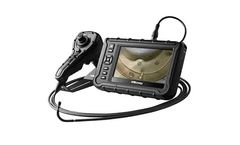
Summary: The use of USA Borescopes’ range of videoscope products during nuclear inspections keeps power plants’ safety a top priority, adding value and efficiency for long-lasting plant integrity. Remote visual inspection specialist, USA Borescopes, play a key role in nuclear power plants and their reliance on routine inspections and maintenance. From nuclear reactors to associated ...
These scopes are ideal for use across a wide range of industries, including high-risk environments such as nuclear facilities, improving not only efficiency but also reducing safety risk to inspection personnel. The connection between exposure to radiation and risk is a well-known safety issue. It is also an issue that those ...

However, increasing the transmit power also increases radiation and health risks, as well as energy consumption. Therefore, in practical applications, it is necessary to reduce the transmit power while ensuring communication quality to minimize environmental and human impact.3. ...

Unlike CT or conventional X-rays, there is no carcinogenic (ionizing) radiation involved. There are no known biological risks associated with exposure to magnetic fields of the strength used in clinical MRI’s. ...

By using an S-bandlinear accelerator (linac) and employing integrated minimal but sufficient shielding, the ZAP-X does nottypically require a radiation bunker. At the same time, the self-shielded features of the ZAP-X are designedfor more consistency of radiation protection, reducing the risk to radiation workers and others ...

MOTION study will quantify new technology’s impact on radiation exposure In December, Cleveland Clinic vascular surgeons successfully completed the first surgical case in the MOTION clinical trial of a new non-radiation-based surgical navigation platform for endovascular aortic interventions. ...

Adjuvant radiation is used either alone or in combination with chemotherapy, and the most common method of radiation treatment is external beam radiation therapy (EBRT).1,2 For EBRT, a large machine generates radiation beams and focuses them inward to travel through the skin, then through the skull, and finally, into the brain.2 ...

Background: Exposure of the heart team to scatter radiation is a serious environmental risk in the cardiac cath lab. While spot shielding reduces operator exposure, its effectiveness in reducing overall room scatter radiation (SR) levels, particularly during imaging with angulated x-ray views, is limited. ...

STS have supplied the NARU -HART Ambulance service training centre at Winterbourne Gunner with a set of Safe-Series simulators for training the HART teams in response to potential incidents involving radiation. The training devices are based around the Thermo EPD style Electronic Personal Dosimeter and offer crews the opportunity to train in a simulated radiation ...

Said to be a green technology, nuclear power raises concerns with potential nuclear meltdown and risk of safety from toxic waste, accompanying the fact that building a new plant cost around $5,000.00 per kilowatt of capacity with around 6 years of lead time. ...

By virtue of this Order, the responsible person should carry out a fire risk assessment on their premises, implement appropriate fire precautionary and protection measures, and maintain a fire management plan. The main purpose of the order is to prevent fire, minimise risk and to ensure the safety of everyone on the premises and in the near vicinity. ...

Radiology is an essential technology in medicine and is used for organ diagnosis, radio–tracing and radiotherapy. The risks for the radiobiology workers have not been assessed sufficiently because measuring instruments fail to detect very low doses. This paper presents an investigation on the potential risks for radiobiology workers, due to the occupational ...
Hence, individual radiosensitivity is a real concern for public health since 5–15% of the population may be concerned and radiosensitive individuals generally show higher cancer risk than the rest of the population. Thus, individual radiosensitivity is a key issue to be addressed in future recommendations of the radioprotection system.Keywords: ionising ...
Currently, the US Department of Energy conducts comprehensive radiological monitoring of people living on Enewetak Atoll, but characterisation of exposure risks posed by Runit Dome have been limited to catastrophic release scenarios and periodic atoll–wide environmental surveys. ...

Removing UV‐B (280–320 nm) from solar radiation had no significant impact on photocatalytic ROS production of nano‐TiO2, whereas removal of UV‐A (320–400 nm) decreased ROS production remarkably. ...
The attribution of radiation risk is associated with the concept of probability, including the plausibility of whether there is risk in prospective exposure situations. ...
Seasonal variation of indoor radon shows higher values in winter and lower values in summer. Lifetime fatality risk assessment and annual average dose received by the residents of the study area are also calculated to be within the recommended safe limit of ...
These data contradict the linear-no-threshold (LNT) dose-risk model. A biological system approach formalises the body to be organised in hierarchical levels. ...
The main aims of this work are to identify the social-demographic profile of the workers based on stratification variables such as gender, age, and tasks performed by the workers, and to evaluate the annual collective doses of workers with potential risk of ionising radiation exposure at the workplace during the years ...
It was shown that the frequency of tumours is determined both by the radiation dose and the time interval between irradiation and addition of the carcinogen. The data obtained make it possible to analyse the period of conservation of induced damage and the nonlinearity of the process of tumour formation under the combined action of radiation and toxic factors on ...