
Refine by
Radish Articles & Analysis
25 articles found

Glucosinolates are important secondary metabolites found predominantly in cruciferous vegetables such as broccoli, cabbage, Brussels sprouts, and radish. These sulfur-containing compounds play a dual role in plant biology and human health, making them a fascinating subject of study in fields like agriculture, nutrition, and medicine. ...

Natural pigments at Matexcel include: Gardenia Extract (Gardenia Black), Radish extract (Red Turnip), Safflower extract (Saffron Yellow), Gardenia Extract (Gardenia Yellow), Ginger Extract (Turmeric), Rice Extract (Monascus Red), Purple Potato (Purple Sweet Potato Color), Shellac Extract (Lac Dye Red)... ...
ByMatexcel

They are also called ‘Short Night Plants’. Examples: spinach, radish, hibiscus, Wheat, Lettuce,… Short Day Plant - SDP These plants flower when the days are shorter. ...

In the field, quick growing crops — including cut-and-come-again lettuces, radishes, salad turnips, kale and spinach — allowing him to produce four crops per bed per season. ...
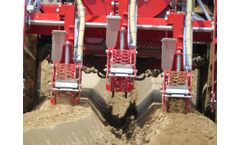
As a result, it successfully sows almost all kinds of seeds, such as: carrots, parsley, cabbage, radish, onion, beetroot, etc. Moreover, it has been designed to meet the farmers needs and vegetable market requirements. ...
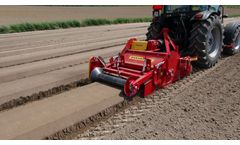
Carrot, parsley, celery, parsnip, beetroot and onion, radishes, cucumbers, for instance. In the next few articles we will introduce you closer to WEREMCZUK brand machines, their models, possibilities and advantages. ...

Researching the agricultural impacts of Konpòs Lakay is one of our favorite things to do, and we hope you’ll stay tuned next month for upcoming results that are on their way from radish experiments conducted by our dear friends and research partner at UC ...

Today, he plants a mixture of triticale, oats, vetch, peas and occasionally rye, radishes or other brassicas. Though he’s still fine-tuning his rotation, Hutchinson says he’s learning more about cover crops over time, and his soils are benefiting and helping to sustain and improve his rotational crop yields. ...

In the 1990s, Linda Kinkel and Neil Anderson, plant pathologists at the University of Minnesota, went looking for a microbial explanation for an inexplicable decline in scab, a disease that disfigures crops like potatoes or radishes with dark, splotchy growths, in a potato field in Minnesota. Kinkel and her colleagues found that the soil contained greater amounts of a certain ...
ByEnsia

This work focused on photo-assisted crude peroxidase mediated transformations of chlorinated phenols (CPs) from spiked and industrial wastewaters and the identification of reaction products formed. Garden radish Raphanus sativus was the source of crude peroxidase. No chlorine bearing compounds were detected by gas chromatography-high resolution mass spectrometry analysis. ...
In this work, the plant extracts came from radish (R) and tea (T), and the AgNPs were derived from a microwave irradiation method. ...
Brooklyn Grange, a for-profit farm atop two roofs in New York City, grows more than 50,000 pounds (23,000 kg) of tomatoes, kale, lettuce, carrots, radishes and beans, among other crops, each year. It sells them through its CSA, at farm stands and to local restaurants. ...
ByEnsia

Thanks to Dionel and Patricia’s enthusiasm and hard work they now have a home garden where they grow cabbage, fruits, chard, radish, eggplant, and more. The implementation of green filters to reutilise for permaculture home gardens is not common practice in the region; it was, therefore, a pilot. ...

There was significant reduction in pathogen levels by the worms (99%), and also a germination test undertaken showed an 83% increase in radish seed germination after vermicomposting when compared to raw digestate. ...

Both pot and field experiments showed that cadmium content in radish was increased by intercropping two or three genotypes, except when white radish was intercropped with green radish. The biomass of red radish was improved by a mixture of all three genotypes, and green radish biomass was improved by ...
The current study investigates whether exposure of six plant species (radish, carrot, soybean, lettuce, spring wheat, and corn) to triclosan or triclocarban derived from biosolids has an adverse effect on seed emergence and/or plant growth parameters. ...

Alternatively, annual species such as forage radishes, oats, barley or field peas will grow rapidly when planted in late summer to provide a cover crop following harvest of wheat or short-season vegetable crops. ...
The present study investigated the concentration of TCS in tissues of radish, carrot and soybean grown in potted soil amended with biosolids. ...
The authors evaluated the plant toxicity and accumulation potential of biosolids‐borne TCS in two vegetables (lettuce and radish) and a pasture grass (bahia grass). Vegetables were grown in growth chambers and grass in a greenhouse. ...
The existing treatment system was modified by deleting the treatment units after the anaerobic digestion. Chinese cabbage and Korean radish were selected as seeding plants in two sets of field irrigation experiments with various portions of the effluent. ...