
Refine by
Raman Microscopy Articles & Analysis
52 articles found

Plastics can be divisive since they are convenient and inexpensive, yet have a harmful impact on the environment. These materials are found everywhere – from museums to modern medicine, and even in the ocean waves. Plastic is ubiquitous, and Raman spectroscopy can be used anywhere it is located for identification, classification, and quality testing ...
ByB&W Tek

In this blog post, we will explore the principles behind confocal Raman microscopy, its applications, and the impact it has had on various scientific disciplines. ...

Applications of Raman Spectroscopy When studying chemical and intramolecular interactions and identifying compounds, chemists utilize Raman spectroscopy. Raman microscopy can be used in nanotechnology to examine nanowires and learn more about their structure. ...

Temperature, concentration and mixing rate are factors that affect the physicochemical properties of the adjuvant produced. Electron microscopy reveals that the AH adjuvant consists of nanoparticle fibers that form loose particulate aggregates. ...
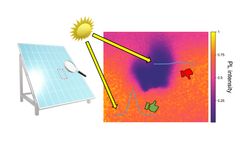
Welcome to Edinburgh Instruments’ monthly blog celebrating our work in Raman, Photoluminescence, and Fluorescence Lifetime Imaging. Every month we will highlight our pick for Map of the Month to show how our spectrometers can be used to reveal all the hidden secrets in your samples.MayWith much of the world aiming to become completely independent of fossil fuels in the near future, there is an ...
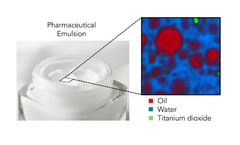
Welcome to Edinburgh Instruments’ monthly blog celebrating our work in Raman, Photoluminescence, and Fluorescence Lifetime Imaging. Every month we will highlight our pick for Map of the Month to show how our spectrometers can be used to reveal all the hidden secrets in your samples.JuneAn emulsion can be defined as a mixture in which a liquid, such as oil, is dispersed in small ...
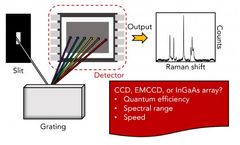
Unsure whether a CCD, EMCCD, or InGaAs detector is best for your Raman application? In this Spectral School tutorial, we discuss the differences between the detectors available for Raman microscopes, and how to select one based on important performance parameters such as quantum efficiency and spectral range.IntroductionIn a Raman microscope, the role of the detector is to convert photons into a ...
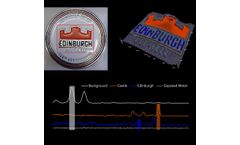
Welcome to Edinburgh Instruments’ monthly blog celebrating our work in Raman, Photoluminescence, and Fluorescence Lifetime Imaging. Every month we will highlight our pick for Map of the Month to show how our spectrometers can be used to reveal all the hidden secrets in your samples.AprilIn our latest instalment, to highlight our affiliation with Edinburgh Rugby, we tackled the Raman analysis of ...
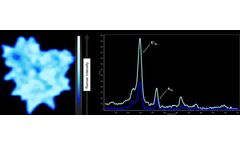
This property in particular has prompted substantial research into their physical characteristics for optoelectronic devices.Identifying the number of layers, strain, defects, and doping in 2D TMDs is critical for using these materials successfully. Raman and photoluminescence (PL) microscopy can provide highly detailed sample information in these crucial areas. ...
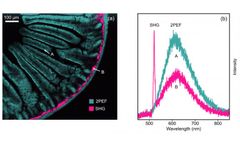
Welcome to Edinburgh Instruments monthly blog celebrating our work in Raman, Photoluminescence, and Fluorescence Lifetime Imaging. Every month we will highlight our pick for Map of the Month to show how our spectrometers can be used to reveal all the hidden secrets in your samples.NovemberTwo-photon excited fluorescence (2PEF) and second harmonic generation (SHG) are complementary multiphoton ...
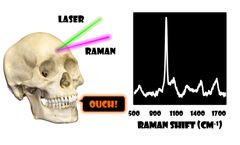
As well as rising from the grave to wander the earth and haunt us every Halloween, skeletons are made of hard, metabolically active bone tissues that perform several major functions to help our bodies thrive. These includes maintaining and supporting our shape, allowing us to have a dynamic range of movement, protecting our vital organs from damage, producing blood cells, and storing key ...
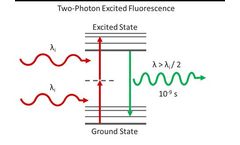
Welcome to Edinburgh Instruments monthly blog celebrating our work in Raman, Photoluminescence, and Fluorescence Lifetime Imaging. Every month we will highlight our pick for Map of the Month to show how our spectrometers can be used to reveal all the hidden secrets in your samples.SeptemberThe development of fluorescence microscopy in the early 20th century ...
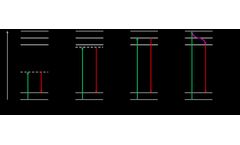
Resonance Raman spectroscopy is a Raman enhancement technique in which the laser excitation frequency is chosen to be close to the frequency of an electronic transition of the sample. Resonance Raman can enhance the Raman scattering intensity by a factor of 102-106 and improves signal-to-noise. The enhanced Raman scattering means shorter exposure times can be used, allowing much faster spectral ...
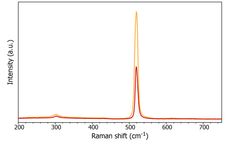
In Raman spectroscopy, laser excitation choice is one of the most important considerations. The wavelength chosen will impact Raman intensity, spatial resolution, background fluorescence, acquisition time, and the potential cost of a Raman system. Lasers used in Raman spectroscopy range from the UV into the near-infrared and beyond. Different wavelength regions offer advantages and disadvantages ...
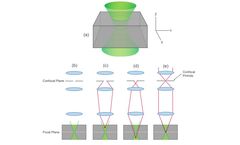
When laser light is focused into a sample by a Raman microscope, a three-dimensional excitation volume is formed within the sample. ...
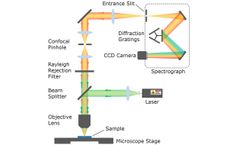
Confocal Raman microscopy combines the spectral information from Raman spectroscopy with the spatial filtering of a confocal optical microscope for high-resolution chemical imaging of samples. ...
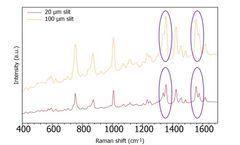
The spectral resolution in Raman spectroscopy dictates the maximum number of spectral peaks that the spectrometer can resolve. The level of spectral resolution required is dependent on the sample and what information the user is aiming to obtain from the Raman spectrum. Five main factors determine the spectral resolution achievable: slit size, diffraction grating, spectrometer focal length, ...
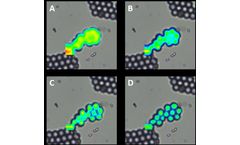
In Raman microscopy, spatial resolution is vital for discriminating different structures in a sample. ...
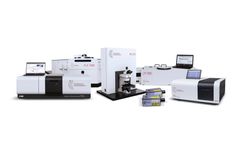
What is Molecular Spectroscopy?Molecular Spectroscopy is a subcategory of spectroscopy that studies the interaction of radiation with molecules and extended materials, as opposed to atomic spectroscopy techniques which deal with individual atoms. Samples that absorb (UV-vis spectroscopy), emit (Photoluminescence spectroscopy), or in elastically scatter (Raman spectroscopy) radiation may be ...

As Burns Night approached and the people of Scotland were eagerly awaiting their wee dram of whisky, the Applications team wondered what a dram would look like when a laser is shone onto it. For those of you not up to scratch on your Scots knowledge a ‘wee dram’ is the perfect pour of whisky, and on the 25th of January across Scotland we raise a glass to celebrate the life of one of our most ...