
Refine by
Rare Earth Articles & Analysis
163 articles found

The following elements are measured by Xact and their typical source associations:Al — CrustalSi — Crustal, brakes, road dustP — Sea salt, volcanic activityS — Ship emissions, secondary aerosol, coal combustion, fireworksCl — Sea salt, secondary aerosol, brick kiln, steel production, garbage burning, fireworks, road de-icerK — Biomass burning, waste incineration, coal combustion, fireworksCa — ...

Industrial operations generate tough wastewater—and outdated treatment methods often cannot keep up. If contaminants are not properly removed, they threaten compliance, equipment reliability, and the environment. Leading companies are searching for smarter, more efficient technologies that deliver cleaner water, reduce operational burdens, and provide long-term ...
Rare earth elements (REEs) are often a target of rapid analysis in geology, mining, and processing: the goal is to quickly determine whether enrichment is present, how composition changes across zones, and which streams or lots look promising. ...

Introduction With the growing global demand for critical raw materials and the need to explore untapped deposits on the seabed, the underwater mining sector is experiencing a major technological acceleration. Traditional equipment is no longer enough. We need robust, smart, and remote solutions capable of operating at increasing depths. In this article, we examine the main innovations, the ...

Molybdenum is used as the matrix to add other elements (such as titanium, zirconium, hafnium, tungsten and rare earth elements, etc.) to form non-ferrous alloys. These alloying elements not only play a role in solid solution strengthening and maintaining low-temperature plasticity for molybdenum alloys, but also form a stable, dispersed carbide phase, thereby ...

Abstract Rare earth elements are valuable strategic resources widely used in cutting-edge technology and defense industries, as well as being deeply integrated into everyday life. China holds the world's largest reserves of rare earth minerals and leads globally in production and sales. The primary purpose of ...

Advanced optical sorting systems now recover not just bulk materials but premium components—copper wiring, high-grade timber, and even rare earth elements from demolition waste.The logistics math has changed dramatically. ...

Multimodal imaging synergistic technology: Through rare earth ion doping, UCNPs can be used as MRI contrast agents (relaxation rate up to 5.60 s⁻¹·mM⁻¹) and fluorescent probes at the same time, such as NaGdF4:Yb/Er/Tm system combined with SPECT/CT technology to achieve simultaneous visualization of anatomical structure and metabolic function. ...
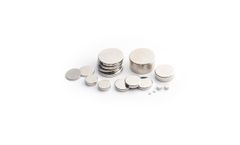
Supply Chain and Raw Material Challenges The unstable supply of key raw materials, such as rare earth elements, may pose challenges to the market. Companies must address this issue through technological innovation and supply chain optimization. ...
Applications of Alumina Catalyst Carriers Alumina catalyst carriers are used in a wide range of industrial processes, including: l Petroleum Refining: The production of gasoline and diesel fuel depends on alumina-supported catalysts for catalytic cracking and hydrodesulfurization processes. l Chemical Manufacturing: Manufacturers employ alumina carriers during the production process to create ...
Combining two or more materials through a specific route to construct a new type of material not only overcomes the limitations of a single component itself, but also exhibits dual or multifunctional properties. Rare earth ion-doped upconversion nanoparticles (UCNPs) are favored by researchers in various fields due to their unique physical and chemical ...

It is a phosphate mineral that encompasses cerium and lanthanum and constitutes one of the principal minerals within rare earth metal ores. This mineral frequently incorporates elements such as thorium and zirconium. ...

If you're in the market for an X-ray fluorescence (XRF) analyzer, you're likely asking yourself: "How do I find the model that perfectly suits my needs?" Elvatech's ProSpector 3 lineup offers three models: ProSpector 3, ProSpector 3 Advanced, and ProSpector 3 Max. Each is equipped with unique features tailored to specific tasks. This article will help you identify the best model for your needs, ...
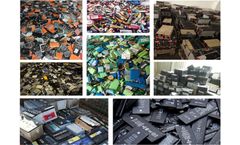
The recycling of waste lithium batteries is a field of great economic value, because lithium batteries contain rare earth elements and non-ferrous metals with high economic value, such as cobalt, lithium, nickel, copper, aluminum, etc. ...

Here are key points highlighting the economic advantages of e-waste recycling: Resource Recovery: E-waste contains valuable materials such as gold, silver, copper, and rare earth metals. Recycling these materials from electronic devices reduces the need for extracting raw materials from the earth, saving energy and resources. ...
ByEcoverva

This defeats the purpose of wanting to recycle all materials and is no longer viable in many parts of the world where the cost of landfill has become prohibitive, some systems no longer possible to market. Intensity rare earth magnetic separators are a new method that is more attractively approaching commercial viability. ...
Coordination Complex Catalyst There are mainly alkyl or alkoxy metal compounds, rare earth compounds, etc. The current research focus is on rare earth compounds. ...

Commonly used stabilizers are Y2O3, CaO, MgO, CeO2 and other rare earth oxides. The cation radius of these oxides is similar to that of Zr4+ (within 12% difference), and their solubility in ZrO2 is very large, and they can form monoclinic, tetragonal and cubic displacement solid solutions with ZrO2. ...
TERBIUMAtomic symbol: TbAtomic weight: 158.92534Atomic number: 65Electron configuration: 2-8-18-27-8-2Oxidation states: +3State of matter: solidHeavy metal, brittleDiscovered in 1843 by Carl Gustaf MossanderBoils at 3041°C, melts at 1360°CNotes:Terbium has a silver-white color. It is a rare earth metal of the yttrium group and a member of the lanthanide series. ...

At present, common inorganic fluorescent materials include noble metal nano crystalline clusters, semiconductor quantum dots, rare earth doped nano particles, carbon dots, etc. Compared with inorganic fluorescent materials, organic fluorescent materials have the characteristics of many varieties, easy structure adjustment, high fluorescence quantum yield and good ...