
Reduce Cod Load Articles & Analysis
10 articles found
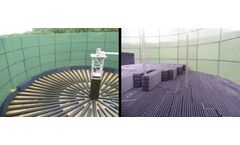
These systems deliver reliable results even under the most demanding conditions by: Improving treatment capacity and quality Effectively treating wastewater with high BOD/COD loads Reducing operational energy demand Lowering carbon footprint Ensuring consistent effluent quality Providing long-term reliability and durability By integrating ...

The Project Smart Storm designed a complete, bespoke effluent treatment system to address the 'consent to discharge' parameters, ensuring the new Brewery was discharging within the consent to discharge limits:- Lamellar clarifier to drop out solids and to comply with consent limits (1) pH balancing with acid and caustic for optimal Bio Augmentation (2 & 3) Bio Augmentation in Bio ...

Micro-electrolysis and Fenton oxidation were applied to reduce chemical oxygen demand (COD) organic load and to enhance organic components gradability, respectively. ...

The utilization of rbCOD by heterotrophic bacteria using rbCOD as an electron donor for respiration has the potential to reduce the influent load (e.g., COD-p) entering the WWTP. The rbCOD CODr ratio can further improve nitrogen (N) and phosphorus (P) removal in the WWTP. ...
By increasing rbCOD through hydrolysis of the hydrolysable substrate, it is possible to reduce the influent load (i.e., TSS, COD, BOD, TKN) entering the WWTP through microbial processes. ...
Here we describe the use of low-cost, consumer level, UV based disinfection systems coupled to CWs for wastewater treatment in three CWs: in Israel, Jordan and in the PA. Once mature, our adapted CWs reduced chemical oxygen demand (COD) load, and, given proper use of the UV systems, inactivated indicator bacteria (faecal and E. coli) to levels ...
By increasing rbCOD through hydrolysis of the hvdrolysable substrate, it is possible to reduce the influent load (Le., TSS, COD, BOD, TKN) entering the WWTP through microbial processes. ...

Requirements An increased BOD load in the wastewater, caused by a conversion of production, required an upgrade of the existing wastewater treatment plant. The existing plant, which consisted of a DAF, RBC, and secondary clarifier, had to be expanded by an additional treatment step before the RBC with the aim to reduce the COD ...
RequirementsAn increased BOD load in the wastewater, caused by a conversion of production, required an upgrade of the existing wastewater treatment plant. The existing plant, which consisted of a DAF, RBC, and secondary clarifier, had to be expanded by an additional treatment step before the RBC with the aim to reduce the COD ...

The main objective of treating leachates from domestic landfills is to reduce the COD and AOX load, particularly the persistent portion which is not removed during a biological pretreatment. ...