
Refine by
Reinforcement Geogrid Articles & Analysis
41 articles found
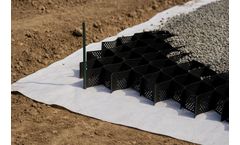
How high can you go with a GEOWEB Earth Retention Wall? For geogrid-reinforced earth retention walls, there is effectively no height limit, provided there is adequate space for proper tieback reinforcement. ...
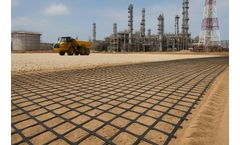
The basin's flood risk requires reinforcement that maintains integrity under saturated conditions; the polypropylene geogrid remains non-absorbent and maintains tensile performance under such conditions. ...
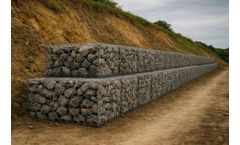
Integration with Geosynthetics in Infrastructure Gabion systems are frequently integrated with complementary geosynthetics to enhance performance in complex projects: Geotextiles: separation and filtration behind gabion walls to prevent soil migration while allowing water flow Geogrids: reinforcement to improve load distribution and slope stability Geomembranes: ...
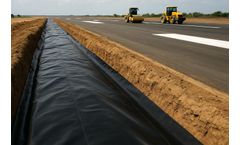
Role of Geosynthetics in Airfield and Infrastructure Systems Modern airfield engineering relies on geosynthetics such as geomembranes, geotextiles, geogrids, and geocomposites to optimize performance and durability. Key applications include: Pavement reinforcement: Geogrids and geotextiles improve load distribution, reduce rutting, and enhance ...
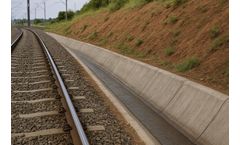
Typical applications include:Pavement reinforcement with geogrids to distribute loads and reduce deformation under dense rail trafficSoil stabilizationGeotextiles to separate weak soil layers from aggregatesErosion control mats to protect slopes from rainfall induced erosionDrainage management via geocomposites beneath track structuresEnvironmental protection ...
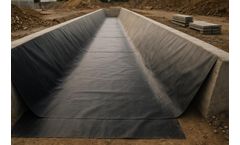
Reinforced Cement Concrete projects in Maharashtra increasingly rely on barrier and lining systems to mitigate moisture ingress and subgrade interaction. ...

Project: Reliance Project Location: Chandauli, Uttar Pradesh Product Supplied: Ocean Non Woven Geotextile 3 MM (Polyester) Quantity: 16,184 SQM Introduction Large industrial and infrastructure projects demand ground improvement solutions that go beyond conventional civil engineering methods. Weak subgrades, fluctuating groundwater levels, and heavy operational loads can significantly ...
Maintenance Implications and Lifecycle Benefits Geogrid-reinforced pavements typically exhibit reduced rut depths and slower cracking progression, lowering rehabilitation frequency. ...
Project Overview Project Name: Road Project Location: Guwahati, Assam Product Supplied and Used: Ocean Uniaxial Geogrid 40 kN Quantity: 5,000 SQM Client Sector: Public road infrastructure (urban and peri-urban connectivity) Guwahati is the primary gateway to Northeast India and a critical logistics and mobility hub for Assam and surrounding states. Rapid urban growth, increasing traffic ...

Large-scale bio-energy facilities require heavy civil engineering support systems including stabilized access roads, load-bearing working platforms, and reinforced foundation bases that can withstand constant vehicular movement, heavy equipment loads, and long-term settlement pressures. Ocean Non Wovens was engaged as a geosynthetics manufacturer and supplier to provide a ...

Geosynthetic materials, which play an important role in the engineering and construction sectors today, are materials consisting of a combination of various natural and synthetic materials, usually polymeric in structure. These materials are often used in soil stabilisation, erosion control, filtration, drainage and landscaping applications. To revolutionise the construction world, overcome ...
Introduction The National Highways Authority of India (NHAI) plays a pivotal role in the development and maintenance of India’s extensive road network, ensuring connectivity and economic growth. With rapid infrastructure expansion, the demand for advanced engineering solutions like geosynthetics has surged. Among the latest innovations enhancing road longevity and performance is ...

Introduction The Kailasa Hills project in Chintamani, Karnataka, is a prime example of geosynthetics’ role in sustainable infrastructure development. Ocean Non Wovens, a leading geosynthetics manufacturer and supplier, played a crucial role in this project by providing high-quality materials tailored for soil stabilization, erosion control, and geotechnical reinforcement. This case study ...
In the fast-growing food processing industry, infrastructure quality is paramount. Modern food plants require robust engineering solutions to ensure longevity, operational efficiency, and compliance with stringent hygiene standards. Ocean Non Wovens recently played a pivotal role in a transformative food plant project in Uluberia, Howrah, supplying and installing 1,900 square meters of our Ocean ...
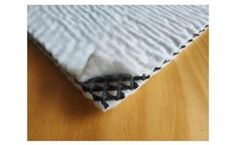
A three-dimensional geotechnical drainage net is made of high-density polyethylene. It is a material used in geotechnical engineering for drainage, filtration, and soil reinforcement. It is made from high-strength polymer materials that offer tensile strength, chemical resistance, and excellent drainage ...

BPM is the one of the largest geogrid suppliers in China. Our biaxial geogrid is made of high molecular polymer through extrusion lamination stamping into a regular mesh and then stretched longitudinally. The material has great tensile strength in the longitudinal and transverse directions. This structure can also provide an ideal interlocking system for more effective force bearing and diffusion ...
Biaxial geogrid reinforcement for roads is a geotechnical material made of plastic materials such as HDPE, which has high tensile strength and tensile breaking strength. ...
Biaxial geogrid soil reinforcement is an essential geosynthetics material in the field of civil engineering and geotechnical applications. BPM geogrid is designed to reinforce and stabilize soil structures, providing enhanced load-bearing capacity and improved ...
The biaxial HDPE geogrid is often used as a reinforcing material for reinforced soil structures or a reinforcing material for composite materials. The HDPE geogrid is divided into four categories: plastic geogrid, steel-plastic geogrid, glass fiber geogrid, and ...

Mechanical Stabilization- Mechanical stabilization involves physically altering the soil through compaction, mixing, or reinforcing with materials such as geogrids or soil nails. This technique is often used on soil with high moisture content or a mix of soil particle sizes. ...