
Refine by
Reject Water Articles & Analysis
95 articles found

One important fact is that power plants interact much more with the ambient than other industrial processes, simply due to the fact that the water-steam cycle must reject surplus heat from the condenser. In addition, the ambient conditions have a significant effect on output and heat rate of gas turbine-based power plants, and thus the entire range of ambient ...

As water scarcity becomes an increasing concern, minimizing water waste is crucial. The UK is projected to face a daily water deficit of four billion liters by 2050. Here are five effective strategies for industrial plants, which account for 5-10% of global freshwater usage, to reduce their water consumption. ...
Our range of modern evaluation systems, including RO, RO/NF, and membrane distillation systems, enables assessment across various operating parameters, allowing for the measurement of water flux and rejection under diverse conditions. ...

Introduction Extending lubricant condition monitoring programs to include grease analysis Onsite oil analysis is an effective tool to quickly analyze samples and optimize maintenance activities. As part of a comprehensive condition based maintenance program (CBM), oil analysis proves to be an effective tool to compliment other diagnostic technologies like vibration analysis, infrared ...

The plant is equipped with a double system of sterilization and disinfection of the reject water, which guarantees environmental safety. ...
ByIRTAmar

The oceans are also a raw material for the production of drinking water. Desalination can only be done with water from the seas and oceans. ...

Dewatered Waste is Disposed at Lower Cost By compacting and dewatering reject, a paper recycling company avoid having to transport water for no useful purpose. ...
ByRuni A/S
No chemicals are used to wash and clean the plastic waste – only clean water – just as the process itself does not emit toxins into the water or air. ...
ByRuni A/S

When looking for ways to purify water, clients often ask us about the difference between Reverse Osmosis Water and Distilled Water. ...
ByYASA ET

Any installation concerned must comply with the water law Eachretention bund installationis subjected to a so-called “Water Law” declaration. It applies to all human activities that can affect the quality of water. This legislation is motivated by the marked deterioration in the quality of water throughout ...

COMMERCIAL BRACKISH WATER Series: Brackish Water Model: MBWRO-0025 double pass The Reverse Osmosis (RO) System provides a Robust construction and is designed with conservative standards for versatility in the event of feed water quality and temperature variations. The system design has incorporated a 15% allowable fouling or flux decline for the membranes without loss of system product water ...
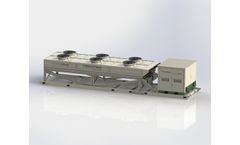
The main difference between the two cycles is that RC’s use steam to produce power while ORC’s convert an organic working fluid, which has a boiling point less than that of water, into vapor to produce power. This differentiating factor makes for much smaller systems, allowing lower temperature heat sources – such as engine waste heat and process heat – be ...

INTRODUCTION: FEEDWATER QUALITY IN REVERSE OSMOSIS PLANTS Feedwater analysis has always been the most important criterion to design and estimate the performance of brackish-water reverse osmosis plants. It is also one of the first things to check when plant performance deteriorates. ...
Ultrapure water is essential for advanced manufacturing plants, for example: pharmaceuticals, energy production, and microelectronic industries. Many end users now seek water treatment technologies with lower pollution loads and elimination of regeneration ...
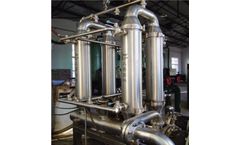
Using ceramic membrane technology, there has two fluids, one is permeated which is constituted by water and detergents present in the original bath, the other is concentrate which contains oils and suspended solids and that is back to oil removal tank. ...
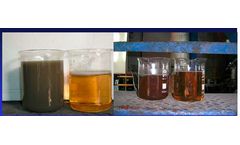
Using ceramic membrane technology, there has two fluids, one is permeated which is constituted by water and detergents present in the original bath, the other is concentrate which contains oils and suspended solids and that is back to oil removal tank. ...
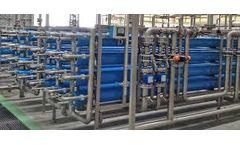
Fouling is what happens when suspended or dissolved contaminants in the wastewater stream deposit and build up on the surface of the membranes.Scaling is similar in its effects, but it occurs when the concentration of mineral salts in the reject waste stream become high enough to oversaturate the water and begin precipitating. ...
Abstract Water in oil can manifest itself in many forms – from dissolved to emulsified, to free water with oil. ...
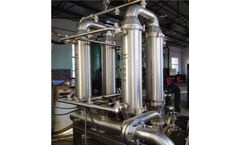
Using ceramic membrane technology, there has two fluids, one is permeated which is constituted by water and detergents present in the original bath, the other is concentrate which contains oils and suspended solids and that is back to oil removal tank. ...
Client: Waterschap De Dommel Solution: CambiTHP - B12 Tilburg Waterboard De Dommel (WDD) is responsible for water management and wastewater collection and treatment in the South-Eastern part of the Netherlands, covering approx. 151.000 ha and collecting wastewater from approx. 900.000 inhabitants. ...