
Refine by
Remediation Costs Articles & Analysis
187 articles found
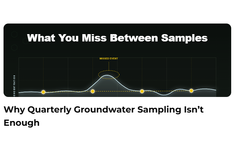
Groundwater contamination doesn’t move in neat, predictable intervals. Yet for decades, environmental monitoring programs have relied on quarterly or annual sampling as the standard approach to understanding subsurface conditions. While this method has been widely accepted, it introduces a critical challenge: it captures only snapshots in time,not the full story. As regulatory ...
ByLiORA
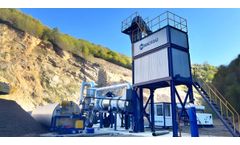
The production loss and quality remediation cost from a single moisture-driven injection error on a rural contract can exceed the price difference between a volumetric and mass flow metered system many times over. ...
ByMacroad

Why Data Frequency Changes Everything Groundwater monitoring programs have traditionally relied on periodic sampling, such as quarterly, semi-annual, or annual data collection from wells. While this approach has been the industry standard for decades, it offers only a limited view of what is happening underground. Today, continuous monitoring is changing that paradigm. The difference ...
ByLiORA
Groundwater contamination is rarely a sudden crisis. It is a slow-moving, often invisible process; one that becomes exponentially more expensive the longer it goes undetected. For operators, regulators, and environmental managers, the real risk isn’t just contamination itself. It’s the delay in understanding it. Early detection doesn’t just improve environmental ...
ByLiORA
At first glance, a brine spill doesn’t always look catastrophic. There’s no fire. No dramatic plume. Often, the impact appears contained: visible on the surface, addressed quickly, and logged as an incident. But what happens below the surface tells a very different story. ...
ByLiORA
Chloride contamination is one of the most persistent, and often underestimated, threats to groundwater. Unlike many contaminants that degrade over time, chloride remains in the environment, moving with groundwater and accumulating across large areas. Once it enters an aquifer, it can be incredibly difficult and expensive to remove. For energy operators, municipalities, and regulators, this ...
ByLiORA
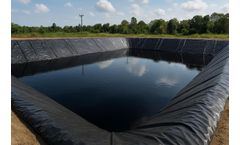
Source: Koerner, Designing with Geosynthetics.Role of Geosynthetics in Containment InfrastructureContainment systems typically employ multiple geosynthetic components to meet performance and safety standards.Geomembranes (HDPE Liners): Impermeable barriers for hazardous liquidsGeotextiles (Protection & Filtration): Protect liners and allow controlled drainageGeocomposites (Drainage Layers): ...
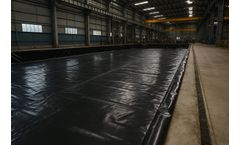
Source: Koerner, R.M., Designing with Geosynthetics Maintenance and lifecycle benefits Use of HDPE liners reduces long-term operational risks and maintenance costs, including: Prevention of soil and groundwater contamination Reduced structural damage due to moisture ingress Lower repair and remediation costs Regulatory compliance Lifecycle ...

When engineers evaluate technologies for mercury remediation, discussions frequently focus on removal efficiency or binding strength. Laboratory studies often report sorption capacity and distribution coefficients (KD), which describe how much mercury a material can bind and how strongly it partitions from water onto the ...
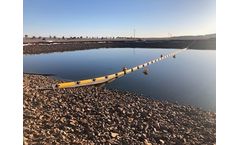
Floating or suspended baffles can (Rivers & McLaughlin 2015; Chatoyer Environmental 2025): Lengthen the flow path so runoff uses more of the basin surface area Break up a central high-velocity jet, spreading flow across the full width Reduce turbulence and back-eddies that keep particles in suspension Increase retention of both coarse and finer sediment fractions In stormwater quality ...
These maps are not slightly wrong, but systematically wrong in ways that cost real money and extend project timelines unnecessarily. The contamination boundaries drawn on quarterly monitoring reports almost always extend further than the actual contamination, leading to remediation plans that treat areas that were never truly impacted. This systematic ...
ByLiORA
Why Do Static Monitoring Networks Waste Money? Most groundwater monitoring programs operate under networks designed years or decades ago. These networks persist unchanged despite accumulating data that could inform more efficient sampling strategies. The result represents a hidden cost that compounds annually, with typical contaminated sites paying 20 to 40 percent more than necessary for ...
ByLiORA
Understanding What Monitoring Frequency Reveals Why Frequency Determines Knowledge I spend considerable time thinking about how we measure things underground. The physical act of lowering a bailer into a well or watching a pump purge three volumes of stagnant water forms only part of the story. The deeper question concerns what those groundwater measurements tell us and what the measurements ...
ByLiORA
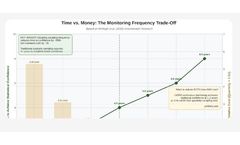
The Global Contamination Challenge Over 2 million contaminated sites exist globally, and we continue polluting more sites than we clean up. This disparity between the problems we face and our ability to solve them through innovation creates what I call an ingenuity gap. The gap persists not because solutions do not exist, but because industry practices lag behind scientific advances by decades. ...
ByLiORA
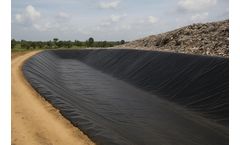
Geomembranes form a continuous, integrated barrier with environmental adaptability and deformation resistance, reducing environmental impact, protecting ecosystems, and lowering remediation and treatment costs. They eliminate leakage points and mitigate pollutant diffusion from landfills, reducing the risk of further soil and groundwater contamination. ...

Birds are dynamic creatures whose behaviors change significantly with the seasons. A site free of pest birds in spring may be overrun by migrating flocks in fall or by nesting colonies in summer. Effective bird management isn’t a one-time effort—it’s an ongoing strategy built around seasonal cycles and proactive measures. Year-round bird control relies on anticipating shifts in ...
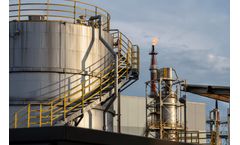
In the heart of the remote oil fields of Kharsang, Arunachal Pradesh, the demand for secure, durable, and environmentally responsible oil storage systems is rapidly increasing. To meet these critical needs, Ocean Non Wovens, a trusted geosynthetics manufacturer and supplier, partnered with the project team to deliver a top-tier oil pit containment solution. For this project, we supplied and ...

Silica is everywhere—from sand dunes to microchips—yet its presence in groundwater can silently erode heat-exchange efficiency, foul RO membranes, and cripple high-pressure water boilers. Silica remediation for groundwater isn’t only a compliance box; it is a profitable tool that protects infrastructure, maximizes uptime, and safeguards community water supplies. Below we ...

How a Friess tube skimmer keeps the environment clean A former casting plant in the west of Germany became the victim of vandalism after the plant was closed down. The oil-filled transformers were drained in order to get at the valuable raw materials inside. The drained oil collected in the collecting pans, which are meant to catch minor leakages. According to regulations, however, they must ...

Instead of traditional ex-situ methods such as dig and dump and dredging, EKOGRID in-situ electro kinetic oxidation technology was chosen for the site to reduce the costs of remediation and avoid disturbances to the environment. Polluted water embankments and bottom sediments are challenging remediation targets, yet cleaning them is extremely ...