
Refine by
Remediation Management Articles & Analysis
298 articles found

Groundwater contamination doesn’t move in neat, predictable intervals. Yet for decades, environmental monitoring programs have relied on quarterly or annual sampling as the standard approach to understanding subsurface conditions. While this method has been widely accepted, it introduces a critical challenge: it captures only snapshots in time,not the full story. As regulatory ...
ByLiORA
Understanding why chloride behaves this way is critical for anyone responsible for monitoring, managing, or remediating contaminated groundwater ...
ByLiORA
Achieving $184,500 in operational savings was possible through SVE/MPE optimization and showcasing the average 14.9 kg/day depletion rate to the regulator with effective real-time ...
ByLiORA
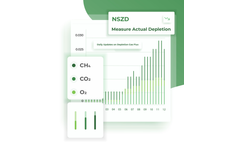
Effective resource allocation and enhancement to operational efficiency. With only 6 sensors and LiORA Insights there was dramatic acceleration in decision-making processes with sensor data and analytics to showcase: Bioremediation injection effectiveness NSZD rates quantified for transition decision Vapor intrusion protection maintained Portfolio optimization achieved ...
ByLiORA

Achieved significant savings through innovative data collection and depletion rate monitoring with advanced sensor technology and real-time analytics. The project resulted in $748,680 in savings through the deployment of 17 sensors, collecting 23 million data points to monitor a 4,490 L/year depletion ...
ByLiORA

Our data better informs resource allocation through access to live data. Our clients unlock more effective site prioritization by highlighting risk in realtime and insitu remediation system success with only six sensors per site to deliver results to allow our clients to move onto other priority ...
ByLiORA

They also provide technical services which include self-control plans and management of specific food supply chains, investigation plans, characterization plans, contaminated site remediation projects, management and design of water/waste treatment plants, etc. ...

When engineers evaluate technologies for mercury remediation, discussions frequently focus on removal efficiency or binding strength. Laboratory studies often report sorption capacity and distribution coefficients (KD), which describe how much mercury a material can bind and how strongly it partitions from water onto the ...

Quantifying leaks in real time with OGI enables prioritization of repairs based on actual financial and environmental impact rather than estimates.Using an OGI system with built-in quantification (QOGI) capabilities, such as those in the Opgal ecosystem, supports moving from population-based estimates to empirical measurement, enabling HSE managers to prioritize ...
ByOPGAL
Executive Summary LiORA's real-time soil sensor network successfully optimized SVE/MPE remediation system performance at a pipeline condensate release site, delivering $184,500 in operational cost savings while achieving significant environmental benefits. Through continuous monitoring of remedial progress, LiORA enabled data-driven system optimization, reducing operating costs by identifying ...
ByLiORA
Summary A former spill site in the United States has three Soil Sensor locations within ~1 metre of each other. Though they are installed in separate boreholes, they are meant to reflect a gradient in gaseous emissions within the soil. The sensors are installed at 15, 30, and 45 ft (4.57, 9.14, and 13.72 m) belowground. Here we compare two approaches to calculating NSZD: the first is our ...
ByLiORA
Executive Summary LiORA's innovative technology successfully guided the remediation strategy at a former bulk fuel facility, enabling a precise Natural Source Zone Depletion (NSZD) assessment that reduced the excavation area and optimized site management. Through continuous monitoring and data-driven analysis, LiORA demonstrated how advanced sensor technology ...
ByLiORA
Understanding the Plume Overestimation Problem A Problem Hidden in Plain Sight I have spent years watching site managers struggle with a problem they cannot easily see: their plume maps are wrong. ...
ByLiORA

A system that performs well under average conditions may struggle to deliver consistent results over time. For developers managing dewatering, remediation, or redevelopment projects, that final stage of treatment carries real risk. ...
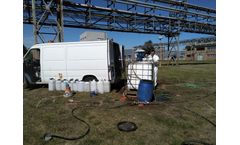
SITE CHARACTERISTICS The aim of this pilot study was to verify the efficiency of sulfidized nanoiron (S-nZVI) in reductive dehalogenation of highly chlorinated ethenes (primarily TCE) in the field conditions. S-nZVI has earned a reputation as a promising material due to its high reactivity towards some pollutants, its increased mobility, and its longevity caused due to suppressed corrosion. The ...

Utilising RemScan Technology for Effective Contamination Management The Kuwait Environmental Remediation Program (KERP) is a significant initiative led by the United Nations Compensation Commission (UNCC), Kuwait National Focal Point (KNFP), and Kuwait Oil Company (KOC). ...
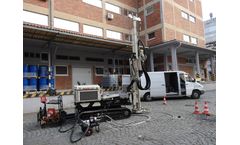
SITE CHARACTERISTICS Heterogenous aquifer (combination of sand, gravel and clay) together with a deep localization of CHCs contamination plume predetermine this site to be difficult to treat. Therefore, the remediation company DEKONTA arrived at an inventive decision to combine the direct-push injected NANOFER particles with a subsequent employment of the thermally enhanced in-situ bioremediation ...
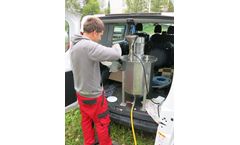
SITE CHARACTERISTICS Together with partners from the Czech Republic (Dekonta, a.s.) and Belgium (ABO and Adviesbureau inzake Grondwater Technieken n.v), NANO IRON works on research and development of in-situ remediation technologies based on hydraulic fracturing of subsurface. The main benefit of the method is a possibility of application of the remediation suspensions in a geological environment ...

Strengthening Environmental Compliance Mandates In many regions, governments have enacted stringent soil remediation and hazardous waste management standards, compelling enterprises to adopt advanced treatment technologies. ...

SediMite® was one of three activated carbon (AC) amendments used in a field pilot study in the Berry’s Creek Study Area (BCSA) in the Hackensack Meadowlands of northern New Jersey. Sediments in intertidal marshes of the BCSA are dominated by Phragmites reed and contain PCBs, mercury and other contaminants. A resulting fish consumption advisory is in effect due to ...