
Refine by
Remediation Pump Articles & Analysis
28 articles found

Rising Water Levels: from sources like rain, streams, or pumping stations (used to remediate or store water in the lake), frequently result in quick algae growth. ...

Some standard methods used in environmental remediation include:Groundwater Pumping and Treatment: Environmental engineers use a vacuum pump to draw out contaminated water and treat it using methods such as carbon absorption, biological treatment, and air stripping[2].Soil Remediation: Environmental technicians employ techniques ...
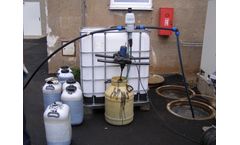
Remediation company EKORA in collaboration with company NANO IRON, producer of zerovalent iron nanoparticles (nZVI), conducted pilot injection of surface stabilized nanoparticles of elemental iron (NANOFER 25S) and their subsequent full-scale application to eliminate groundwater contamination of chlorinated hydrocarbons (CHCs) and hexavalent chromium (Cr6+) at KARA Trutnov site ...

NANOFER slurry was chosen by the remediation company AQUATEST for removal of chlorinated hydrocarbons (CHCs) from a deep aquifer in fractured rocks. Extraction of deposited waste was accomplished during the first remediation phase. Pump and treat and venting started as the second stage in 2004, and these measures cannot be stopped because of the ...

For further information on QED’s remote access portal and to upgrade existing systems, please call +44 (0)333 800 0088 or contact us at [email protected] About QED Environmental Systems QED Environmental Systems, a subsidiary of Graco Inc., is the leading international supplier of pumping systems for groundwater sampling, remediation and landfill liquids ...

Metal concentrations in excess of established health guidelines have been shown to create significant health risks to humans. PAST REMEDIATION OPTIONS: In the past, conventional remediation of soil impacted by heavy metals has relied on excavation, which was expensive and disruptive. In addition, moving the soil only moved the problem, without treating the soil ...

Department of Energy (DOE) nuclear weapons production facility (the Pinellas Plant) in Largo, Florida posed an extreme challenge for groundwater remediation pumps. Soil and surficial aquifers at the site, now known as the Young-Rainey Science, Technology, and Research Center, were contaminated by large quantities of light and dense non-aqueous phase liquids ...
Landfill operators were using electric pumps moved portably from well to well; liquid levels would rise in one area of the landfill, they would pump it dry, remove the pump and move to another area. ...

Historically, during periods of high rainfall, the incoming flows exceeded the capacity of the system and excess flow was pumped from the Eastney pump station to storm tanks at Fort Cumberland. ...
Liquid management and groundwater sampling pumps from Geotech's pump and remediation equipment supplier, QED help keep the landfill operating at peak efficiency. ...

At that point, the required pump flow doubled, while the required pump head further decreased. A single pump could not achieve the higher capacity by itself. ...
Temperatures in the wells exceed 140 degrees Fahrenheit, and the condensate is highly corrosive because of dissolved sulphur dioxide, another waste decomposition byproduct. In essence, the pumps must survive operating in hot sulphuric acid. With their rugged, high-clearance design and unique range of corrosion-resistant materials, air-powered AutoPumps from Geotech's ...
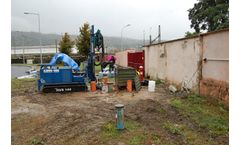
Nanoremediation was seen as an opportunity to enhance the in situ biodegradation of the BTEX contaminants and to reduce the current remediation method of skimming free product from the groundwater surface waters and contining the use of a pump and treatment system that have been ongoing since 2005. ...
Metal concentrations in excess of established health guidelines have been shown to create significant health risks to humans. Past Remediation Options In the past, conventional remediation of soil impacted by heavy metals has relied on excavation, which was expensive and disruptive. In addition, moving the soil only moved the problem, without treating the soil ...
EPA. 2002). Brief Overview Of Metals Remediation Methods: Conventional Methods: Conventional approaches to ex-situ remediation include excavation and disposal of the impacted soil. ...

Several chrome processing facilities in South Africa release hexavalent chromium (Cr(VI)) into groundwater resources. Pump-and-treat remediation processes have been implemented at some of the sites but have not been successful in reducing contamination levels. ...

An analytical one–dimensional model has been developed to examine the uni–directional barometric pumping in passive Soil Vapour Extraction (SVE) system. The model is applicable to a special case in which a radial flow field is insignificant. ...
Risk assessment of contaminated sites is crucial for evaluating adverse health impacts on local communities, and provides effective decision support for site-remediation practices. In this study, a coupled simulation and fuzzy-rule-based method was proposed for health risk assessment of groundwater contamination, and applied to a petroleum contaminated site. Benzene ...

This reality limits the effectiveness of several soil and groundwater remediation technologies. These include in-situ pump and treatment (P&T), bioremediation of recalcitrant compounds and chemical oxidative and chemical reductive treatment approaches, both onand off-site. As a consequence, site remediation can be much longer than desired and ...

With the conventional 'Pump & Treat' method, groundwater is normally extracted from one or several wells, cleaned above ground and disposed off to the either groundwater or surface water. ...