
Refine by
Remote Sensing Satellite Articles & Analysis
44 articles found
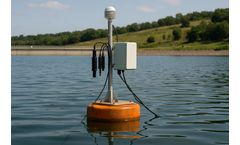
When the hypolimnion becomes anoxic and phosphorus releases from sediment, vertical profiling detects it before nutrients reach the surface and fuel algae growth. Remote Sensing from Satellite and Aerial Platforms: Multispectral satellite imagery estimates chlorophyll-a and maps algae distribution across thousands of hectares. ...
When Water Science and Data Science Team Up Against Harmful Algae The Context: Climate change and increasing human activity near water points cause cyanobacterial efflorescence to rapidly multiply, leading to potentially harmful water contamination. The Challenge: Because cyanotoxins have been associated with various health problems in humans and animals, these events can have serious impacts ...
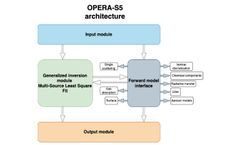
OPERA-S5 (OPEn platform for the Retrieval of Aerosol and CO2 from S5) includes two main objectives: the development of Open-Source Community Full-Physics XCO2 Retrieval Algorithm for Sentinel 5, and the demonstration of the developed algorithm by investigating the uncertainty characterization of CO2 and CH4 retrievals in the context of the challenging CO2M requirements using the proxy combination ...
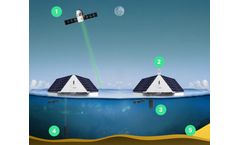
At LG Sonic, we thrive on challenges and value our audience’s insightful questions that delve beyond the obvious. During our recent webinars, we received a multitude of intriguing inquiries that showcase your deep understanding of our technology and its applications. We are excited to share some of these thought-provoking questions and provide comprehensive answers that shed light on the ...

FRM equipment is designed to meet air quality measurement standards developed by regulatory bodies such as the United States Environmental Protection Agency (USEPA). Satellite-Based Monitoring Systems Compared to air quality monitors deployed at ground level, air quality monitoring technology aboard satellites such as OCM-3 Aerosol Optical Depth ...

Many regions worldwide are facing increasing water scarcity due to factors like population growth, climate change, and over-exploitation of freshwater resources. Ensuring the quantity and quality of available water sources is vital for public health. Pollution from industrial, agricultural, and urban sources can contaminate water, making it unsafe for consumption and harming ecosystems. The ...
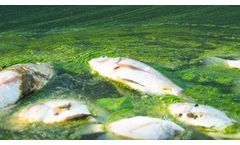
As a concept in engineering and environmental management, in parallel with solution-proposals, consideration is also given to the consequences of inaction and leaving a challenge unmet with solutions. The “do-nothing” approach to managing algal blooms, therefore, involves taking minimal or no action to actively control or mitigate the effects of algal blooms in natural bodies of water ...

This method is useful in identifying potential sources of pollution and determining the appropriate treatment methods. 5. Remote Sensing Remote sensing involves the use of satellite imagery to monitor water quality over large areas. ...

One of the key aspects of precision farming is the ability to move from reactive to proactive practices. In this blog post, we will discuss the benefits of proactive farming and explore tools and techniques to help growers make the transition from reactive to proactive farming. Precision farming is a modern agricultural technique that uses technology to optimise crop production and ...
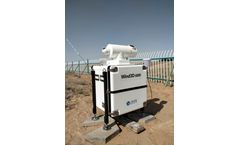
Detection means such as ground-based radar combined with satellite remote-sensing LiDAR can be used to analyze the transport characteristics and optical properties of sand and dust [24 ]. ...

However, it is a laborious and expensive method. Remote Sensing and GIS: Remote sensing helps to collect data through satellite that helps to estimate crop area. ...

Farmers, food manufacturers, agronomists, and agricultural politicians who want to improve output and profitability would benefit from space-based technologies for climate-smart agriculture. Satellite remote sensing data is critical for monitoring soil, drought, snow cover, and crop development. ...
Monitoring water quality in real-time allows you to avoid problems in your water body; Real-time data offers valuable insights about the chemistry of your lake and algae trends; A data-driven approach improves decision-making for reducing nutrients. “Real-time data is actionable data,” said Chief Water Specialist EJ Neafsey in a recent webinar. When it comes to water quality ...
Data is essential in water treatment, as it allows for a better understanding of the 'why', 'how', and 'when' of harmful algal blooms ...
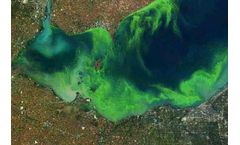
Yet, the technique that stands out the most comes from space. You guessed it - remote sensing (or satellite imagery). Remote sensing refers to the process of collecting and analyzing information about objects, areas, or phenomena from a distance, typically via satellites. Similarly, ...
![Precision viticulture technology a key to producing premium quality wines in changing climate [part 2]](https://d32zuqhgcrpxli.cloudfront.net/eyJidWNrZXQiOiJlZS1maWxlcyIsImtleSI6ImZpbGVzLzExMTU3Mi9pbWFnZXMvMTExNTcyXzBfMjAyMDEwMDgxNDQ2MDMyODkxMTk4XzQwMC5wbmciLCJlZGl0cyI6eyJyZXNpemUiOnsiZml0IjoiY29udGFpbiIsImJhY2tncm91bmQiOnsiciI6MjU1LCJnIjoyNTUsImIiOjI1NSwiYWxwaGEiOjF9LCJ3aWR0aCI6MjQwLCJoZWlnaHQiOjE0NX19fQ== "Precision viticulture technology a key to producing premium quality wines in changing climate [part 2]")
As the weather has a lot of influence on grape quality through vine physiology, it’s needless to say that observing canopy micro-climate is crucial for adjusting canopy management, disease management, as well as adjusting harvest time and water management. Remote sensing devices (satellite- aircraft- or unmanned aerial vehicles- (UAVs) ...
To name only a few precision monitoring technologies that can help winemaker produce premium quality grape – geolocation, remote sensing devices, satellites, UAVs, Wireless sensor networks, agbots, spectrophotometer, electromagnetic sensors, etc. ...

Instruments and Technology used in Precision Forestry Many but not all the technologies used in Precision Forestry are associated with remote sensing, geographic information systems (GIS), and global positioning systems (GPS). Remote sensing through satellite imagery relies on spectral images to give ...

Previous studies of these clouds have focused on modelling and remote sensing via satellite. We present the first comprehensive set of regional, in situ measurements of cloud microphysics, taken during June – July 2016, as part of the DACCIWA (Dynamics-Aerosol-Chemistry-Clouds Interactions in West Africa) campaign, assessing spatial and ...

We see the world in three color bands of red, green, and blue. The satellites put into space by NASA and the European Space Agency can measure between 5 and 25 bands of light. ...