
Refine by
Resistivity Imaging Articles & Analysis
97 articles found
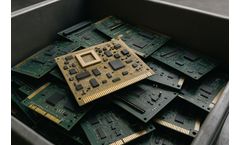
The Hidden Treasure in Electronic Waste Electronics use precious metals to address engineering challenges such as corrosion resistance and high conductivity. When devices reach end-of-life, these metals remain, but concentration varies by device type. ...
In the most demanding industrial and municipal settings, equipment reliability isn’t optional — it’s essential. Inspections of pipelines, manholes, or confined spaces often expose tools to extreme conditions: moisture, heat, chemicals, mud, vibrations, and more. This is the challenge RinnoVision set out to solve with the RV-MAX 360, a cutting-edge inspection camera designed ...

These small metallic rings are integrated into catheters, guidewires, and implants to enhance real-time tracking under imaging systems like X-ray, fluoroscopy, and MRI.Why Marker Bands MatterEnhanced Visibility – Radiopaque materials create clear imaging markers Precision Placement – Helps guide devices to exact treatment locations Safety Improvement – Reduces ...

Process The client used the SuperSting R8 and set out a line of 84 electrodes spaced 12.5 meters apart to measure resistivity and induced polarization (IP) using a dipole-dipole electrode array. Many parallel lines measured at 50 meters apart to make 3D resistivity and IP imaging. Results SuperSting R8 induced polarization data processed with ...
Instrument The AGI SuperSting R8/SIP/SP/Wi-Fi resistivity instrument with a 56 electrode SwitchBox , EarthImager 2D and EarthImager 3D software were used. ...
2D Electrical Resistivity Imaging Objective Study was performed at a Heap Leach Copper Mining site in Chile to determine the impervious zones for the irrigation. ...
It’s crucial for life across the globe, and, in the developing world, access to groundwater is at a premium. However, with resistivity imaging groundwater exploration techniques, even when you’re in one of the driest locations on Earth, deep groundwater is possible to locate. ...
Purpose The main subject of the field tes was to determine the geotechnical site characterization of the area to correlate the results obtained through the 2D resistivity imaging and the infromation of the concrete aqueduct. Process The determination of site characterization was performed by AGI SuperSting Wi-Fi R8/IP/SP instrument with 42 electrodes and 3 ...
Purpose A mining company in Turkey hoped to determine existing and new alternative basalt zones at an existing basalt mining site by using Electrical Resistivity Imaging (ERI). Process Our client, Ali Karan, used 84 electrodes spaced at 10 meters and two lines 5 meters apart inside the study area. The dipole-gradient array was used to collect the 2D ...
By training students how to use our resistivity meter for groundwater exploration, we’re equipping them to help locate groundwater in all its forms. AGI’s instruments make finding this water simple: Instead of going the traditional route (installing electrodes in the ground and surveying), this method involved measuring resistivity via sinking ...
The clients used EarthImager 3D software to model and get a visual of the area. Results Thanks to 3D resistivity tomography, our clients detected an anomaly outside of the fenced 65-foot-by-35-foot cemetery area. ...
In June 2014, our clients used AGI resistivity imaging tools to successfully locate a 125-gallon-per-minute groundwater well in West Texas as well as geohazards that could, if left unlocated, cause significant damage to property and increase costs. ...
The geophysical methods included: 2-dimensional electrical resistivity imaging survey (2-D ERI) and borehole geophysical logging. The 2-D ERI was used to identify locations for the bedrock characterization and injection boreholes. ...
Additionally, an attempt was made to identify other geoelectrical anomalies that may have archeological character by using the Geophysical Electrical Resistivity Tomography (ERT)imaging method. Layout Due to the limited study area and obstacles (fence, outbuilding, etc.) only one ERT profile was carried out. ...
Lake Travis – Austin, Texas Objective: Locate buried pipeline and map the limestone bedrock surface Site: Lake Travis, near Austin, Texas USA during the AGI Marine Resistivity Seminar Date: May 1, 2014 and May 7, 2015 Instrument: SuperStingR8 WiFi, SwitchBox56, underwater marine cable with 28 electrodes spaced at 6m. Software: EarthImager 2D underwater ...
That’s where Electrical Resistivity Tomography (ERT) came in. Process A 3D electrical resistivity imaging electrode layout of 13-by-8 electrodes was placed on the ground surface of the ancient archaeological site. ...
Dipole-dipole and strong gradient array Software: EarthImager2D with a finite element inversion model Results: Resistivity imaging successfully located a relatively high production water well producing approximately 125 GPM in a region where 10 GPM is common when not using resistivity imaging. ...
This data set began the electrical resistivity imaging industry. Background In 1993, the Sting instrument was created—but it didn’t immediately take off. ...
That’s where AGI marine resistivity imaging methods come in. For two months in 2008, a team used boat-towed streaming marine resistivity data to successfully estimate the geotechnical properties of the canal floor in order to reduce dredging costs. ...
AGI’s instruments make finding this water flow simple: Instead of going the traditional route (installing electrodes in the ground and surveying), this method involved measuring resistivity via floating marine cables. Purpose The purpose of this exploration was to use 3D imaging with floating marine cables and a small number of electrodes to demonstrate ...