
Refine by
Respiratory Care Articles & Analysis
16 articles found

This review brings significant changes to asthma care approaches, including applying fractional exhaled nitric oxide (FeNO) testing- an objective airway inflammation test for aiding in asthma diagnosis and management. ...

For years, you’ve always been a sound sleeper. But lately, your partner or spouse has been waking you up throughout the night because your snoring is disturbing their sleep. So you’re probably asking yourself “Why am I snoring all of a sudden?” If you’ve always considered yourself a non-snorer, or if your partner or spouse has started complaining about the noise ...
One of the more commonly asked questions sleep apnea experts answer is “Does sleeping sitting upright help with sleep apnea?” We already know that when a person with sleep apnea sleeps on their back, gravity closes or significantly narrows their airway (the space formed at the back of the mouth and upper throat areas). At the same time, the amount of air that enters their lungs ...
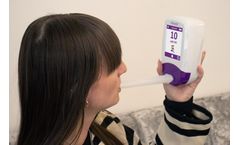
If a GP office possesses only one NObreath®, they benefit from the device size and portability, ensuring that healthcare providers can efficiently utilise the device wherever patient care demands. Carol Stonham, a member of Bedfont® Scientific Limited Medical Advisory Board and policy lead for Policy Care Respiratory Society (PCRS), ...
An individual who suffers with chronic, frequent snoring will usually try just about anything you can imagine to alleviate the problem so that they, along with their partner or spouse, can enjoy a peaceful night’s rest and wake up refreshed the next day. For example, they might try using bulky or costly headgear or oral appliances made by a dentist to reduce the frequency of their snoring. ...
For many individuals, sleeping with the right pillow can help them win the war against snoring. This is because your sleep position can dramatically affect how much you snore and how much this impacts your sleep quality. When you sleep, your airway relaxes and narrows causing your tongue to fall backwards. As a result, your throat wall vibrates as you breathe and causes you to snore. ...
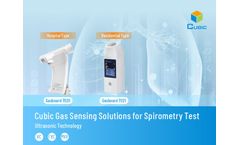
Utilizing Cubic's advanced ultrasonic gas flow sensor, it excels in delivering precise measurements of critical respiratory parameters. From static vital capacity to forced vital capacity and maximum voluntary ventilation rate, Gasboard 7020 delivers reliable measurement results for respiratory conditions. ...

Medical and Healthcare Ensuring safety and hygiene in healthcare settings Monitoring oxygen levels in ICUs, ensuring sterile conditions in operation theatres, or even managing air quality in general wards, Cambridge Sensotec’s devices are omnipresent. Innovations in patient care and treatment Beyond traditional monitoring, these sensors assist in cutting-edge ...

After all, even once safely ensconced in a hospital bed, someone admitted to the hospital still needs someone to provide actual care. With a respiratory pandemic like COVID-19, that often means a respiratory therapist (RT), there to provide oxygen therapy, aerosol medications, or mechanical ventilation support is needed. ...

In India, only 1 lakh beds get monitored continuously out of 19 lakh beds which are dependent on human intervention. This leaves loopholes in the care of critically ill patients, who need constant monitoring of their vitals. ...

Abstract Rationale:Patients with severe coronavirus disease (COVID-19) require supplemental oxygen and ventilatory support. It is unclear whether some respiratory support devices may increase the dispersion of infectious bioaerosols and thereby place healthcare workers at increased risk of infection with severe acute respiratory syndrome coronavirus 2 ...

Year after year, citations for violations of the Respiratory Standard 1910.134 consistently remain in the TOP 5 most cited OSHA violations. Don’t kid yourself, respiratory protection is a complex subject. You cannot just arbitrarily decide that “it looks dusty out there, I guess I will have the workers wear dust ...

If 2009’s recent media coverage regarding the spread of the H1N1 virus caused your organization to reconsider whether you need a respiratory protection plan for your employees, you were not alone. David Lahoda, Managing Editor of OSHA Watch and contributor to OSHA Healthcare Advisor, recently blogged on the wake-up call many of us have received as we rush to get our ...

It overlooks the costs of climate change as well as the costs of tax subsidies to the oil industry, the burgeoning military costs of protecting access to oil in the politically unstable Middle East, and the health care costs of treating respiratory illnesses caused by breathing polluted air. ...
For example, when buying a gallon of gasoline, customers in effect pay to get the oil out of the ground, refine it into gasoline, and deliver it to the local service station. But they do not pay the health care costs of treating respiratory illness from air pollution or the costs of climate disruption. ...

It overlooks the costs of climate change as well as the costs of tax subsidies to the oil industry (such as the oil depletion allowance), the burgeoning military costs of protecting access to oil in the politically unstable Middle East, and the health care costs for treating respiratory illnesses from breathing polluted air. ...