
Refine by
Retention Screen Articles & Analysis
21 articles found
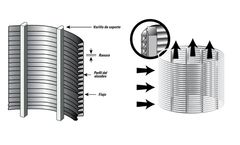
Wedge Wire Screen Wedge Wire Screen is a multipurpose screen with characteristics of toughness and clogging resistance where slit/slot (mesh) suitable for the application is formed by arranging "wedge wires" with a triangle shape at equal intervals. ...
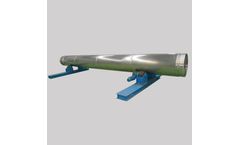
It's typically a cylindrical structure constructed with Vee (wedge) wire, creating a slotted screen. This screen interacts directly with the catalyst bed. How Does a Vee Wire Center Pipe Work? ...
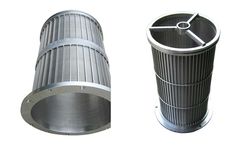
Used extensively in Carbon-in-Pulp (CIP) and Carbon-in-Leach (CIL) processes, these screens enhance the recovery of precious metals while ensuring optimal carbon retention. ...
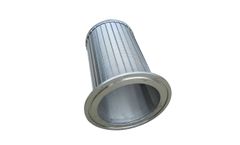
Category: Wedge Wire Screen Rotary Cylinder Trommel Material: stainless steel 304,304L,316,316L,321,430 or as per your request. ...
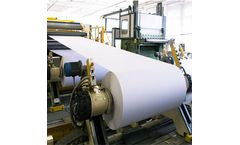
Efficient cleaning, filtration, dewatering, pulp screening, fiber retention, and solid-liquid separation processes are essential. The key to achieving these processes is the use of wedge wire screens. The design structure of wedge wire screens provides maximum throughput, reduces pressure drop on the screen, and ...
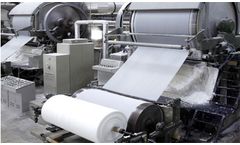
Proven Filtration Solutions for Complex Refinery Applications Filter screens are designed to handle different flow rates to provide continuous operations commonly in refinery applications. ...
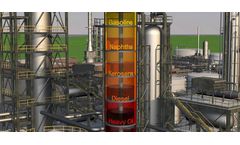
Proven Filtration Solutions for Complex Refinery Applications Filter screens are designed to handle different flow rates to provide continuous operations commonly in refinery applications. ...
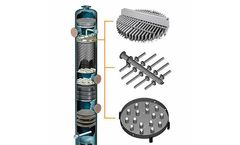
Among various options, wedge wire screens have emerged as a popular choice for custom-designed vessel internals. ...
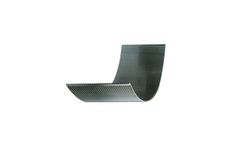
Wedge wire screens, also known as profile bar screens,V wire screens, are essential components in various industrial applications where filtration, separation, and particle retention are critical. ...
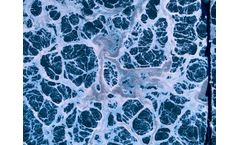
ACWA Services designed, supplied and installed all the mechanical and electrical equipment including media, media retention grids, screens and air blowers together with instrumentation and control for the MBBR.Filter MediaThe media is critical to the MBBR operation and therefore it is vitally important to select media which will allow optimum treatment process ...

It became necessary to develop a new type of two-dimensional mesh or perforated plate screen to improve the retention of fibres and hairs. As the apertures of the screen's mesh or perforated plate are defined in two dimensions, the screen is able to ensure the maximum retention of hairs and fibres. On the basis ...

Filters were rated with a 98% nominal retention of particles larger than their rated pore size. For example, think of the old standby What man filters used in your freshman chemistry class. ...

Tanks with greater L:W ratios typically require multiple retention screens, at significantly higher costs, and with increased headloss. ...
Most also include an air scouring system to clean the screens as needed. Retention screens need to be designed to pass the maximum hydraulic flow the plant may experience. ...
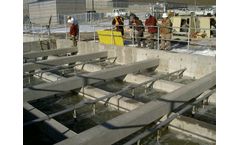
Tanks with greater L:W ratios typically require multiple retention screens, at significantly higher costs, and with increased headloss. ...
Several companies manufacture moving bed systems using a variety of floating biomass carriers and media retention systems. Brentwood offers the structured-sheet media modules used in the AccuFAS fixed-film system. ...
Another issue that made headlines is media washout, solved by installing screens in the reactor basins. The retention screens prevent washout, however, they add to the already complex and expensive implementation. Screens can also introduce headloss of 2-4" per basin and may change the plant hydraulics. ...

The proficiency of a non-target screening approach with solid phase extraction and GCMS in full-scan mode was examined. ...

Description of the original plant The original plant included the following unit operations: Pre-treatment by mechanical screening with openings of 3 mm Biological treatment by extended aeration activated sludge process, in a single concrete tank. ...
Based on federal and state regulations for identifying and quantifying low levels of pesticides in food and environmental samples, we selected three capillary columns to screen for triazine pesticides. A nonpolar and two low/intermediate polar phases were chosen to evaluate differences in component elution order and retention times. Low level ...