
Refine by
Returned Activated Sludge Articles & Analysis
41 articles found
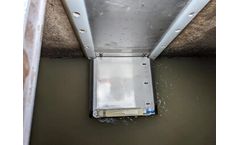
Engineers working on a project in North Wales have employed novel techniques to improve wastewater treatment efficiency, reportedly at a fraction of the cost of traditional methods, saving an estimated £3.5 million. Alison Miles from NIVUS, an instrumentation partner in the project, explains the flow measurement technology behind the reported improvements. ...
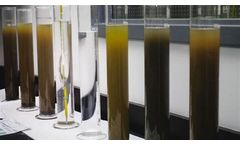
Sludge bulking remains one of the most persistent challenges in small and mid-sized wastewater treatment facilities, particularly during seasonal shifts that affect the food-to-microorganism (F/M) ratio, nitrogen-to-phosphorus (N/P) ratio, and temperature. These operational changes often trigger the overgrowth of filamentous organisms or biofilms, leading to poor sludge settling, high sludge ...
When the activated sludge is in the aerobic tank, the sludge in the tank needs to be discharged when the sludge settling rate in the aerobic tank exceeds 50%. ...
The conventional Sequencing Batch Reactor (SBR) process has a unique operation wherein the treatment occurs in a single reactor and operates as a fill-and-draw activated sludge system. The use of the SBR process in wastewater treatment is rapidly increasing worldwide. ...
ByCoftec
This process consists of a combination of centrate and return activated sludge (RAS), where centrate and RAS reaeration basin (CaRRB) effluent is added to primary effluent prior to mainstream aeration. ...
The Valrico process begins in an anoxic zone where raw sewage is mixed with RAS (Returned Activated Sludge) and phosphorus is biologically removed. The mixed liquor then enters one of two large oval aeration basins where surface aerators operate at a constant speed 100% of the time. ...
They also modified the two-staged activated sludge nitrification system and added two final clarifiers, chlorine contact, and three new 2-meter belt presses to replace the old ones. ...
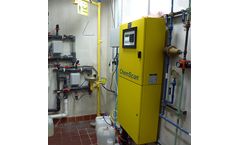
Specifically, the plant uses the A2/O BNR process with return activated sludge renitrification. Monitoring effluent Bonnybrook installed five ChemScan analyzers, which can monitor four key parameters in real time from two different sample points using a single central analyzer. ...
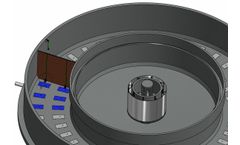
In a first step the intake structure of clarifier no. 2 has been modified at flow proportional return activated sludge (RAS) control. In a second step RAS control has been changed according to sludge level control in clarifier no. 2. The comparison of the RAS flow, sludge level and TSS-concentration (total ...
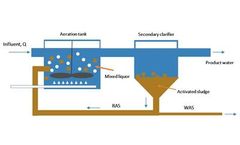
However, one of the most widely used conventional biological treatment process is the activated sludge process (ASP). Many sewage treatment plants use ASP in their secondary treatment steps due to the human and animal organic matter in the inlet waters of wastewater treatment plants.The term “activated sludge” comes from the fact ...

The term “activated sludge” comes from the fact that the sludge contains live bacteria and protozoa that actively digest and break down sewage. ...
SRT however, is the length of time that a unit of sludge (or other bio media) is active within the reactor. Treatment selection and design of biological wastewater treatment systems take all five of those criteria (and others) into account. ...

The pilot Fluence plant features, “fine screening, two MABR modules in series, coagulant injection for phosphorus removal, a secondary clarifier with return activated sludge recycling, and a sand filter for tertiary polishing followed by chlorination for effluent ...
As the World Bank explains: The activated sludge process has three basic components: 1) a reactor in which the microorganisms are kept in suspension, aerated, and in contact with the waste they are treating; 2) liquid-solid separation; and 3) a sludge recycling system for returning activated ...
Several technologies have been in practice for generations including the conventional activated sludge process. MBBR wastewater treatment is a relatively new water treatment process being used for filtering waste water in both industrial and domestic sectors with excellent performance. ...

Anaerobic hydrolysis in activated return sludge was investigated in laboratory scale experiments to find if intermittent aeration would accelerate anaerobic hydrolysis rates compared to anaerobic hydrolysis rates under strict anaerobic conditions. ...
Introduction: The Moccasin Bend WWTP uses pure oxygen produced by a cryogenic oxygen plant for activated sludge treatment of the influent waste stream, which consists of municipal and industrial wastes. ...
In this full-scale study, the increment of the nitrification rate is examined in the mainstream process at different temperatures and at different flow rates of returned activated sludge to the side-stream treatment. Our results show that the nitrification rate in the mainstream process was increased by 41% during the coldest period of the study, ...
Operate as single pass without return solids as a moving bed biofilm reactor (MBBR) or fixed bed biofilm reactor (FBBR) process. Operate with return solids as an integrated fixed-film activated sludge (IFAS) process. ...
Due to the energy consumption of internal recirculation, mixers and return activated sludge (RAS) pumping the existing pre-denitrification process configuration offers a specific energy consumption for biological treatment of 23 kWh (PE · a)−1. ...