
Refine by
Reverse Engineering Articles & Analysis
44 articles found

The measurement of manufactured components has evolved across decades. Traditional coordinate measuring machines (CMM) set a foundation for precision validation, while optical metrology introduced speed and non-contact ...
Metrology is the science of measurement, and it plays an essential role in numerous fields, including science, technology, engineering, and industry. The core of metrology is ensuring accurate measurements, which are critical for quality control, manufacturing processes, and scientific experiments. This article will explore the key concepts, tools, and applications of metrology, illustrating its ...
Non-contact measurement refers to the process of determining the dimensions, geometry, or other physical properties of an object without physically touching it. This technique leverages various advanced technologies to capture precise data while ensuring that the object’s integrity remains unaltered. Non-contact measurement is crucial in situations where physical contact could damage the ...
A Coordinate Measuring Machine (CMM) is a precision measuring metrology machine used in manufacturing and quality control processes to precisely measure the geometric characteristics of objects. It operates on the principle of coordinate geometry, employing a probe to collect data points from the surface of an object to determine the dimensions, shapes, and positions of features, such as holes, ...

For example, at this plant, re-using the existing bearing lubrication system for two of the units was the clear cost-trade-off solution, but required reverse engineering and some modification to address existing problems and provide for reliable integration into the new automation system. ...
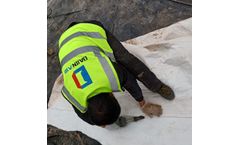
For example, in landfill projects and soil engineering, geotextile can isolate soil and sand, soil and concrete, and other different materials. ...
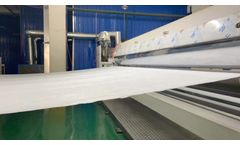
The role of filament geotextiles in engineering: 1). Reverse filtration of dams and slope protection in water conservancy projects, isolation and seepage prevention of channels; 2. ...
Whether it is to evaluate the integrity of a piping system or analyze various parts. It can also be used for reverse engineering purposes. Just ask Adam Pinard, NDE Engineer and 3D Scan Lead at Nucleom, a Canadian-based leader in providing NDT services to nuclear facilities. ...

Furthermore, the influence of ancient water engineering is seen in modern-day water disinfection, filtration and testing methods. ...
Hydropower plants around the world have been equipped with components from Voith Hydro for over 140 years. As a full-service provider of hydroelectric power plant equipment, Voith is one of the world’s leading manufacturers. The Voith Hydro GmbH & Co. KG, with its headquarters in Heidenheim, is a leading full-service provider of machine technology equipment for hydroelectric power ...
Hydropower plants around the world have been equipped with components from Voith Hydro for over 140 years. As a full-service provider of hydroelectric power plant equipment, Voith is one of the world’s leading manufacturers. The Voith Hydro GmbH & Co. KG, with its headquarters in Heidenheim, is a leading full-service provider of machine technology equipment for hydroelectric power ...
Its main line of products is made up of milled products, FFF additive 3D printing, planning services, dimensional controls and reverse ...
Because Creaform’s 3D scanning solutions can be used anywhere in the design process, including for product development and design, reverse engineering, and quality control and quality assurance, businesses in the auto sector can accelerate their time to market, resolve quality challenges, and reduce costs. ...
Reverse engineering is the process that identifies a physical object’s properties by performing a comprehensive analysis of its structure, functions and operations. Measurements of the object’s full surface geometry are taken, either manually or with various 3D measurement technologies, to create a 3D digital representation of the object. ...

This article covers a few contexts and applications of which you would not, at first glance, think as areas of interest for metrology, 3D scanning, 3D printing and reverse engineering. This includes drag racing, museology/archeology, veterinary anatomy and mountain bike. ...

You’ll be pleased to learn that it is entirely possible to reap the benefits of IoT asset management. By reverse engineering existing equipment you can make it industrial IoT enabled. ...
ByPolygon
The laboratory for additive manufacturing (LaF) at Landshut University, deals with the process of reverse engineering headed by Prof. Dr.-Ing. Norbert Babel. This includes scanning objects, scanning data processing using special software tools and transfer to a CAD system, modeling and simulating, as well as generating prototypes developed which are manufactured ...

When you reverse engineer a product to be made from a superior wear resistant material, it is essential to verify the product you receive is exactly what you are expecting. ...
3D measurement is a metrology process that uses different types of 3D measurement tools, such as 3D scanners, to collect 3D data from physical objects, such as their shapes, textures, geometries and colours. Scan-to-CAD and inspection software then extracts the 3D measurements from the 3D models for further analysis and processing. What types of companies use 3D measurement? In a nutshell: any ...

The new Zero Brine pilot plant at the Polish Bolesław Śmiały coal mine, however, seeks to solve the problem with a combination of nanofiltration, reverse osmosis (RO), and electrodialysis. The model calls for recovery of clean water, salts, magnesium hydroxide, and calcium that can be sold. ...