
Refine by
Rice Processing Articles & Analysis
46 articles found
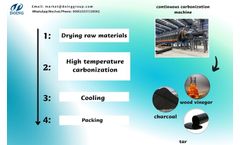
This significantly increases the overall energy consumption of the carbonization process, extends the time required for preheating and temperature ramp-up, and consequently diminishes the overall carbonization efficiency of the equipment. ...

This process ensures maximum carbon retention while producing minimal emissions. ...
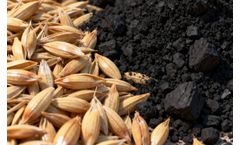
Removing Impurities Rice husks often contain dust, sand, and other impurities, which can affect the stability of the carbonization process and the purity of the product. ...
When we talk about sustainable farming practices and enhancing soil health, the conversation often revolves around organic fertilizers. Among these, carbonized rice hull, also known as rice husk biochar, has been gaining attention for its potential to improve soil quality and support plant growth. ...
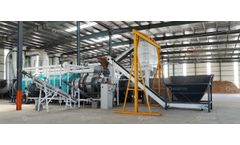
By converting rice husks into valuable biochar, the process not only provides an eco-friendly waste disposal solution but also opens up a range of commercial opportunities. ...
Among the various biomass sources used for biochar production, rice husk is a particularly abundant and promising feedstock, especially in regions with significant rice production. ...
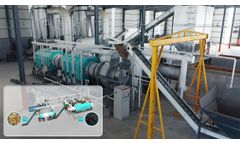
The carbonization process transforms agricultural waste like rice husks into biochar, a valuable material with diverse applications. However, selecting the right carbonizer requires careful consideration of several key factors, including operational efficiency, environmental impact, and long-term profitability. Assess the Processing Capacity The ...
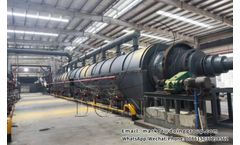
Carbonization process: the key to unlocking the potential of husk In the deep processing of rice husk, carbonization plays a core role. Carbonization is a high-temperature pyrolysis process, usually carried out under oxygen-deficient or oxygen-limited conditions, in which the organic matter in the rice husk is ...
In this article, we explore various methods and technologies for effectively recycling rice husk, with a focus on the innovative rice husk carbonizer.Understanding Rice Husk and Its Environmental Impact Rice husk is the outer layer of rice grains, separated during the milling process. ...
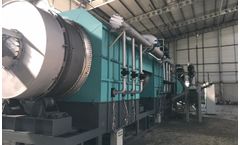
The biomass waste is basically from the inedible rice husks, otherwise known as rice hulls, that protect the editable grains for the elements. For each and every lot of rice harvested and processed, approximately .2 a lot of biomass waste is generated. ...
The hulls and husks on rice tend to be removed and discarded. The process involved to turn hulls and husks into charcoal is one of the environmentally sustainable choices to present an energy or source of heat. ...

miRNAs are thought to be closely related to the carcinogenic process, and there is a 2-nt 3' terminal excess on mature miRNA duplexes in mammals, which can be recognized and loaded by Argonaute (AGO) proteins to form RNA-induced silencing complexes (RISC) and can regulate the expression of targeted genes, and in fact, reduced doses of comprehensive miRNAs are considered to be ...
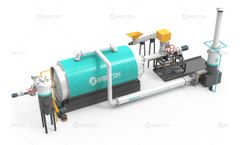
If you are living in a area where a great deal of rice husk is processed, you can put in place your own business of making charcoal from rice husk. You will have to buy a rice husk charcoal machine but once you have a good quality machine, you wouldn't have any problem in manufacturing high-quality charcoal that should fetch a ...
A Rice Hull Carbonizer is among these inventions that uses an increased temperature along with other required processes that turn the rice hulls into charcoal.- The Working Process Of A Rice Husk CarbonizerA Carbonizer Machine includes 4 major parts:- Carbonization machine or chamber- Gasification furnace- ...

Those who work the land here do so in relative isolation; they grow rice and sugarcane as best they can, in a patchwork of green and brown pastures sweeping over India’s Eastern Ghats. “We used to use a dhenki[1] to harvest rice from our fields,” explains one of the women in Keragam, where villagers have long relied on manual labour to irrigate ...
There are several benefits of purchasing a rice husk charcoal making machine, particularly if you have accessibility to unlimited quantities of rice husk. If you reside in the region where a great deal of rice is processed, sourcing rice husk shouldn't be that difficult. The truth is, when you manage a facility ...
With one of these machines, you're also going so that you can process materials including rice husk, straw, sawdust, wood, as well as sewage sludge. ...
One simple fact that a lot of people don't realize about rice production is that it creates plenty of rice husk biomass waste. ...

This is how the heat is being properly controlled to ensure rice is boiled according to the adjusted settings. It can also be called rice steamer. ...
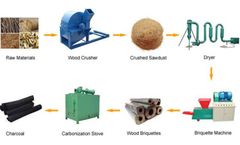
It is a way to recycle the rice husk and make value from the product. Rice husk, another name as rice hull, is a kind of biomass waste as the coat of the rice. ...