
Refine by
River Bed Articles & Analysis
33 articles found

Introduction In modern mining projects, dredging plays a strategic role in sediment management, material recovery, and maintaining plant efficiency. Whether extracting sand, gold, or minerals, or emptying settling ponds, dredging solutions optimize production processes and reduce environmental and operational risks. Today's technologies, based on submersible pumps, electric dredgers, and remote ...
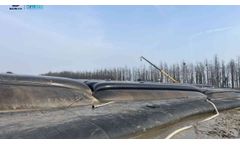
Geotube filled with sand has been widely used in Ports and Harbors, Dams & Levees, Coastal Protection, Solid Waste Landfill, Sludge Pond Remediation and other dyke buildings. Geotube is made of woven and filled with mud and sand. After dewatering, geotube superposes to form the dyke core and covered by protective layer. Geotube has good corrosion resistance and weather resistance, and can be ...

What Is A Geotextile Tube? Geotextile tube is an engineering material used in civil engineering and environmental protection. It is usually made of polypropylene or other synthetic fiber materials and has a mesh structure. Geotextile tube is characterized by high water permeability and filtration properties. The main uses of geotextile tubes are in the fields of water conservancy projects, ...
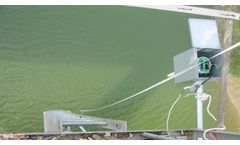
Application Problem: For a flood monitoring application, the customer required a solution to accurately monitor the level of a river, and be able to measure the river’s dry bed conditions. Application History: Solutions from several level sensor brands couldn’t detect the river’s dry bottom conditions, making ...
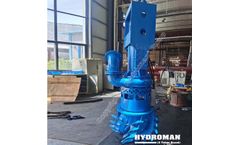
Hydraulic Submersible Slurry Pumps are used for derdging & de-silting of river, lake ,pond & port operation. Highly applicable in sludge removal, sand pumping from river bed & high density slurry extraction. ...
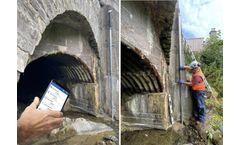
Engineers at Transport Scotland have investigated the potential for water level monitoring systems to help mitigate risks where transport infrastructure interacts with moving water. The trial was conducted at a bridge over Vales Burn near Hawick in Scotland, and the monitoring equipment was provided by OTT HydroMet. Climate change is increasing the frequency and severity of extreme weather ...

As some fish ponds are adjacent to the river bed, most of the soils are a sandy gravel with trace amounts of silt which would not hold water, so theses fish farm ponds need to be lined with HDPE pond liner to prevent the seepage of water outside of the ponds. ...

All standpipes were drilled through the downstream fill, the permeable soil layers in the old river bed and approximately 1m into the bedrock. Measurements were made with a fine spatial sampling (0.12 m) allowing abnormal water flow to be observed with high resolution in the vertica direction. ...

It then can cause a tremendous amount of damage when it builds up too quickly, so you'll see erosion of river beds, roadways, or culvert areas. It also can cause instability in road bedding, which leads to transportation problems. ...

Grade-control structures (GCS) are commonly used to protect fish habitat by preventing excessive river-bed degradation in mountain streams. However, flow over the GCS can cause localized scour immediately downstream of the weir. ...

Two independently installed empty conduits DN 50 which are protected by a galvanized steel tube at the river bed (mainly during the pavement works) cross the water body. For easier access to the cables a cable duct has been ...
Channel morphology in an alluvial river usually varies due to the altered flow and sediment regime from upstream damming. This paper reports an evaluation of the dynamical changes of sedimentation and erosion in the middle and lower reaches of the Yangtze River after operation of the Three Gorges Dam (TGD). Here, we present the results from a case study of ...
Model simulations were conducted with the two objects partially buried in a simulated rippled river bed. A Reynolds-averaged Navier–Stokes (RANS) equation model coupled with a κ-ε turbulence closure was used to validate the experimental velocity measurements. ...
Bed structures develop in many coarse gravel-bed rivers, and the distribution of bed structures is obviously impacted by the environment conditions, especially hydrology and sediment regimes. This study carried out field investigations in natural tributaries of the Yangtze River to study the sizes of ...

In 2005 the river reached a maximum flow of 582 m³/sec. This caused serious erosion of the river bed and dramatically changed the initial river course in the vicinity of the bridge. After the flood, the river flowed very close to one of the abutments of the railway bridge, eroding its foundation. ...
As a result of the extreme rainfalls that occurred in Romania during the year 2005, many rivers had a significantly increase in water flow. One immediate consequence was that almost all the important rivers caused heavy floods with severe damage to civil structures and infrastructure. Another consequence with long term effects was that the increased water flows ...
This study measured the hydraulic conductivity of the river bed and the aquifer, water levels and seepage fluxes in the heavily regulated Lule River in Northern Sweden, with the aim of characterising water exchange across the river-aquifer interface. ...
Many rivers in the region of northwest China are drying up, and the ecological environment is getting worse. ...
Morphological changes and hydraulic parameters are analyzed over a meander point bar along a sand-bedded river. Morphological changes caused by a flood are mapped using terrestrial and mobile laser scanners. ...

The use of plastic media was evaluated for modelling sedimentary processes in rivers using a movable bed model (MBM). From gradations within the range of 0.17–2 mm, the size of the thermoset plastic media was colour coded in order to better visualise complex flow processes. Equations developed by Engelund–Hansen and Schoklitsch were used to predict sediment ...