
Refine by
Robot Sorting Articles & Analysis
26 articles found
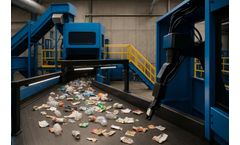
MIND powers the company's high-tech product family, including the recently launched MIND Airpulse pneumatic sorter, MIND Vision, the HyspecMIND AI-enhanced optical sorter and the SamurAI sorting robot. The platform integrates computer vision, machine learning and real-time decision-making to support sorting operations.Built on four pillarsVision ...

This is where PICVISA's technology plays a critical role — using advanced optical sensors, NIR/SWIR hyperspectral cameras, AI, and robotics to sort textiles by composition and color at industrial scale, enabling true textile circularity. ...
Automated waste sorting systems are revolutionizing recycling facilities worldwide, achieving up to 85% greater accuracy than manual sorting methods. ...
PICVISA's Technology for Waste Reduction Emerging technologies like those marketed by PICVISA are paving the way toward a more sustainable future. PICVISA's AI-powered optical sorting systems, robotics, and data analytics help recycling plants increase efficiency, improve material recovery rates, and meet increasingly stringent environmental regulations. ...

Traditional mechanical separation and manual sorting alone are no longer sufficient to maintain high recovery rates while controlling operating costs. In this context, AI-equipped robotic systems are increasingly being integrated into recycling lines. Rather than replacing existing separation technologies, these systems enhance them by adding intelligence, ...
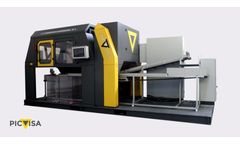
How are recycling robots using AI to improve waste management? The scale of the task means that manual sorting is slow, costly, and inefficient. ...
Transcription free integration solution for AB Sciex LC MS-MS instruments and the iSoft Telepath system for routine Vitamin D Analysis. The following automation solution was prepared in collaboration with Craig Webster and Rachel Henderson at the Heartlands Hospital in Birmingham and is an example of the type of integration possible between Mass Spectrometry instruments and Clinical LIMSor ...
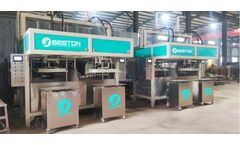
Advanced industrial packaging equipment now includes robotic arms, conveyor systems, and automated sorting mechanisms. These technologies ensure rapid and accurate handling of materials, reducing downtime and maintaining consistent production rates. ...

Recently, the Ningbo Haishu Recyclable Sorting Center, which was built by JONO Enviro, was officially put into use. This is a mixed plastic sorting line, which can subdivide plastics of different colors and different materials into 13 kinds, improve the recycling rate of plastics, and further enhance the fine sorting ability of ...
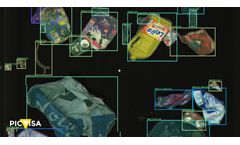
And many of these industries are considering in their strategy to be more sustainable, now and in the future, so they are turning to robotics to recycle their waste more rationally. They have discovered that they can leverage artificial intelligence and computer vision to detect, capture and sort waste quickly and accurately. ...
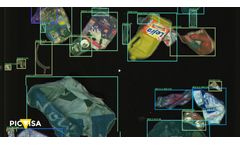
And many of these industries are considering in their strategy to be more sustainable, now and in the future, so they are turning to robotics to recycle their waste more rationally. They have discovered that they can leverage artificial intelligence and computer vision to detect, capture and sort waste quickly and accurately.A new generation of ...
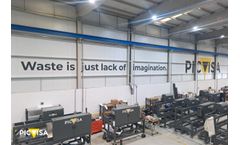
It is an automated process that uses cameras and artificial intelligence to identify and sort recyclable materials. Machine vision systems analyse images of the conveyor belt, detecting and sorting different types of waste accurately and quickly.What are the benefits of machine vision sorting? ...
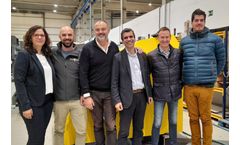
Combine Eldan’s vast experience with PICVISA’s cutting-edge technology and success is assured.AN HISTORIC PARTNERSHIP Eldan Recycling, a global leader in high quality recycling solutions with more than six decades of experience in the management of materials such as tyres, cables and electronic waste, is partnering with PICVISA, a technology company that has revolutionised material ...
PICVISA’s automated separation technology uses techniques such as optical sensors and artificial intelligence-based robotics to sort and recycle textile materials. As for the construction sector, at PICVISA, we apply a fusion of NIR (near infrared) and RGB (red, green, and blue) technology to perfect waste recovery systems in the sector. ...
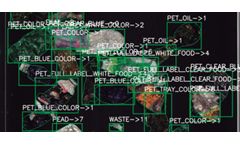
Lastly, it leads to greater flexibility in the recycling process, meaning that recycling plants can adapt to changes in material flows and sort new materials quickly and efficiently. Artificial Intelligence and Artificial Vision are key technologies to enable machines to perceive, understand, act, and learn, as well as identify and classify objects through content analysis and ...
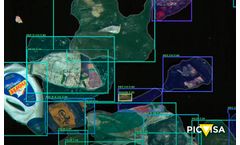
ARTIFICIAL VISION, ARTIFICIAL INTELLIGENCE AND ROBOTICS FOR WASTE SORTING Artificial vision and artificial intelligence, often supported by robotic classifiers, are capable of generating information about the selected materials. These technologies are rapidly spreading across Europe with the aim of speeding up waste sorting and ...
More so, these bins can easily be connected with the specially designed application, the GUI of which can let the users know about the location of the nearest bin so that streets are not littered. Smart Sorting in Waste Management Due to capital constraints and requirements, not all bins can be made intelligent i.e., sorting needs to be done once the waste has ...

By being able to monitor the condition and performance of the machine almost instantly, detect production failures and analyse their possible causes, downtime is reduced.In addition, production is maximised as, by assessing any variations, sorting equipment can be optimised quickly.Ultimately, data analysis leads to an improvement in the quality of material ...

The UK is a growing country. Our population has now passed the 66 million mark – and while more people means larger communities, it also means more strain on essential services. For local authorities, expanding neighbourhoods are increasing the pressure on your waste management. How can you improve refuse collections, to manage more households than ever before? Let’s take a closer ...

Over this period, our products have evolved greatly and now feature disruptive technology such as Artificial Intelligence when developing all our equipment. Ecopick, our intelligent robot for automating sorting and quality control tasks, is a fine example of this commitment to investing in R&D. ...