
Refine by
Rotary Valve Articles & Analysis
51 articles found
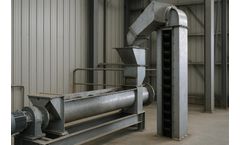
Sizing assumes starting torque of 150–200% of running power, 20–30% surge capacity, and provisions for future expansion.Design Specifications for RecyclingAbrasion-Resistant MaterialsBucket Elevator Boots: AR400 or AR500 steel (400–500 Brinell) in paste or metallic service; replaceable wear liners for maintenance access.Screw Conveyor Flights: Hardened steel with overlay welding (Chromium carbide ...
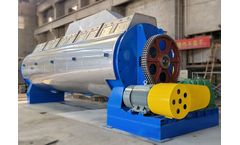
Oily sludge mainly comes from the refining "three sludges" in the petroleum and petrochemical industry, that is the oil separator bottom sludge, dissolved air flotation scum and excess activated sludge generated in the process of wastewater treatment in refineries; coal-to-oil, coal-to-oil Biochemical sludge, gasification wastewater pretreatment sludge, etc. produced by coal chemical industries ...

The sludge particles are sent to the cooler through the rotary air lock valve, condensed to about 40 ℃ and sent to the product silo. ...
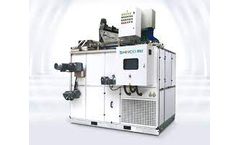
The sludge particles are sent to the cooler through the rotary air lock valve, condensed to about 40 ℃ and sent to the product silo. ...

Provide adequate rotational capabilities: Actuators must be able to accommodate their valves' rotary capacities (usually 90 or 180 degrees). Operate at the proper speed: A valve actuator's cycle speed can be controlled using special control circuit elements. ...

Customer: Casein manufacturer (milk refining) Material: Casein Installation: In a pneumatic line downstream of a storage container Function: Material flow monitoring of the upstream rotary valve. Early detection of blockages and control of the material flow for the downstream dryer. ...
ByENVEA
Industry: Food Manufacture Material/Qty: Salt flow up to 200 kg/hr Installation: (In-line) transfer line Function: Flow Measurement of ingredient addition APPLICATION Salt is blown from a silo, via a sieve and rotary valve, into the process. The salt flow is determined by a recipe setting and the speed of the rotary ...
ByENVEA

Chemical processing applications present specific challenges in terms of the equipment used within the processing plant; they must be manufactured from materials that will not damage or harm the end product, and also comply with industry regulations. We take a look at which chemical resistant valves are most commonly used in these industries and why they are so popular. ...
Rotary valves (also known as airlocks, rotary feeders, or airlock feeders) are used to transition material from one pressurized point, such as a dust collector, to another unpressurized point, such as a drum or bin. Rotary valves help seal a pressurized system against loss of air and pressure. ...
Control valves are split into two main types, either linear motion or rotary motion valves. The range of linear motion control valves consists of globe valves, gate valves, diaphragm valves and pinch valves. The range of rotary motion control ...
Securing your baghouse for personnel entry can include locking down your rotary valve, locking your blower, or sealing off any adjacent baghouse compartments. ...
As dust discharges into your dust collector’s hopper, ensuring you have the right removal method is going to help minimize problems that could arise due to dust build up. A hopper is designed to be temporary storage for your dust discharge. If you have excessive dust build-up in your hopper it can block off your dust collector air flow and cause a loss of suction throughout your dust ...
There may also be need for explosion isolation valves in the dust collection line to prevent a deflagration from travelling back to process equipment if an event occurs in the dust collector. ...
Client: Surface coater (Germany) Product: Plastic granulate Conveyed volumes: Amount not known Diameter of the pipe: DN 150 Installation location: Free falling behind rotary valve Number of systems: 2 According to the client, the FlowJam S offers the following advantage: Malfunction information if there is a standstill in the mixing process ...
ByENVEA
Client: Incineration plant (Germany) Product: Hearth furnace coke (HFC), lime hydrate Conveyed volumes: 64 - 100 kg/h Conveyor mechanism: Rotary valve Installation location: Conveying air stream, exhaust gas cleaning Solution: PicoFlow is specially developed for measuring powder flow in transport lines with very low material concentrations. ...
ByENVEA
Client: Food producer Product: Wheat Conveyed volumes: 5 t/h Conveyor mechanism: Rotary valve; Pneumatic conveying line Installation location: Pneumatic conveying line after rotary valve The SolidFlow 2.0 system offers the following advantages: Calculation of wheat requirements Daily consumption can be calculated ...
ByENVEA
Do you need us to supply the Inlet Duct, Pick-Up Hoods, Installation, or Fan? Do you want a Rotary Valve or Double Dump Valve? Is there anything else important to you we may be missing? ...
Do you need us to supply the Inlet Duct, Pick-Up Hoods, Installation, or Fan? Do you want a Rotary Valve or Double Dump Valve, and is a screw conveyor required? ...

The online cleaning system was designed to include bags, cages, platform and ladder, and a screw conveyor and rotary valve. To complete the retrofit from a wet to dry process, Schust supplied and installed the compressed air piping and included filter/regulator, unions, and necessary shut-off valves. ...
Process data Customer: Building materials industry (Germany) Product: Clay Volume: 650 kg - 3 t/h Installation location: Freefall after screw conveyor Function: Contactless measuring in freefall, replacement of an Impact Flowmeter Solution The MaxxFlow HTC is a none contact fl owmeter capable of measuring high fl ow rates of dry bulk solids from the discharge of free feeding devices, ...
ByENVEA