
Ruminant Feed Articles & Analysis
20 articles found
Why is it important to have a high-quality feed? The quality of ruminant feed is directly linked with milk production, animal health, as well as farm performance. As feed costs represent a significant number of the total production costs, it is crucial to ensure feed nutritional values and quality throughout the ...
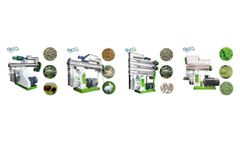
Just how to buy animal food handling machine? If the pet feed equipment used for fish feed manufacturing or yard animals feed manufacturing, is it possible? ...
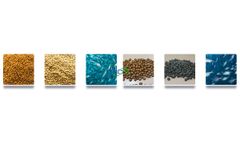
In recent years, the application of fish feed pellet extruder extrusion innovation to feed manufacturing is an epoch-making leap in feed manufacturing modern technology. ...
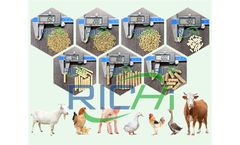
First of all, under the premise of selecting high quality ring die, appropriate die hole form, open hole ratio and compression ratio (compression ratio = effective length of die hole/die hole diameter) should be selected according to the feed variety, formula and output. Generally speaking, straight holes and stepped holes are suitable for processing compound ...
15 T/H pig chicken animal compound feed plant expansion project in China 120,000 Tons/year Poultry Feed Factory and 20,000 Tons/year Bio-organic Fertilizer Pellet Plant in China Poultry feed mill project with an annual output of 50,000 tons in China Full Automatic 60T/H Animal Feed Company Expansion Project In China Complete ...
Malaysia 3-5T/H Poultry Mash Feed Plant Project Indonesia 3-5T/H Ruminant Feed Plant For Sheep And Cattle Pellets Production Uzbekistan 1T/H Floating Fish Feed Plant And 1-2TPH Extruded Cattle Feed Plant Tanzania 3-5T/H Animal Livestock Poultry Pellet And Mash Feed Mill Project Hong Kong 3-4T/H ...
Trees provide shelter and shade for livestock, and some offer additional forage, nutritionally important supplementary minerals, and possible control of intestinal worms through the action of condensed tannins contained within the leaves. Condensed tannins also have the potential to suppress microbial activity in the rumen, reducing the uptake of nitrogen into the blood, and ultimately into the ...
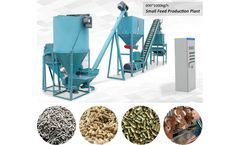
In recent years, more and more farmers who feed cattle, cow, sheep and other animals choose to make their own animal feed by purchasing a small set of ruminant animal feed production plant. ...
Plastic Net wrap and twine are used to hold Hay Bales together until it is time to feed cattle. It is a quick and convenient way to gather, load, and unload Hay Bales. ...
Urease inhibitors can also be used as feed additives for ruminants, which can effectively reduce the ammonia content in the air in poultry houses and improve the environment and the efficiency of nitrogen utilization on animals. ...
Urease inhibitors can also be used as feed additives for ruminants, which can effectively reduce the ammonia content in the air of poultry houses, improve the environment, and improve the efficiency of nitrogen utilization by animals. ...

Using the in vitro gas production technique - which evaluate nutritive value of ruminants feeds - the fermentation kinetics of genetically modified (GM) corn and the gas production of GM soybean were respectively faster and lower compared to their respective conventional counterpart, although the chemical composition were not affect by the genetic modification. ...
MonoScan for Stock Management of Animal Feed MonoScan provides a reliable and accurate continuous level indication of animal feed in Kfar Vitkin, Israel. This is one of the largest feed mills in the country. Kfar Vitkin feed mill supplies feed for poultry, turkeys, ruminants, fish, rabbits, and ...
MonoScan provides a reliable and accurate continuous level indication of animal feed. MonoScan is deployed in a very large regional large feed mill. This feed mill supplies feed for poultry, turkeys, ruminants, fish, rabbits, and pigeons. ...

Top animal feed is a result of the exact application of composition during the production process as well as the use of stateof-the-art technology. ...
In 1990, Switzerland became the first country in mainland Europe to report a native case of bovine spongiform encephalopathy (BSE), despite a low level of live bovine and meat and bone meal (MBM) imports from the UK, the country generally recognised as the origin of the epidemic. Although an MBM to ruminant feed ban was immediately put into effect, the incidence ...
Imports of animal feeds containing contaminated meat and bone meal (MBM) from the UK and other countries in the late 1980s and early 1990s was identified as the major risk factor for an increased risk of bovine spongiform encephalopathy (BSE) entering into the Netherlands. ...
Comparable risk management strategies have been put in place, such as a ban on the feeding of ruminant materials to other ruminants, a ban on the use of specified risk materials in human and animal feed, and targeted import policies designed to limit the possibility of introduction and propagation of BSE to and within the ...

Forage legume proteins were fractionated by the Cornell Net Carbohydrate and Protein System or ruminally incubated to assess how conditioning and conservation methods interact with polyphenols (condensed tannins or o-quinones) to alter protein degradability. ...
RFO and phytin are indigestible by non-ruminant animals and contribute to decreased feed efficiency, reduced mineral adsorption, and phosphorous pollution in manure. ...