
Refine by
Safe Chlorination Articles & Analysis
19 articles found
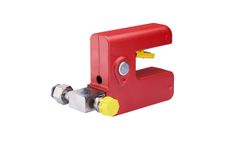
The Ecomondo trade fair: Lutz-Jesco will be presenting system solutions from a single source whether for disinfecting process water, bleaching textiles or manufacturing primary materials such as PVC: chlorine gas is central to a range of industrial processes. This important chemical is also highly dangerous, and even small quantities of chlorine gas can cause ...

” SAFETYCHLORMIX enables chlorine production of up to 650 g/h SAFETYCHLORMIX is available in different performance levels, which enable chlorine production from 18 to 650 g/h. ...

” SAFETYCHLORMIX enables chlorine production of up to 650 g/h SAFETYCHLORMIX is available in different performance levels, which enable chlorine production from 18 to 650 g/h. ...

Background:Residual chlorine sensor is an essential tool in water treatment. They are used to measure the concentration of free chlorine that remains in water after being treated with chlorine. ...
The discolored Municipal water flows through rusty pipes and is undrinkable due to the amount of chlorine added. This ‘safe’ supply, although free of Coliforms, is prone to breakdown which means delivery is often ...
Chlorination in the U.S. began in 1908, according to the Safe Drinking Water Foundation. ...

In April 2019, six people became sick after being exposed to chlorine gas at a hotel pool in India, because one of the chlorine gas cylinders, which had been stored improperly, began to leak, exposing swimmers to chlorine gas. ...
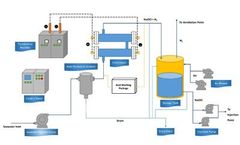
The most widespread disinfectant used in the treatment of drinking water, circulating water is chlorine, which can be applied in a variety of ways. History has taught us that, in bacteriological conditions, chlorinating water is a quite safe way of disinfecting drinking water, after all, more than 75 years have passed since ...
Most commercial kitchens will use bleach, or a similar sanitiser, to keep their space safe. Today, we will share with you the top five reasons you should be using chlorine dioxide instead. ...
At the turn of a tap, we have access to chlorinated water for every day use. However, for people who don’t want or can’t access scheme water, there is often a question of how to treat other water sources to make them safe. ...

We carried out a mixed methods evaluation to assess sustained effectiveness of chlorinators approximately two years after installation, including 18 site assessments of chlorinators and distribution systems, 180 surveys of households served by those systems and 17 key informant interviews. We tested for free chlorine residual and Escherichia coli ...
Training your workers on how to safely use chlorine is one part of health and safety best practices; monitoring your workplace for chlorine leaks is another. Learn about the hidden dangers in this common substance and how you can stay safe. The "Hidden Dangers" of Chlorine So many everyday things that you see ...
Point-of-use water treatment with chlorine is underutilized in low-income households. The Zimba, an automated batch chlorinator, requires no electricity or moving parts, and can be installed at shared water points with intermittent flow. ...
Five household water treatment and safe storage (HWTS) options – chlorination, solar disinfection, ceramic filtration, sand filtration, and flocculation/disinfection – are proven to improve microbiological quality and prevent diarrheal disease in developing countries. ...
Chlorine is the conventional means of water disinfection, so Biwater brought in ERG to design and manufacture the emergency gas scrubbing package for their plant. ...

Ammonia was first synthesized in 1823 and the first commercial production of synthetic ammonia began in 1913. Chlorine, a sanitizer by “man” Chlorine is a sanitizing gas. ...
Keeping this fully in mind, let us turn our attention pragmatically toward constraints upon applications within impoverished households of the developing world struggling to achieve the UN goals. Many people turn to chlorine or iodine in their quest for safe drinking water. These chemicals can certainly accomplish primary disinfection and provide residual ...

Chlorine, dissolved in liquid is one of the most effective and economical semi-killers for the treatment of water to make it potable or safe to drink. ...
The solution may reside in a novel use of N-halamine technology. N-halamine chlorinated resin beads, an emerging water purification application, use antimicrobial properties of chlorine to safely purify drinking water supplies at the point-of-use (POU) without elec¬trical power. ...