
Refine by
Sample Collection Articles & Analysis
1,151 articles found
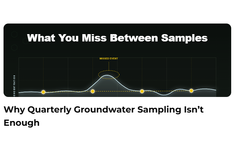
Groundwater contamination doesn’t move in neat, predictable intervals. Yet for decades, environmental monitoring programs have relied on quarterly or annual sampling as the standard approach to understanding subsurface conditions. While this method has been widely accepted, it introduces a critical challenge: it captures only snapshots in time,not the full story. As regulatory ...
ByLiORA
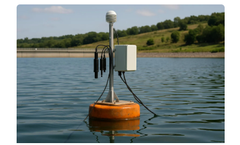
Real-time monitoring refers to the continuous measurement of physical, chemical, and biological parameters in a water body, transmitted automatically to operators without manual sample collection. Unlike grab sampling, which involves a site visit, sample collection, and lab analysis, real-time systems employ ...
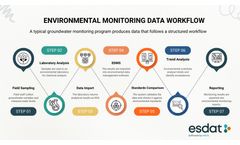
Environmental teams are under pressure to do more than collect samples and submit reports. They need to prove that their data is complete, traceable, defensible, and ready for regulatory review. ...
Project Details The objective of the pilot is to demonstrate the effective treatment of soil contaminated with PFAS by thermal desorption and off-gas destruction using Iron Creek’s Tech Zero remediation technology. ...
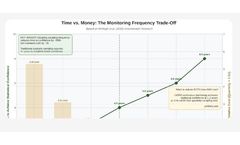
Understanding the Plume Overestimation Problem A Problem Hidden in Plain Sight I have spent years watching site managers struggle with a problem they cannot easily see: their plume maps are wrong. These maps are not slightly wrong, but systematically wrong in ways that cost real money and extend project timelines unnecessarily. The contamination boundaries drawn on quarterly monitoring ...
ByLiORA
Understanding What Monitoring Frequency Reveals Why Frequency Determines Knowledge I spend considerable time thinking about how we measure things underground. The physical act of lowering a bailer into a well or watching a pump purge three volumes of stagnant water forms only part of the story. The deeper question concerns what those groundwater measurements tell us and what the measurements ...
ByLiORA
The Well Redundancy Problem Every groundwater monitoring network includes wells that cost money but provide no commensurate value. This statement reflects reality at contaminated sites worldwide, not a criticism of the hydrogeologists who designed these networks. Contamination plumes evolve over time, and our understanding of subsurface conditions improves as data accumulates. A well that ...
ByLiORA
The Global Contamination Challenge Over 2 million contaminated sites exist globally, and we continue polluting more sites than we clean up. This disparity between the problems we face and our ability to solve them through innovation creates what I call an ingenuity gap. The gap persists not because solutions do not exist, but because industry practices lag behind scientific advances by decades. ...
ByLiORA
Laboratories often encounter variability due to improper sample handling, temperature fluctuations, or delays in processing. Small mistakes in dilution, pipetting, or the use of contaminated glassware and reagents can produce false positives or negatives. ...
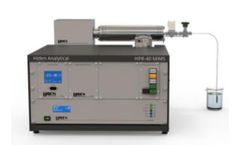
Dissolved gas measurements are often the difference between suspecting what’s happening in a water system and proving it. Whether you’re tracing and dating groundwater, diagnosing denitrification, quantifying methane production, or monitoring trace contaminants, the challenge is the same: gas concentrations can be low, dynamic, and easily altered by sampling. We sat down with ...

Deploying RemScan for Rapid Hydrocarbon Contamination Detection and Characterisation at a Hazardous Site TMK Consulting Engineers invited RemScan to examine a potentially hazardous site where a hopper had been linked to a waste oil storage tank by a pipe suspected of leaking mixed hydrocarbons onto the soil below. ...
Introduction Accurate measurement of Soil Organic Carbon (SOC) is essential for agriculture, environmental management and climate change mitigation efforts. Ziltek recently participated in a project aimed to lower the cost of and enhance SOC measurement, reporting, and verification (MRV) processes, particularly in the medium to high rainfall regions of southwest Western Australia. This ...

The Maintenance Advantage and Maximum Equipment Uptime: Why More Facilities Are Adopting On-site Oil Analysis Oil analysis is no longer just a diagnostic tool—it’s a powerful strategy for organizations focused on equipment reliability and cost control. While 60–70% of industrial facilities today use oil analysis as part of their reliability programs, most still rely on ...
Approach: TCH heaters were installed to depths between 23 and 30 ft bgs to heat the target treatment zone (TTZ) to ...
How our in-house pilot studies replicate field conditions to generate meaningful methane data. In a previous blog we discussed some of the pros and cons of BMP studies on anaerobic digesters. While they’re excellent for showing how much methane can be produced from a food substrate, they have less utility as a representative site study and will only work well in some cases. The best-case ...

Blue-green algae, or tiny organisms called cyanobacteria, are a growing concern in freshwater systems worldwide. Blue-green algae naturally occur in many aquatic environments and are a normal part of the ecosystem. Cyanotoxins produced by cyanobacteria cannot be visually detected in water or tissues. In the ecosystem blue-green algae Lake Tahoe, play a fundamental role, contributing to the ...
Introduction To obtain reliable and reproducible results by X-ray fluorescence (XRF) analysis, it is crucial that the sample be as compositionally uniform as possible and optimally prepared in terms of structure and surface. This is especially important when working with powdered materials—ranging from ore and coal to pharmaceutical and ceramic mixtures. In this article, we will show how ...
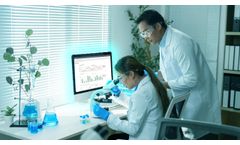
In today’s high-stakes environment, there’s no room for guesswork—laboratories need precision, speed, and control. That’s where quality indicators and visual dashboards come in. These powerful tools are game-changers for industries where accuracy is non-negotiable—whether it’s environmental testing, food safety, or industrial analysis. Integrated into a ...

Digital transformation in laboratories has brought a new challenge to quality control teams: how to organize the large volume of data generated daily? Structuring laboratory data efficiently is no longer a competitive advantage – it is a necessity to ensure agility in responses, reduce rework and make more assertive decisions. In this article, we will show the best practices for ...
In this application, total suspended particulate (TSP) samples were collected using a medium-flow air sampler with imported 0.8Dum glass fiber microfiltration membranes. After sampling, the filters were stored in a desiccator. Microwave digestion was employed as the pretreatment method, offering rapid sample decomposition while ...