
Refine by
Sample Concentration Articles & Analysis
510 articles found
Project Details The objective of the pilot is to demonstrate the effective treatment of soil contaminated with PFAS by thermal desorption and off-gas destruction using Iron Creek’s Tech Zero remediation technology. ...
The vacuum parallel concentrator is a core piece of equipment for sample pretreatment, and its malfunctions directly affect experimental efficiency and the accuracy of results. ...

Variable load conditions, high-temperature exhaust, and low-concentration pollutants further complicate accurate emissions monitoring. ...

They are a diverse group of molecules, often existing in low concentrations within complex biological samples like blood, tissues, or cells. ...
Graphite heating plates, as efficient and stable laboratory heating equipment, are widely used in experimental scenarios such as sample digestion, evaporation and concentration, and material heat treatment. ...
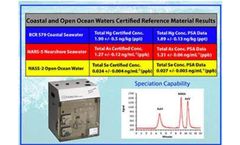
Seawaters pose analytical challenges due to the high salt content of the sample & low environmental concentrations of the target analytes. ...

Bailey's Creek Pilot Study In 2009, the first commercially-produced SediMite pellets were applied to a small test plot of PCB-impacted sediments of Bailey's Creek, a brackish intertidal salt marsh system. Pre- and post-application samples were analyzed for sediment contaminant concentration, carbon content, benthic community, and bioavailable portion of the ...
Key parameters commonly assessed include: Hydrodynamic radius (the effective size of the particle including its hydration layer) Polydispersity index (a measure of size distribution homogeneity) Zeta potential (when equipped with appropriate modules) Estimates of molecular weight However, scientists should be aware of important limitations: DLS provides intensity-weighted size distributions ...
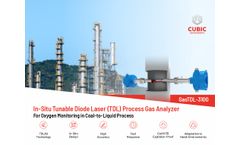
The solution consists of four parts: sampling unit, preprocessing unit, control unit, and analysis unit. • Sampling Unit: Collecting the gas from coal-to-liquid process and introducing the gas into the laser gas analysis system. • Preprocessing Unit: Using precision filters to remove dust and oil, purifying the sample gas, and ensuring ...

Diffuse reflectance infrared Fourier transform spectroscopy (DRIFTS) is a powerful analytical technique for the study of powdered and rough surface materials. It is widely employed for quality control, materials characterisation and catalytic studies in both research and industrial settings. However, optimal sample preparation and instrument setup are crucial to obtain the most reliable results ...
BySpecac

X-ray fluorescence (XRF) is a nondestructive analytical technique used to identify and quantify elements in various sample types. The sample is exposed to X-rays, causing its atoms to emit fluorescence back to a detector. This fluorescence is measured to identify the elements present and determine their concentrations. XRF is widely used in ...
ByB&W Tek
Every measurement is more than just numbers — it’s confidence in your decisions. Mistakes are costly, and lost time is a missed opportunity. You need an instrument that delivers fast, precise results with no compromises. That’s exactly what the ProSpector 3 from Elvatech offers — a handheld XRF analyzer designed for professionals who value speed, accuracy, and ease of use. ...
Choosing analytical equipment isn’t just a purchase — it’s a strategic investment in your business. One wrong result can cost you thousands — or even millions — of dollars. Inaccurate analysis leads to defective products, financial losses, and serious reputational damage. In industries where every measurement matters, you need an analyzer you can trust to deliver ...
Biomolecular Complex Analysis: For studying multimeric protein complexes or transient small-molecule interactions, MST is highly effective due to its ability to analyze low sample volumes at physiological concentrations. Epigenetic Studies: MST assays allow for precise measurement of interactions between histone modifications and regulatory proteins, aiding in ...

The Total Petroleum Hydrocarbon (TPH) concentrations in the soil and groundwater were 13.000 mg/kg and 1.370 mg/l respectively. ...

Ultraviolet-Visible Spectroscopy (UV-Vis)(1) UV-Vis spectroscopy is a fast and convenient technique that can be used to analyze components in the medium that can absorb ultraviolet or visible light, such as certain vitamins and alkaloids.(2) This method is often used to determine the concentration and purity of samples.4. Ion Chromatography (IC)Ion chromatography ...

l Advantages: Ultracentrifugation is a gentle method that minimizes the degradation of LPS, making it suitable for obtaining high-quality samples for downstream applications. l Challenges: This method requires specialized equipment (ultracentrifuge) and may not be as scalable or efficient as phenol extraction for large-scale purification. 3. ...
However, measuring cytokine levels can be challenging due to their low concentrations in biological samples and the variability in results obtained from different assay methods. Luminex xMAP technology has emerged as a powerful tool for cytokine detection, allowing researchers to measure multiple biomarkers from a single sample. This multiplexing ...
For the past decade, Raman spectroscopy has gained ground in real world applications due to the highly selective nature of Raman signatures, the non-destructive nature when testing, and the convenience of needing no sample preparation. While many Raman applications are based on qualitative analysis, such as raw materials verification and quick identification of unknown chemical ...
ByB&W Tek

Its disadvantage is that it limits the concentration of the sample and makes it difficult to analyze the particle size and particle size distribution of the high concentration system. At present, there are advanced instruments to relax the concentration range, but the sample with lower ...