
Refine by
Sample Cup Articles & Analysis
25 articles found
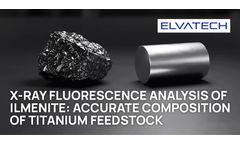
Ilmenite and Its Significance: Where It’s Used and Why Composition Matters Ilmenite is a mineral—the primary source of titanium—occurring as iron–titanium oxide (FeTiO3). It is a raw material for producing titanium dioxide (TiO2), a widely used white pigment, and for metallic titanium. About 95% of all mined titanium feedstock is processed into TiO2 pigment used in paints ...
Obtaining precise results in X-ray fluorescence (XRF) analysis requires thorough and proper sample preparation. For liquid samples, meticulous preparation ensures high accuracy and reproducibility of measurement outcomes. This article covers essential aspects of liquid sample preparation and handling procedures for XRF ...
Introduction To obtain reliable and reproducible results by X-ray fluorescence (XRF) analysis, it is crucial that the sample be as compositionally uniform as possible and optimally prepared in terms of structure and surface. This is especially important when working with powdered materials—ranging from ore and coal to pharmaceutical and ceramic mixtures. In this article, we will show how ...

Disposable paper cups are widely used in daily life due to their low cost, convenience, and portability, and are commonly found in both public settings and private households. Compared to plastic products, paper-based cups have a simpler production process, are recyclable, and generate less environmental pollution. ...
Introduction Soil is the foundation of agriculture and ecosystems, yet industrial activities and pesticides often introduce toxic metals like lead, cadmium, or mercury. Rapid assessment of soil composition is essential for farmers, environmental engineers, ecologists, and regulators. X-ray fluorescence (XRF) delivers multi-element results in minutes without complex lab work, making it an ...
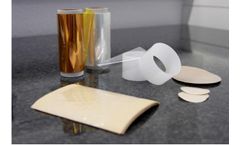
The preparation of liquids using X-ray fluorescence analysis is done by simply pouring the sample into a sample ...

Diffuse reflectance infrared Fourier transform spectroscopy (DRIFTS) is a powerful analytical technique for the study of powdered and rough surface materials. It is widely employed for quality control, materials characterisation and catalytic studies in both research and industrial settings. However, optimal sample preparation and instrument setup are crucial to obtain the most reliable results ...
BySpecac
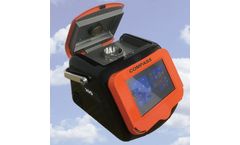
It substantially encompasses the inorganic element items requisite for soil sample testing and can be customized to incorporate additional elements in accordance with customer specifications. Operators are afforded the facility to directly utilize the Compass 200 for the on-site analysis of soil samples. Samples can be procured and either placed ...
Introduction Cement is one of the most crucial materials in the construction industry, and its quality directly impacts the strength and durability of buildings. In a world where construction safety and longevity are non-negotiable, ensuring that cement meets all necessary standards is vital. Poor-quality cement can lead to dangerous consequences such as cracks, structural damage, and even ...

Introduction Extending lubricant condition monitoring programs to include grease analysis Onsite oil analysis is an effective tool to quickly analyze samples and optimize maintenance activities. As part of a comprehensive condition based maintenance program (CBM), oil analysis proves to be an effective tool to compliment other diagnostic technologies like vibration analysis, infrared ...

Cannabis and near-infrared spectroscopy Near-infrared spectroscopy (NIRS) is a fast analytical technique with low running costs used to perform quality control (QC) and product screening on various cannabis products, including hemp. It can determine the cannabinoid profile or even the potency of dried cannabis flowers. NIRS can also be used for QC of cannabis oils, waxes, tinctures, ...
Personal care and cosmetic products are ubiquitous in our daily lives. Most of us wouldn’t readily go out to meet our peers without first practicing a bit of hygiene, which is why these products are so widely used. Personal care products and cosmetics are mainly applied externally (e.g., on hair, skin, and nails) as well as orally (e.g., on teeth, gums, and tongue) either for hygienic ...

Equipment: BUCHI NIRMaster Lloyd’s Animal feeds performs measurements on all incoming feed materials using a BUCHI NIRMaster FT-NIR Spectrometer configured with AUNIR INGOT pre-calibrations. Samples are placed in an unbreakable cup and feed ingredient parameters are shown within 10 seconds. For the mill at Oswestry where the machine is located, this rapid ...
ByBUCHI
One hundred forty-three subjects compared treated IDR tap water with regular tap water and retail bottled water, all in unmarked cups. Subjects graded the samples on a five-point scale for flavor, temperature, texture, color, and smell. ...
Equipment: BUCHI NIRMaster Lloyd’s Animal feeds performs measurements on all incoming feed materials using a BUCHI NIRMaster FT-NIR Spectrometer configured with AUNIR INGOT pre-calibrations. Samples are placed in an unbreakable cup and feed ingredient parameters are shown within 10 seconds. For the mill at Oswestry where the machine is located, this rapid ...
ByBUCHI

To get straight down to business you simply load your sample, press the green START button, and your analysis will appear in seconds. ...
Sample uniformity and dynamics Other critical sample characteristics that often get overlooked during the method development process are sample consistency and stability. ...
ByBUCHI

There are a wide range of methods but most are available in open or closed cup formats – but what is the difference between these? Open Cup Flash Point In these types of tests the vessel is open to the air. ...
General function and description: The sample (serum, blood, urine or any other aqueous solution) is filled in a plastic sample tube and cooled via a Peltier element. ...

These classical techniques, commonly referred to as open-cup and closedcup methods, share a common principle: A test flame is lowered into the vapor space at regular intervals so that the ignition can be observed. Depending on the method, 70–75 mL of sample is used for open- and closed-cup flashpoint determination. Naturally the ignition of ...