
Sample Grinding Articles & Analysis
9 articles found
Imagine the first human settlements: people building homes, making pottery, storing water and grain. The material that made all this possible was clay. It is highly plastic, easily molded into any shape, and after firing becomes as hard as stone. Not by chance, clay tablets became the very first “pages” of human history. Even today, clay remains the foundation of entire industries: ...

For example, a molecule can absorb the energy contained in the incident light, resulting in faster rotation or more apparent vibrations.Infrared Spectroscopy SamplesSamples used in infrared spectroscopy can be in solid, liquid, or gaseous states.Solid samples can be prepared by grinding the sample with an oil-like grinding agent. ...

For the extraction of such components, polar organic solvents, such as methanol and acetonitrile are usually used. For the extraction of tissue samples, pre-grinding with liquid nitrogen or breaking up with magnetic beads is required. ...
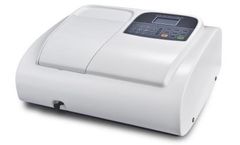
Rapeseed is an important oil crop in my country, and rapeseed oil is one of the important edible oils in China. The chlorophyll content in rapeseed oil directly affects the oil processing cost and the shelf life of the oil. This article refers to "GB/T 22182-2008/ISO 10519:1997 Rapeseed Chlorophyll Content Determination Spectrophotometer Method" and "NY/T 1287-2007 Rapeseed Chlorophyll Content ...

It has low mass, making it hard to detect, and you had to rely on destructive techniques that involved grinding and dissolving samples. Optical Emission Spectroscopy (OES) is a relatively simple technique that allows you to measure the steel directly without extensive preparation or the use of harsh chemicals. The rise of lighter alloys As lighter alloys become ...
Sample preparation is the most important step of any chemical analysis. ...

Near infrared spectroscopy (NIRS) technology can be an inexpensive and convenient method for nondestructive analysis of seed; however, many instruments require a 300 to 500-g sample size to operate. Recently, Perten Instruments, Inc. developed a 20 g 'breeder's' cup for use with their DA 7200 diode array NIRS instrument. ...

At this point the technician re-weighs the sample, then grinds the sample to reduce the particles to small enough size to pass a fine mesh sieve. When all of the sample passes the fine mesh sieve, the technician mixes and splits the sample for final sample preparation, or executes an additional ...
Drying the sample removes the diluting influence of moisture, and facilitates further sample preparation stages of grinding and sieving. ...