
Refine by
Sample Separation Articles & Analysis
181 articles found

During digestion, the sample is placed in a sealed digestion vessel, and microwave energy acts directly on the sample and digestion reagents, causing the sample to decompose rapidly under high temperature and pressure. ...

Components of a Purity Analysis A physical purity test divides the seed sample into distinct categories, each weighed separately: l Pure Seed (PS) – Seeds of the species being tested, including whole seeds and germinable broken seeds containing the embryo. ...

They are a diverse group of molecules, often existing in low concentrations within complex biological samples like blood, tissues, or cells. This is where advanced analytical techniques become essential. ...

The process begins with the denaturation of double-stranded DNA, which involves heating the sample to separate the strands. Following denaturation, the temperature is lowered to allow primers—short sequences of nucleotides that are complementary to the target DNA—to bind to the specific regions of interest on each strand. ...
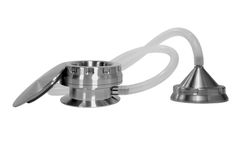
The ActiveCount Remote Impactor Kit is designed to provide a flexible, modular solution for viable sampling in critical environments. Whether you rely on a house vacuum system, use an ActiveCount viable sampler, or require a remote sampling setup, this kit is engineered to adapt seamlessly to your existing processes and scale as your needs evolve. ...

The application of magnetic beads results in faster and more effective protein purification procedures. Magnetic field separation of beads from samples accelerates purification processes beyond traditional chromatographic methods. ...
This dual-color or multiplex approach enriches the data obtained, offering detailed insights into the relationships between different molecular targets within the same sample. One key feature of our ISH services is the capability for multiplex ISH, which allows for the localization of two or more probes within a single sample. ...

Are you using a water-blocking filter, but water is still getting ...

High-Performance Liquid Chromatography (HPLC)(1) PrincipleHPLC can separate, identify, and quantify various components in complex samples. ...

MS works by ionizing gas molecules and separating the resultant charged particles by their mass-to-charge ratios (m/z) in an electric or magnetic field. ...

Comparative proteomics is a branch of proteomics that involves comparing protein expression in different biological samples (such as cells in healthy and disease states or cells from different biological species). ...

Proteome validation usually includes the following steps.Protein IsolationThe target protein needs to be separated from the biological sample. Techniques such as gel electrophoresis, high-performance liquid chromatography (HPLC), ultracentrifugation, etc., are used.ImmunoassayA common proteome validation method is immunoassay, i.e., using specific antibodies to ...

TMT labeling involves using a series of chemically different weight tags that can bind to the N-terminus and side chains of peptides. This method allows multiple samples to be processed simultaneously and then mixed together for mass spectrometry analysis. TMT technology allows for the simultaneous quantification analysis of up to 16 different samples, making it ...

In addition, it is costly and requires a certain amount of sample.2. Western BlottingWestern blotting first separates proteins by gel electrophoresis, then transfers the proteins to a membrane, and detects the glycoproteins using specific antibodies.(1) AdvantagesIt can provide information about the relative molecular weight and existence of glycoproteins. ...

The detailed steps are as follows:Protein Sample PreparationFirst, the target protein sample needs to be prepared. ...

Based on the "bottom-up" mass spectrometry analysis strategy, through the data-dependent acquisition (DDA) mode, it aims to achieve unbiased identification and quantification of proteins in biological samples.The general process of shotgun protein sequencing is to first digest the protein sample into peptides, and then separate the peptides by high-performance ...

The traditional HCP detection method is an enzyme-linked immunosorbent assay (ELISA), but the specificity and coverage of antibodies limit this method, which may lead to bias in the detection results.ApplicationsMass spectrometry is a method of qualitative and quantitative analysis of samples by ionizing sample molecules and measuring the mass and relative ...

Since the first large-scale metaproteomics data was generated in 2005, metaproteomics has rapidly improved in scale, depth, speed, and quality.Analysis WorkflowThe technical process of metaproteomics mainly includes: sample preparation, protein separation, and protein identification.1. Sample PreparationThe preparation of the ...

Both react isotopes with the amine of peptides, and through the principle of isobaric labeling, they label different samples, simultaneously detecting the ion signal response intensity of the same peptide in different samples in the mass spectrometer, achieving the relative quantitation of all proteins. ...

In particular, Liquid Chromatography-Mass Spectrometry/Mass Spectrometry (LC-MS/MS), due to its high sensitivity, high throughput, and high resolution, has become the mainstay of modern proteomics.Mass spectrometry is a technique that analyzes based on the different ratios of mass and charge (m/z) of molecular ions. In the mass spectrometer, the sample goes through four steps: ...